
If you follow quantum error correction at all, you have heard about the surface code. It is the workhorse, the default, the design most companies point to when they sketch a fault-tolerant future. But it is not the only game in town. Lurking in the same family of lattice-based codes is a quieter contender called the color code, and it makes a tempting pitch: pack more protection into fewer physical qubits, and get some of the hardest logical operations almost for free.
Same idea, different tiling
Both codes work by spreading a single piece of quantum information across a grid of physical qubits and constantly checking for signs of trouble. In the surface code, qubits sit on a checkerboard, and each stabilizer measurement asks a simple yes-or-no question about a small patch of neighbors. Errors show up as mismatches, and a classical algorithm figures out where they probably happened.
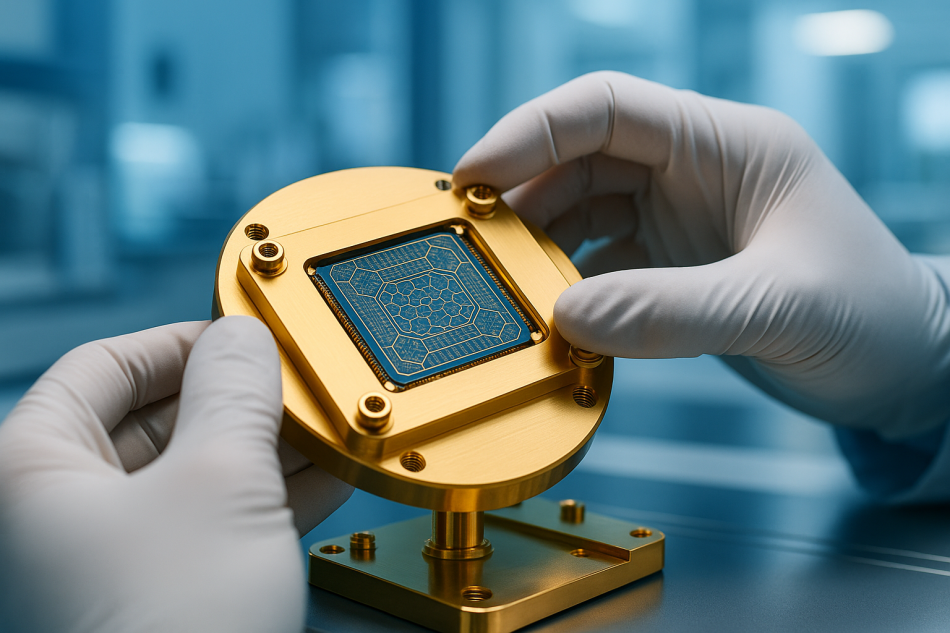
The color code plays the same game on a different board. Picture a lattice of hexagons and triangles that can be colored with three colors so that no two touching tiles share one. Qubits sit on the corners, and each face hosts stabilizer checks. The clever part is that a single face measures both kinds of error at once, where the surface code needs separate checks for each. That doubling-up is where the efficiency comes from. For a given level of protection, a color code can use noticeably fewer physical qubits per logical qubit, and in a field where every qubit is expensive, that is not a small thing.
The free gate bonus
The real prize is something called transversal gates. To run an algorithm on error-corrected data, you eventually need a set of logical operations rich enough to do anything. Some of those operations are cheap. Others, especially the non-Clifford gates that give a quantum computer its edge, are notoriously expensive and usually require the magic-state factories that dominate resource estimates.
Color codes have a structural gift here. Certain gates that the surface code has to build laboriously can be applied transversally in a color code, meaning you just hit each physical qubit with the same simple operation and the logical gate falls out. That reduces the overhead for a whole class of operations and can shrink the sprawling scaffolding that fault-tolerant machines are expected to need. On paper, a processor built around color codes could reach useful computations with a smaller footprint.
Why it hasn't taken over
If the color code is so efficient, why is nearly every roadmap built on the surface code instead? The answer is decoding. When an error strikes, the pattern of triggered checks has to be translated back into a guess about what went wrong. For the surface code, this problem maps neatly onto a well-studied graph-matching task, and fast, reliable decoders exist. The color code's error signatures are messier. A single fault can light up checks of three different colors, and untangling that is a harder computational puzzle. For years, color-code decoders were slower and less accurate, which dragged down the error threshold, the crucial cutoff below which adding more qubits actually helps rather than hurts.
There is also the matter of connectivity. Color-code layouts often demand that each qubit talk to more neighbors, and that extra wiring is painful on real hardware where every connection introduces noise and crosstalk. The surface code's virtue is partly that it is forgiving: it asks each qubit to interact with only a handful of neighbors, which suits the two-dimensional chips that superconducting and spin-qubit makers actually build.
A comeback in progress
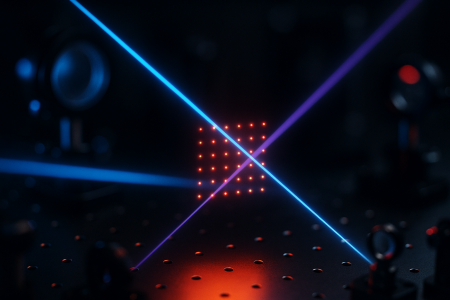
The story is not settled. Researchers have sharpened color-code decoders considerably, borrowing tricks from machine learning and clever ways of splitting the three-color problem into simpler pieces. Reported thresholds have climbed toward the neighborhood the surface code enjoys. Platforms with more flexible connectivity, particularly trapped ions and neutral atoms that can shuttle qubits around or reach across a grid, are a natural fit for color codes because they are not stuck with a rigid nearest-neighbor layout. Small color-code logical qubits have already been demonstrated on such systems.
None of this guarantees the color code wins. The more likely outcome is a mixed ecosystem where different codes suit different hardware and different jobs, and machines even switch between them for specific operations. What the color code really represents is a reminder that error correction is not a solved recipe. The surface code got there first and earned its dominance, but the search for a leaner path to fault tolerance is very much alive, and the winner may not be the code everyone assumes today.