
Walk into almost any conversation about quantum computing and you will hear about qubits, gates, and circuits. The mental model is borrowed from classical computing: you apply operations to information one step at a time, building up a program. Most of the field, from IBM to Google to IonQ, is building machines that work this way. They are called gate-based, or universal, quantum computers, and they aim to run any quantum algorithm you can write down.
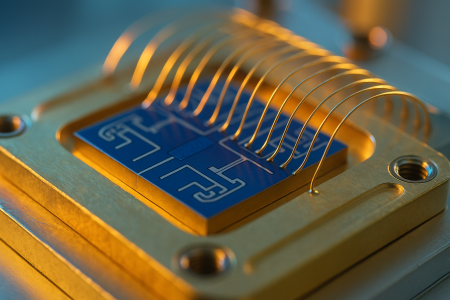
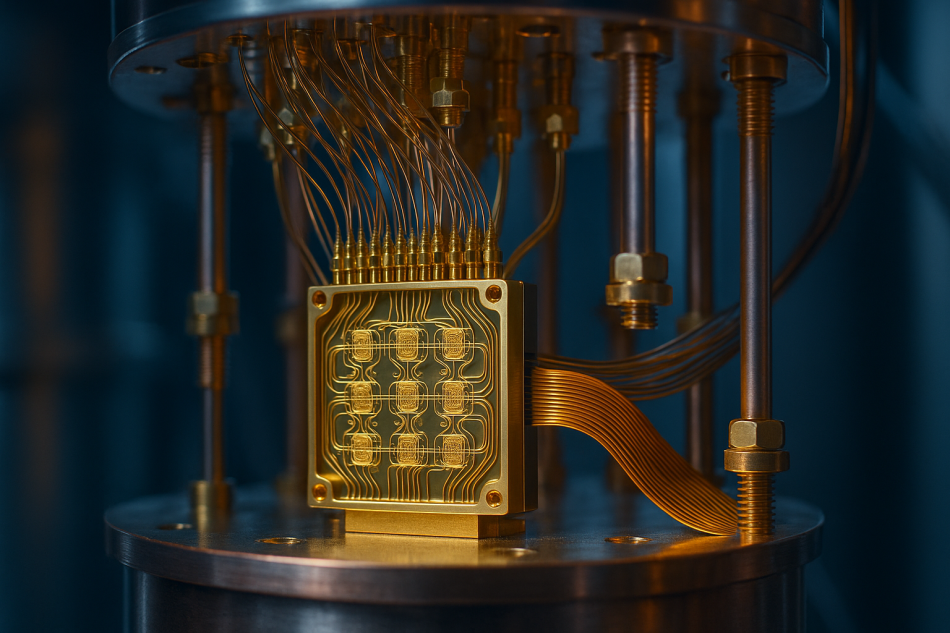
D-Wave Quantum took a different road. The company, founded in British Columbia, built its business on quantum annealing, a technique that does not run circuits at all. Instead of executing a sequence of gates, an annealer encodes a problem into the physical energy landscape of its qubits and lets the system settle toward its lowest-energy state. That state, if the machine is built and tuned well, corresponds to the answer.
What annealing actually does
The idea borrows from physics. Nature tends to find low-energy configurations, the way a ball rolls into a valley. Annealing exploits that tendency. You start the qubits in a simple, well-understood state, then slowly change the system so that its energy landscape morphs into one that represents your problem. If you do it gently enough, the qubits stay in the lowest-energy valley throughout, and you read out the solution at the end.
This makes annealers naturally suited to optimization problems, the kind where you are searching for the best arrangement among an enormous number of possibilities. Scheduling delivery routes, balancing a portfolio, laying out a factory floor, assigning crews to shifts. These can be translated into the energy-minimization form annealers understand. D-Wave's machines, including its Advantage systems, now carry thousands of qubits, far more than the gate-based processors that make headlines. But the comparison is misleading, because the qubits are doing something fundamentally narrower.
Why the qubit counts don't line up
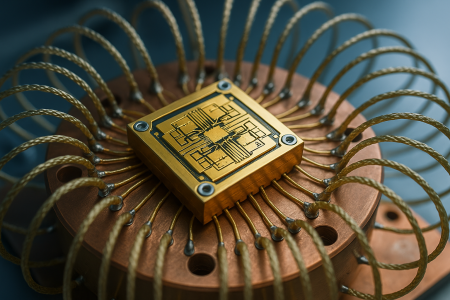
A gate-based qubit needs to support arbitrary operations and, eventually, error correction. An annealing qubit only needs to participate in the slow settling process. That is a lighter requirement, which is part of why D-Wave can fabricate so many of them on superconducting chips. It also means you cannot directly compare a D-Wave machine's qubit count to a Google or IBM processor. They are not measuring the same thing.
Annealers also face their own limits. Real chips have limited connectivity, meaning each qubit only links to a handful of neighbors. Mapping a densely connected problem onto that sparse hardware can consume many physical qubits to represent a single logical variable, eating into the apparent advantage. Noise and the speed of the annealing schedule matter too. Go too fast and the system gets stuck in a valley that is low but not the lowest.
Where it has found real use
D-Wave has leaned hard into commercial accessibility. Its Leap cloud service lets developers send problems to the hardware over the internet, and the company has published case studies with partners in logistics, manufacturing, and materials. Whether annealing delivers a genuine speedup over the best classical optimization software remains contested, and serious researchers have shown that well-tuned classical algorithms often match or beat it on many benchmarks.
That tension defines the company's story. Annealing reached usable hardware early, which gave D-Wave a head start on real customer engagement. But the lack of a clean, proven quantum advantage left it exposed to the argument that classical computers can do the same job. In response, D-Wave has expanded into gate-based development as well, signaling that even the most committed annealing company sees the universal model as the long-term destination.
A useful reminder
The annealing path matters because it punctures a comfortable assumption: that there is one obvious way to build a quantum computer and everyone is simply racing to scale it. There isn't. Annealing trades generality for buildability. It cannot run the famous algorithms that promise to break encryption or simulate complex molecules at full depth, but it sidesteps some of the brutal engineering that gate-based machines must conquer before they become broadly useful.
For now, D-Wave occupies an unusual niche. It is a quantum company with hardware in the field and paying customers, yet it works on problems most of the industry treats as a side quest. Whether annealing becomes a lasting commercial tool or a clever detour, it shows that the quantum landscape has more than one valley worth exploring.