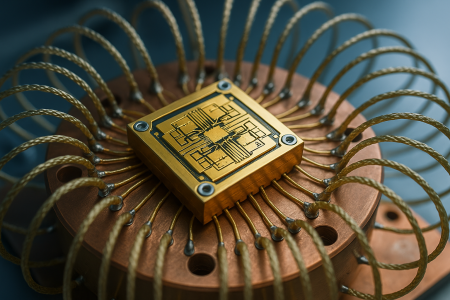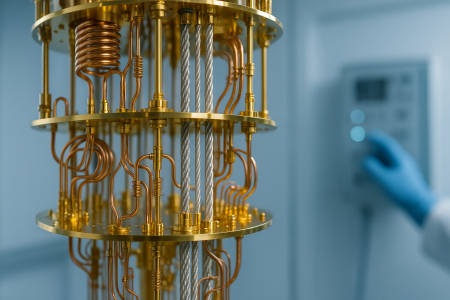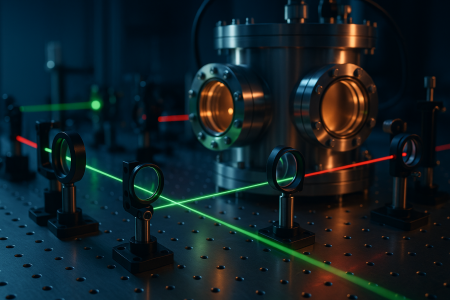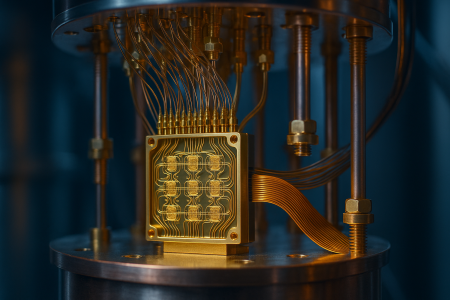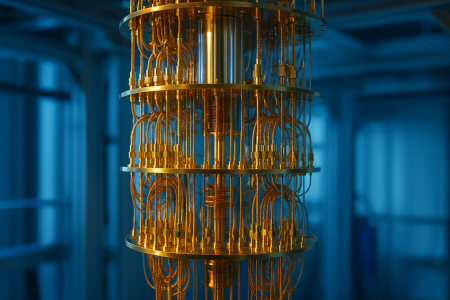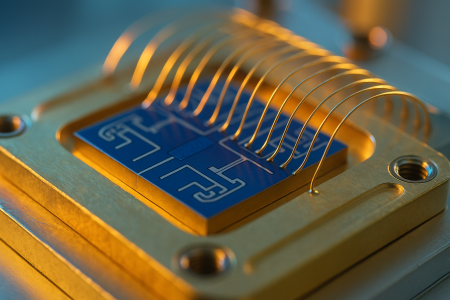

Quantum computing has a brutal financial shape. The science is hard, the hardware is exotic, and the payoff sits somewhere over a horizon that keeps moving. A company can spend hundreds of millions of dollars on dilution refrigerators, fabrication lines, laser systems, and physicists before it sells anything that resembles a product. That mismatch between cost and revenue defines how the whole field gets paid for.
Why quantum is not a normal startup bet
A software startup can launch on a laptop and a cloud account. A quantum hardware company needs a cleanroom, a cryogenics supply chain, and a team of people with doctorates in physics. The capital required to reach even a modest milestone dwarfs what most venture funds are comfortable writing for an unproven market. On top of that, the timeline to a genuinely useful, fault-tolerant machine is measured in years, not quarters.
That combination scares off some investors and attracts a particular kind of patient capital. The money that flows into quantum computing tends to come from people and institutions willing to accept a long, uncertain wait: deep-pocketed strategic investors, sovereign funds, large corporations, and governments with national-security and economic-competitiveness motives.
The venture and public-market route
Early-stage quantum companies still lean on traditional venture capital, but the rounds are unusually large for companies with little revenue. The reason is simple: you cannot build a quantum processor incrementally on a shoestring. You need the whole stack working before you can demonstrate anything meaningful.
Several pure-play quantum firms took an unusual path to the public markets. IonQ, Rigetti, and D-Wave all reached public listings through mergers with special-purpose acquisition companies, the so-called SPAC route that was popular as a way for pre-profit deep-tech firms to raise large sums quickly. Going public gave them access to broader capital pools, but it also exposed them to the impatience of public shareholders who expect to see progress and, eventually, sales. The stock-price volatility that followed is a reminder that public markets and decade-long research programs make awkward partners.
The corporate giants play by different rules
For IBM, Google, Microsoft, Amazon, and Intel, quantum computing is a line item inside an enormous research budget. They do not need outside funding to keep their programs alive, which lets them pursue long roadmaps without justifying each step to a venture board. That endurance is a real advantage. It also means the competitive landscape is lopsided: a small startup with a clever qubit design is competing against firms that can absorb years of losses without flinching.
Private megarounds and the photonics outlier
Some companies have deliberately stayed private and raised enormous sums from a mix of venture firms, corporate investors, and institutional backers. PsiQuantum, which is building a photonic machine intended to scale to a million qubits, became known for raising private rounds on a scale rarely seen in hardware. The logic behind those megarounds is that a credible shot at a fault-tolerant computer is worth a very large bet, and that drip-feeding such a project would simply waste years.
Governments as anchor investors
The largest and most durable source of money in the field is public. National programs across the United States, the European Union, the United Kingdom, China, Australia, Canada, and others have committed substantial sums to quantum research, hardware procurement, and lab infrastructure. Government money matters for more than its size. It funds the basic science and the university pipelines that companies later hire from, and it shows up as a customer. National labs and defense agencies buy or lease early machines, giving young companies revenue and a credibility stamp before a commercial market exists.
What the money is actually chasing
Investors and governments are not paying for today's noisy machines. They are paying for a position in a future where error-corrected quantum computers might transform chemistry, materials design, and optimization. The risk is that the timeline stretches longer than the patience of the people holding the checkbook. Funding rounds dry up, valuations sag, and a promising company can stall not because the physics failed but because the money ran out first.
That is the quiet tension running underneath every roadmap and press release. The hardest part of building a quantum computer may not be the qubits. It may be staying solvent long enough to finish.