
Picture a quantum processor as a small town where every qubit is a house, and the roads between houses are the only paths along which information can travel. Some towns are tightly knit, with a road from every house to every other. Most are sprawling suburbs where you can only reach your immediate neighbors. That map of who can talk to whom is called connectivity, and it quietly shapes what a quantum computer can actually do.
Why connectivity matters
Quantum algorithms are built from gates, and the most important ones are two-qubit gates that entangle a pair of qubits. The trouble is that a two-qubit gate only works between qubits that are physically coupled. If your algorithm needs qubit 3 to interact with qubit 40, but the hardware only links neighbors, the machine has to shuttle the quantum state across the chip first. It does this with a SWAP, an operation that exchanges the states of two adjacent qubits. Chain enough SWAPs together and you can move information anywhere, but each one costs you.
That cost is the SWAP tax. A SWAP is typically built from three two-qubit gates, and two-qubit gates are the noisiest, slowest operations in the whole repertoire. Every extra SWAP adds error and eats into the precious coherence window before the qubits forget their state. A circuit that looks short on paper can balloon once it is mapped onto real hardware that cannot connect the right qubits directly.
Two philosophies of layout
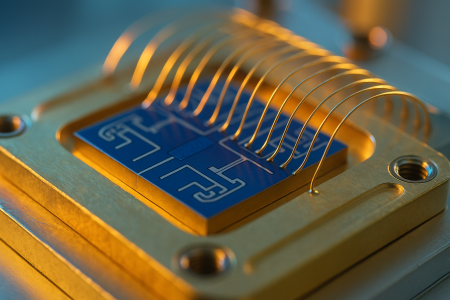
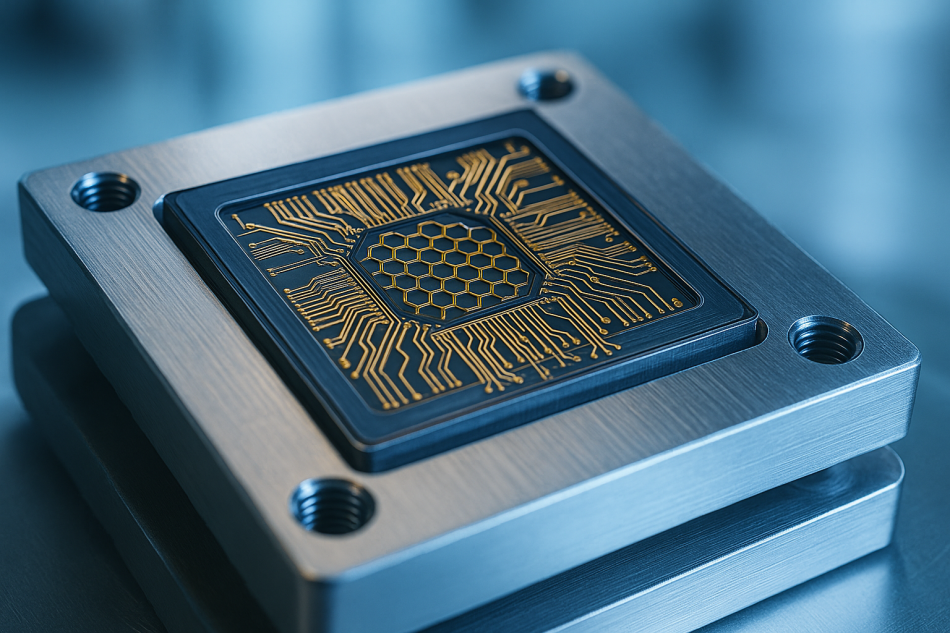
Hardware makers have split into camps over how to handle this. Superconducting processors, like the transmon chips from IBM and Google, are fabricated in two dimensions, so a qubit can only be wired to a handful of physical neighbors. IBM settled on a layout it calls the heavy-hexagonal lattice, where each qubit connects to two or three others. That sparse connectivity is deliberate. Packing in more couplings would reduce crosstalk, the unwanted leakage of signals between qubits, but it forces the compiler to insert more SWAPs to route distant interactions.
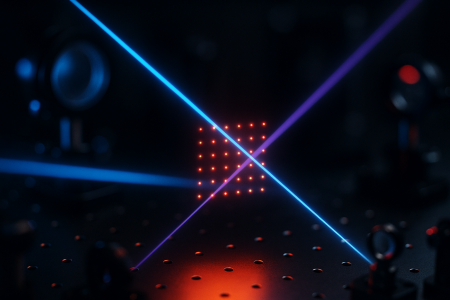
Trapped-ion machines sit at the other extreme. Because the ions float in an electromagnetic trap and are manipulated by lasers, any ion can in principle interact with any other in the same chain. This all-to-all connectivity is a genuine advantage. A circuit that would demand a forest of SWAPs on a superconducting grid can run with far fewer operations on an ion trap. Companies like Quantinuum and IonQ lean on this when they argue that raw qubit count is the wrong number to fixate on. Neutral-atom systems, which arrange atoms with optical tweezers, can also reshuffle their geometry, giving them flexible connectivity that grid-based chips lack.
The compiler's quiet job
Between the algorithm a researcher writes and the gates the hardware runs sits a piece of software called the transpiler, and one of its hardest tasks is solving the routing problem. Given a circuit and a connectivity map, it has to decide where to place each logical qubit and when to insert SWAPs so that every two-qubit gate lands on a connected pair. Finding the absolute best routing is computationally brutal, so transpilers rely on clever heuristics. A good routing pass can be the difference between a result that means something and a smear of noise.
This is why two machines with identical qubit counts and gate fidelities can perform very differently. The one with richer connectivity, or smarter routing software, wastes fewer operations getting qubits into position to interact.
Connectivity in the error-corrected future
The stakes rise sharply once you start building logical qubits out of many physical ones. Quantum error-correcting codes, including the popular surface code, assume a specific pattern of nearest-neighbor interactions. A two-dimensional grid happens to suit the surface code well, which is part of why superconducting vendors tolerate sparse connectivity. But operations between logical qubits, the ones that actually run useful computations, still demand careful routing across the chip. The SWAP tax does not disappear with error correction. It moves up a level and shows up as the overhead of moving logical information around.
None of this means a sparse map is doomed or an all-to-all map is destined to win. Dense connectivity brings its own headaches in crosstalk, calibration, and the sheer difficulty of scaling an ion chain to thousands of qubits. The point is subtler. When you compare quantum computers, the headline qubit number tells you almost nothing about how many useful operations you can squeeze out before noise takes over. The wiring diagram, and the software that navigates it, often matters just as much.