Processors & Chips

The CLOPS Count: How Fast a Quantum Computer Actually Runs
 Rafayel
Ask what makes a quantum computer good and most people reach for two numbers: how many qubits it has, and how clean those qubits are. Both matter. Nei...
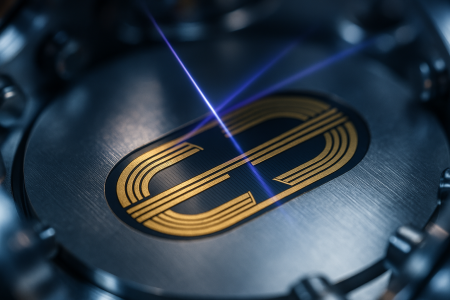
The Racetrack Trap: Quantinuum's Ions That Circle to Compute
Most quantum computers freeze their qubits in place. A superconducting chip nails each one to a fixed spot on the silicon and wires it up for life. Qu...

The Frequency Collision: When Two Qubits Want the Same Note
Picture a choir where every singer is assigned a fixed note at birth and can never change it. As long as the voices stay spread across the scale, harm...

The SWAP Shuffle: How a Quantum Program Bends to Fit the Chip
Write a quantum algorithm on paper and you can pretend any qubit can interact with any other. Real hardware is not so generous. On a superconducting c...
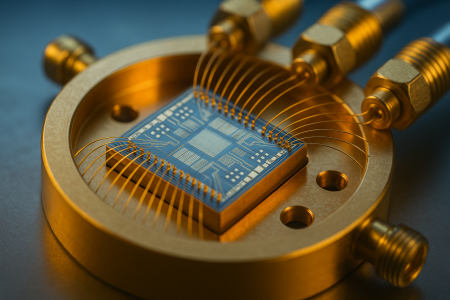
The Cross-Resonance Gate: How IBM Entangles Qubits That Never Move
Every useful quantum program eventually needs two qubits to talk. A single qubit can rotate and twirl all day, but entanglement, the resource that mak...
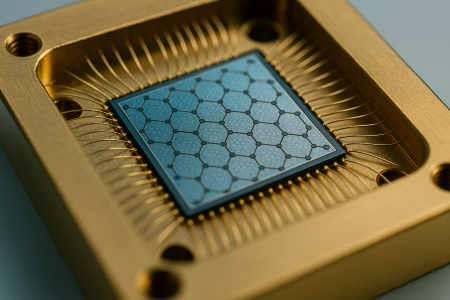
The Heavy-Hex Grid: Why IBM Spread Its Qubits Thin
Look at a photograph of one of IBM's quantum processors and you might expect a dense mesh, every qubit wired to as many neighbors as possible. Instead...
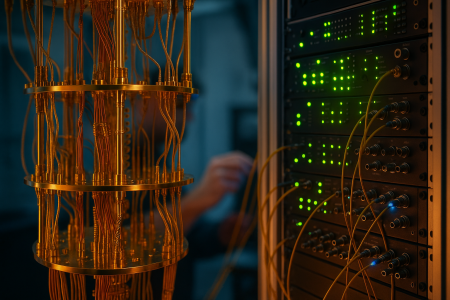
The CLOPS Count: How Fast a Quantum Computer Really Runs
Ask how good a quantum computer is and people reach for two numbers: how many qubits it has and how clean its gates are. Both matter. Neither tells yo...

The Randomized Benchmark: How a Quantum Computer Grades a Single Gate
Ask a quantum engineer how good their machine is and you will get a lot of numbers. Qubit counts, coherence times, connectivity maps. But the number t...
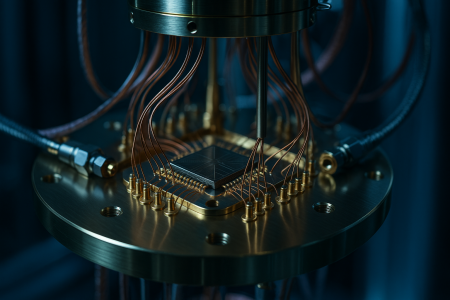
The Cross-Entropy Score: How Google Graded Its Own Quantum Machine
When a quantum computer runs a job no classical machine can copy, an awkward question follows: how do you check that it got the answer right? If the w...

The Transpiler: How a Quantum Program Gets Squeezed Onto Real Qubits
Write a quantum program and you get to imagine a perfect machine. Any qubit can talk to any other. Your gates come in whatever flavor you like. Nothin...
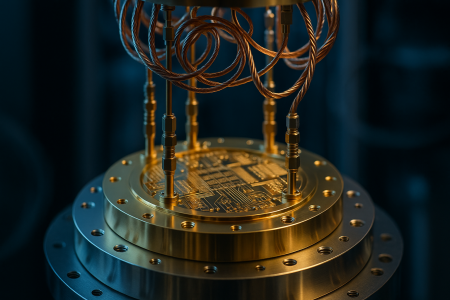
The Quantum Volume Test: Cramming a Whole Machine Into One Number
Ask how good a quantum computer is and the easy answer is a qubit count. Fifty, a hundred, a thousand. It sounds like progress you can rank. But a mac...

The One-Way Computer: Running a Quantum Program by Measuring It Away
Ask how a quantum computer works and you will usually hear a familiar story. You prepare some qubits, apply a choreographed sequence of gates that rot...

The Heavy-Hex Lattice: Why IBM Wired Its Qubits Sparingly
Look at a photograph of one of IBM's superconducting quantum chips and you might expect a dense mesh, every qubit shaking hands with as many neighbors...
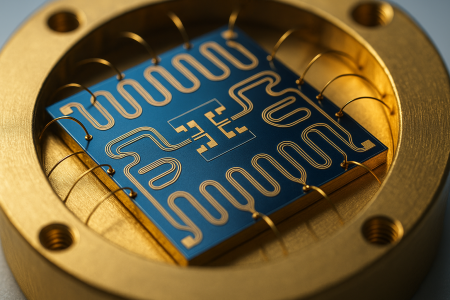
The Frequency Collision: When Two Qubits Land Too Close
Build a superconducting quantum processor out of fixed-frequency transmons and you inherit a problem that has nothing to do with quantum mechanics and...
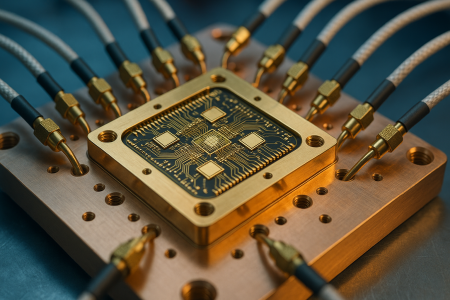
The Cross-Resonance Gate: Entangling Qubits Without Turning a Dial
Every quantum computer needs a way to make two qubits talk to each other. Without a reliable two-qubit gate, you can flip individual qubits all day an...
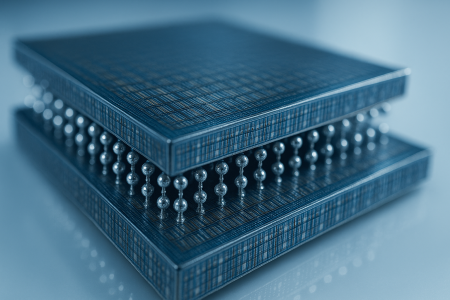
The Flip-Chip Stack: How Superconducting Qubits Went 3D
For years, a superconducting quantum chip looked like a single tile of silicon or sapphire with everything printed on one face. The qubits, the resona...

The Supremacy Rematch: When Classical Computers Fight Back
Every so often a quantum computing group announces that its machine has done something no classical computer can match. The task is usually obscure, t...

The Benchmark Wars: Why Quantum Computers Can't Agree on a Yardstick
Ask a quantum computing company how good its machine is and you will get a number. The trouble is that no two companies quote the same number. One bra...

Circuit Knitting: Faking a Bigger Quantum Computer With Classical Glue
Every quantum processor has a hard ceiling: the number of qubits etched onto its chip. If your algorithm needs 40 qubits and your machine has 30, you...

The Transpiler: How Your Quantum Program Gets Rewritten Before It Runs
Write a quantum program and you are, in a sense, lying to yourself. You draw a tidy circuit with clean gates connecting any qubit to any other, using...
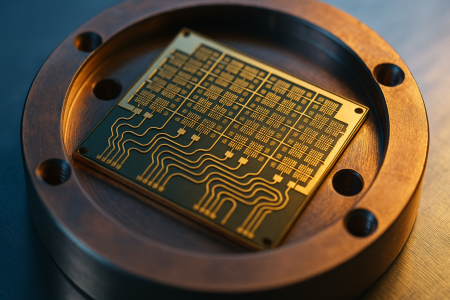
The Frequency Crowding Problem: When Qubits Run Out of Room on the Dial
Every fixed-frequency transmon on a superconducting quantum chip is a tiny resonator that answers to one particular pitch. Send in a microwave pulse a...