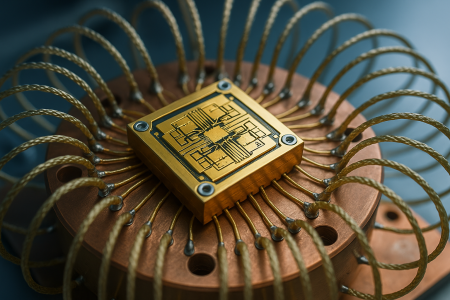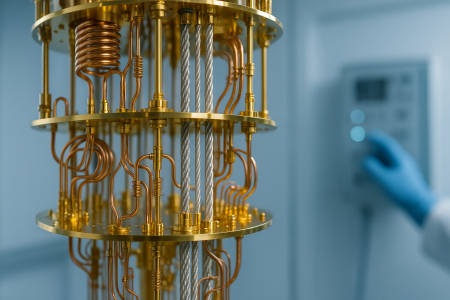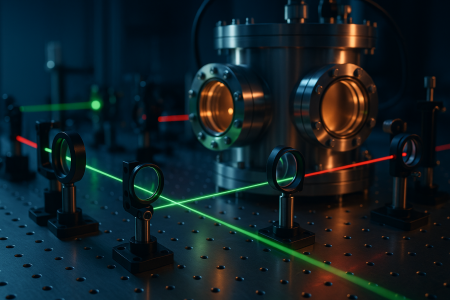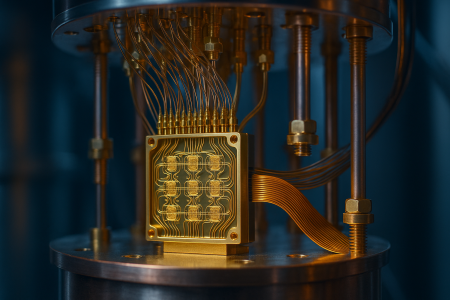

Ask a quantum computing company how good its machine is and you will get a number. The trouble is that no two companies quote the same number. One brags about qubit count, another about quantum volume, a third about "algorithmic qubits," and a fourth about how many circuits it can run per second. Each metric is real. Each is also chosen, at least a little, to flatter the hardware that produced it. Sorting through them is the quiet, unglamorous work behind every quantum press release.
Why the qubit count lies
The most tempting number is the simplest: how many qubits does the chip have? It is also the least useful on its own. A processor with 1,000 noisy qubits that lose their quantum state after a handful of operations can do less real computing than a machine with 50 clean ones. Qubit count says nothing about how often gates fail, how well qubits stay entangled, or whether every qubit can even talk to the ones it needs to. Treating it as a scoreboard is like ranking cars by the number of cylinders while ignoring whether the engine runs.
That gap is what pushed the field toward composite metrics that fold quality and quantity together.
Quantum volume: a single square number
IBM introduced quantum volume to answer a specific question: what is the largest square circuit a machine can run and still get the right answer more often than not? A square circuit uses as many qubits as it has layers of gates, so pushing the number higher demands both more qubits and lower error rates at once. The result is reported as a power of two. A quantum volume of 128 means the machine handled a 7-by-7 circuit reliably; 512 means 9-by-9.
The appeal is that you cannot cheat it by adding junk qubits. The limitation is that it saturates. Once machines cross a few hundred qubits, running the random test circuits that define quantum volume becomes so hard to verify classically that the number stops climbing in any meaningful way. It was designed for the noisy, small-scale era, and it is starting to age out of it.
Algorithmic qubits and the honesty problem
IonQ popularized "algorithmic qubits," a metric meant to reflect how many qubits you can actually put to work on a useful algorithm after accounting for error. It is closer to what a user cares about than raw counts. But it also leans on error mitigation techniques that clean up results after the fact, and critics argue that inflates the figure beyond what the bare hardware delivers. The debate is less about arithmetic and more about where you draw the line between the machine and the software crutches propping it up.
Speed enters the picture
None of those metrics mention time. A machine can have superb fidelity and still be useless if it takes a week to finish a job that needs thousands of repetitions. That is why IBM added CLOPS, or circuit layer operations per second, to capture throughput. It matters enormously in practice, because real algorithms run the same circuit thousands of times to build up statistics. A trapped-ion machine with beautiful gate quality but slow operations can lose on wall-clock time to a faster superconducting chip, and CLOPS is where that shows up.
The metrics that actually predict the future
For anyone tracking progress toward fault-tolerant machines, the numbers that matter most are the plainest ones:
- Two-qubit gate fidelity, because entangling operations are where most errors are born.
- Coherence time, how long a qubit holds its state before decaying.
- Connectivity, whether qubits can interact directly or need costly shuffling.
- Logical error rate, the error left over after error correction, which is the only number that counts once machines get large.
That last one is increasingly the honest benchmark. As companies demonstrate error-corrected logical qubits, the conversation is shifting from "how many physical qubits" to "how low is the logical error, and does it keep falling as we scale the code." A machine whose logical error rate drops as you add more physical qubits is on the fault-tolerant path. One where it does not is stuck, no matter how impressive its headline count.
Reading a press release skeptically
When a company announces a record, the useful reflex is to ask which metric moved and which stayed silent. A giant qubit count with no fidelity figure is a warning sign. A quantum volume claim on a 20-qubit machine tells you little about a 1,000-qubit roadmap. The benchmark wars will not end soon, because a universal yardstick would inevitably crown a winner and cost everyone else their favorite talking point. Until then, the best defense is knowing what each number leaves out.