superconducting qubits
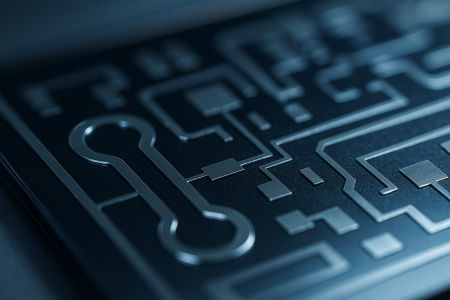
The Tantalum Turn: The Metal That Stretched a Qubit's Life
 Rafayel
A superconducting qubit is a tiny electrical circuit that behaves like an artificial atom. Cool it to a fraction of a degree above absolute zero and i...
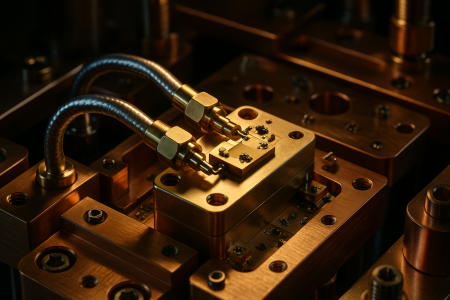
The Quiet Amplifier: Boosting a Qubit's Whisper Without Drowning It in Noise
Picture trying to hear a single person whisper from across a stadium, with the crowd roaring. That is roughly the challenge of reading out a supercond...
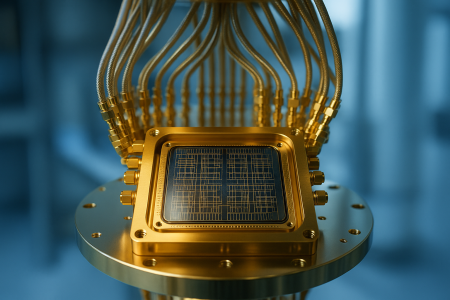
The Threshold Crossing: When More Qubits Finally Meant Fewer Errors
There is a moment every quantum computing engineer has been chasing since the 1990s, and it is almost perverse in how simple it sounds. Take a single...
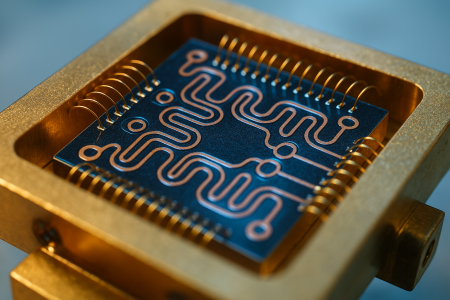
The Tunable Coupler: The Switch That Turns Entanglement On and Off
Put two superconducting qubits close enough to talk and you have the beginning of a quantum processor. The trouble is that they never stop talking. A...
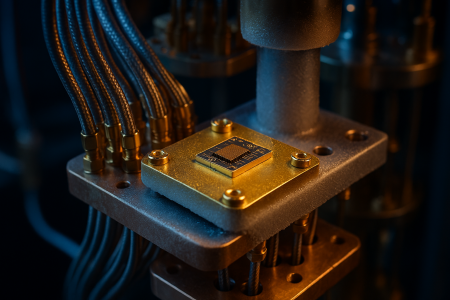
The Cold Controller: Intel's Chip That Runs Qubits From Inside the Fridge
Every superconducting or spin qubit lives at the bottom of a dilution refrigerator, a few thousandths of a degree above absolute zero. But the electro...
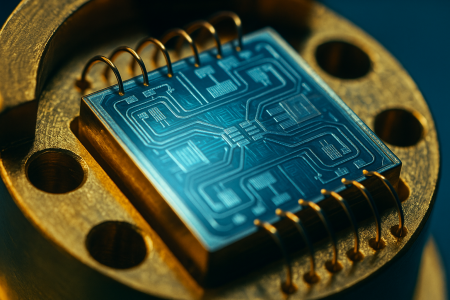
The Leakage Ladder: When a Qubit Climbs Out of Its Lane
A qubit is a promise of simplicity. Two states, zero and one, and nothing in between to worry about. That promise is what makes the whole edifice of q...
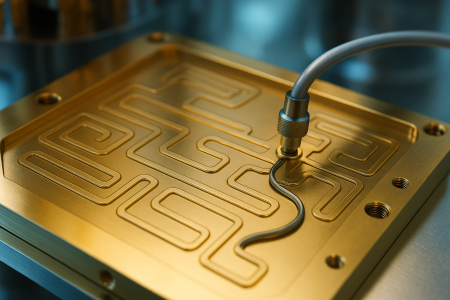
The Shared Wire: How One Cable Reads a Dozen Qubits at Once
Every quantum computation ends the same way: you have to look. After the gates are done, each qubit holds a fragile superposition that collapses the i...
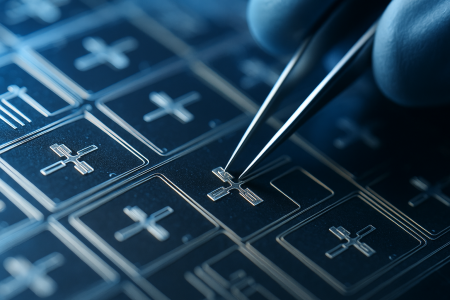
The Josephson Junction: The Flimsy Sandwich Behind Every Superconducting Qubit
Strip away the golden chandelier of a dilution fridge, the forest of coaxial cables, and the control electronics humming in the next room, and a super...
The Reset Button: How a Qubit Gets Wiped Clean Between Runs
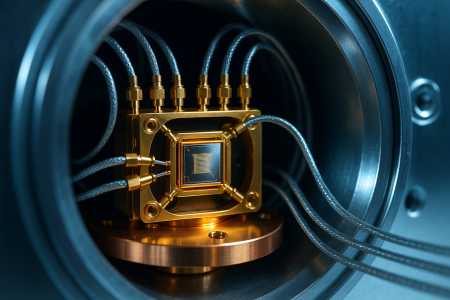
Every quantum program begins with a demand that sounds trivial and turns out to be surprisingly hard: start from zero. Not an approximate zero, not a...

The Fluxonium: The Heavy Qubit Betting on Deeper Protection
The transmon runs most of the superconducting quantum computers you can rent in the cloud today. It is simple, reliable, and well understood. But it h...

The Frequency Collision: When Two Qubits Want the Same Note
Picture a choir where every singer is assigned a fixed note at birth and can never change it. As long as the voices stay spread across the scale, harm...
The Cross-Resonance Gate: How IBM Entangles Qubits That Never Move
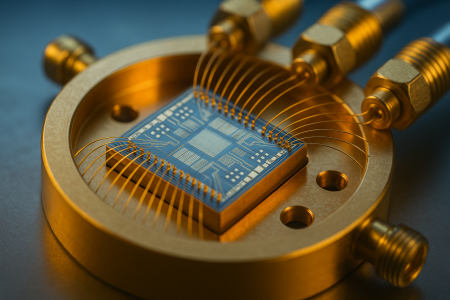
Every useful quantum program eventually needs two qubits to talk. A single qubit can rotate and twirl all day, but entanglement, the resource that mak...
The Unimon: Finland's Qubit That Rethinks the Transmon
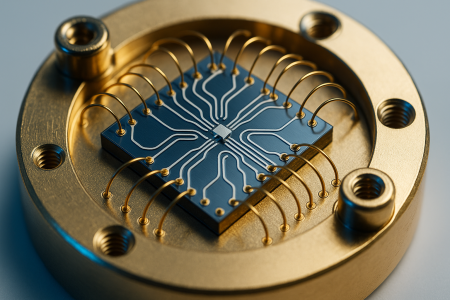
Most superconducting quantum computers run on a qubit called the transmon, a design so dominant that it powers nearly every machine IBM, Google, and R...
The Surface Code: The Checkerboard That Guards a Single Qubit
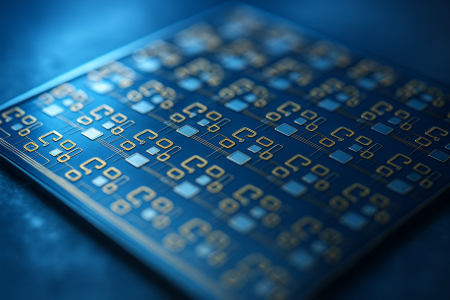
Ask an engineer at Google, IBM, or almost any lab building superconducting qubits which error-correcting code they plan to run, and you will hear the...
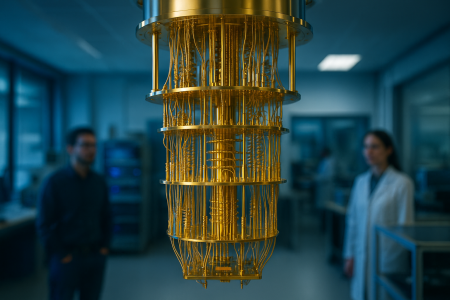
The Zuchongzhi Run: China's Superconducting Bid for Quantum Advantage
When people talk about the race to a useful quantum computer, the conversation usually orbits a handful of American and European names. But one of the...
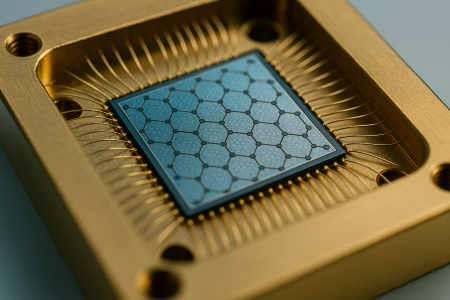
The Heavy-Hex Grid: Why IBM Spread Its Qubits Thin
Look at a photograph of one of IBM's quantum processors and you might expect a dense mesh, every qubit wired to as many neighbors as possible. Instead...
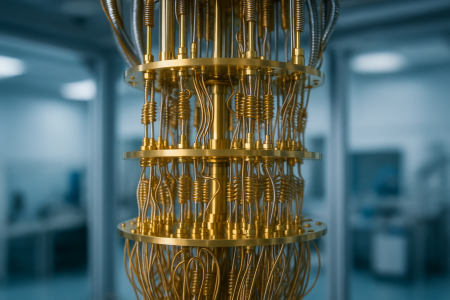
The Dilution Fridge: The Golden Chandelier That Chills Qubits Near Absolute Zero
Look at almost any photo of a superconducting quantum computer and you will not see the chip. What you see is the fridge: a gleaming brass-and-gold st...
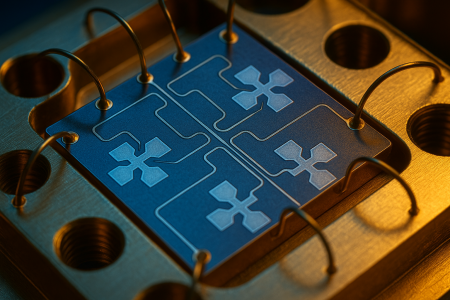
The Transmon: The Charge-Shy Qubit That Runs the Cloud
If you log into a quantum computer today through IBM's cloud, Google's lab, or a Rigetti processor, odds are you are talking to a transmon. It is the...
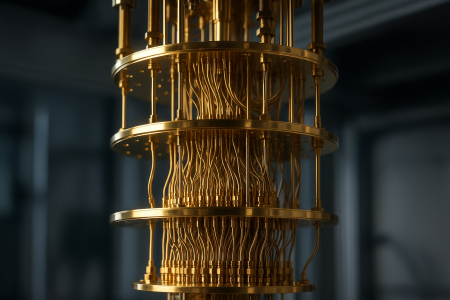
The Wiring Wall: Why Every New Qubit Needs Its Own Cable
Look at a photograph of a superconducting quantum computer and your eye goes to the golden chandelier, tier after tier of plates and coiled cables des...
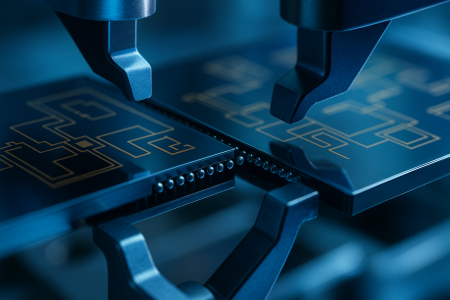
The Flip-Chip Stack: Why Qubits Moved Into a Second Story
For years, a superconducting quantum processor lived on a single flat piece of silicon or sapphire. The qubits sat on the surface, and so did everythi...
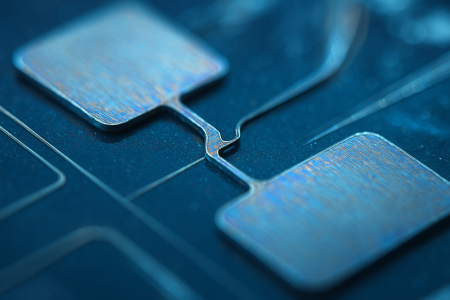
The Two-Level System: The Tiny Flaw That Steals a Qubit's Life
A superconducting qubit is, at heart, a beautifully engineered circuit. But it lives on a chip made of imperfect materials, and those imperfections fi...