

The Lattice Surgery: How Logical Qubits Join Hands to Compute
Building one logical qubit out of a grid of physical qubits is hard, but it is a solved idea on paper. The surface code spreads a single unit of quant...
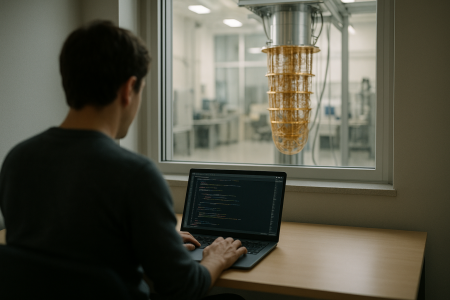
The Cloud Queue: How You Actually Rent Time on a Quantum Computer
Buy a quantum computer and you are also buying a dilution refrigerator, a rack of microwave electronics, a team of physicists to keep it calibrated, a...
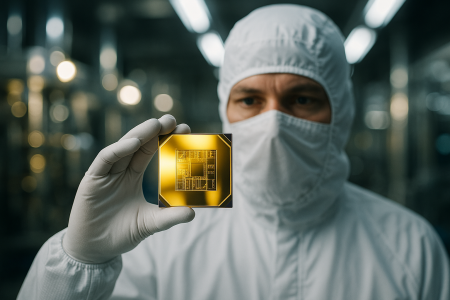
The Fab-1 Bet: Rigetti's Wager on Owning Its Own Qubit Foundry
Ask most people to name a quantum computing company and IBM or Google comes up first. Rigetti Computing is smaller and scrappier, but it made a decisi...
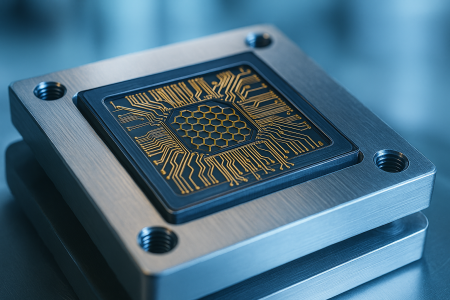
The SWAP Tax: When Qubits Can't Talk to Each Other
Picture a quantum processor as a small town where every qubit is a house, and the roads between houses are the only paths along which information can...
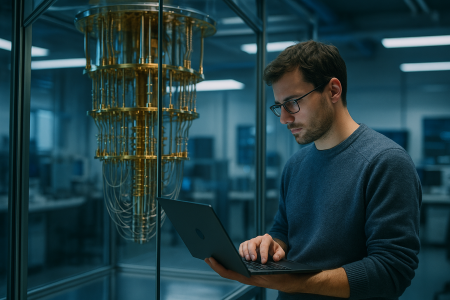
What Quantum Computers Are Actually Useful For Right Now
Ask a vendor what their quantum computer can do and you will hear a long list: drug discovery, battery design, logistics, financial modeling, climate...
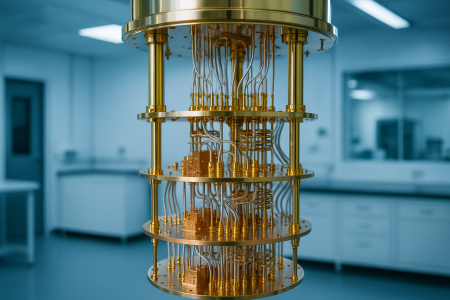
The Annealer's Wager: D-Wave's Bet That You Don't Need Gates
Ask most people to picture a quantum computer and they imagine gates: crisp logical operations flipping and entangling qubits one step at a time, like...
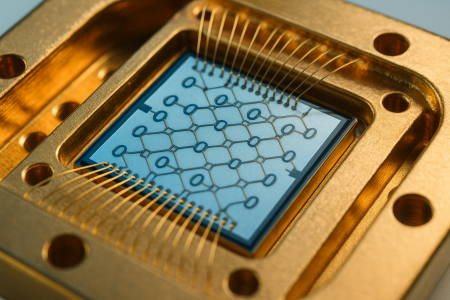
The Heavy-Hex Lattice: Why IBM Gave Its Qubits Fewer Neighbors
Look at a photograph of an IBM quantum processor and you will notice something odd about the pattern. The qubits are not packed into a tidy square gri...

Reading the Roadmaps: What IBM, Google, and Quantinuum Promise
Almost every serious quantum computing company now publishes a roadmap. These are glossy diagrams with named chips, dated milestones, and confident ar...
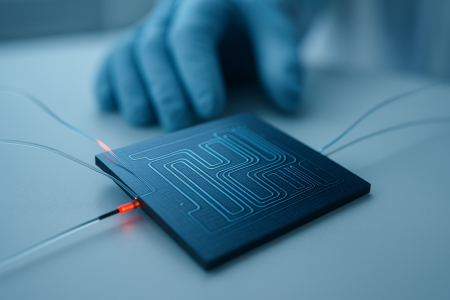
The Photonic Gamble: Building a Quantum Computer Out of Light
Walk into most quantum computing labs and you will find a chandelier of gold-plated plumbing, cooled to a hair above absolute zero, or a vacuum chambe...

The Molecule Machine: Why Chemistry Is Quantum Computing's Best First Bet
Ask a quantum physicist which problem a quantum computer is actually built for, and the answer is rarely codebreaking or stock portfolios. It is chemi...
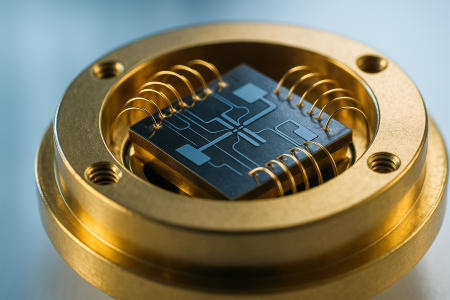
The Leakage Problem: When a Qubit Sneaks Out of Its Own Two Levels
The whole premise of a qubit is that it holds one bit of quantum information in two states, conventionally labeled 0 and 1. It is a tidy abstraction....
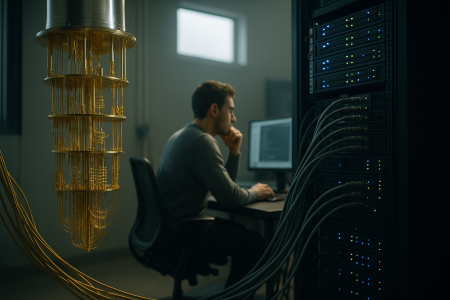
The Variational Loop: How a Quantum Computer Asks a Classical One for Help
For all the talk of quantum machines cracking chemistry and optimization, the honest truth about today's hardware is that it cannot run a long, clean...
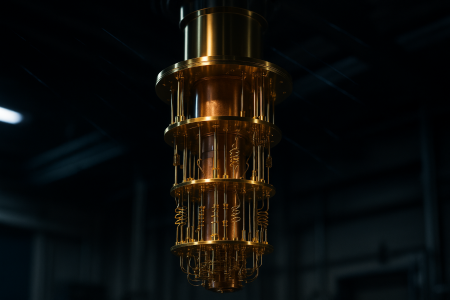
The Cosmic Ray Strike: When One Particle Blanks a Whole Quantum Chip
Quantum error correction rests on a quiet assumption: that mistakes happen one qubit at a time, more or less at random, in scattered spots a code can...

The Rydberg Blockade: How Neutral Atoms Say No to a Second Kick
In a neutral-atom quantum computer, the qubits are single atoms held a few microns apart by lasers. They do not touch. They do not share a wire. Left...
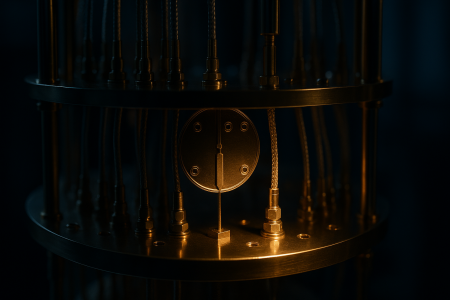
The Mid-Circuit Peek: Reading a Qubit While the Program Runs
For years the rule of a quantum program was simple: load the qubits, run the gates, then measure everything at the finish. Measurement was the wall yo...

The Monte Carlo Shortcut: Why Banks Keep One Eye on Quantum Computers
Ask a bank how it prices a complicated derivative or measures the risk in a portfolio, and the answer usually involves brute force. The math is too ta...

The Color Code: The Triangular Rival to the Surface Code
Ask most engineers how a quantum computer will protect its fragile information, and they will point to the surface code, the checkerboard lattice that...
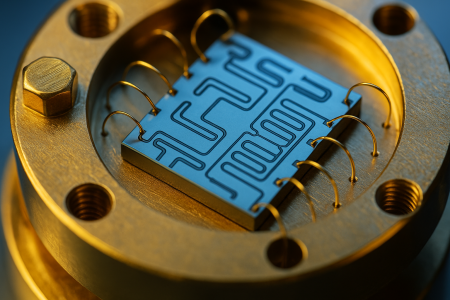
The Purcell Filter: Guarding a Qubit From Its Own Antenna
Every superconducting qubit faces a quiet contradiction. To learn what state it is in, engineers couple it to a small microwave resonator and bounce a...
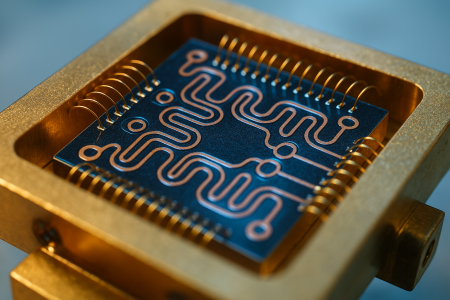
The Tunable Coupler: The Switch That Turns Entanglement On and Off
Put two superconducting qubits close enough to talk and you have the beginning of a quantum processor. The trouble is that they never stop talking. A...
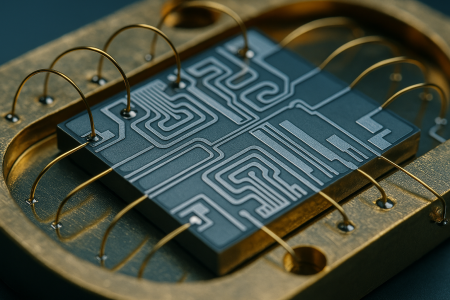
The Purcell Filter: The Guard That Lets a Qubit Be Read Without Being Killed
Every superconducting qubit faces the same awkward trade-off. To find out what state it is in, you have to connect it to the outside world through a r...

The Tweezer Array: How Lasers Assemble a Grid of Atom Qubits
Most quantum computers arrive with their qubits already built in. A superconducting chip is fabricated in a cleanroom, its qubits etched and deposited...