

The Neutral-Atom Bet: How Lasers and Single Atoms Joined the Quantum Race
For years the quantum hardware conversation came down to two camps: superconducting circuits, championed by IBM and Google, and trapped ions, refined...
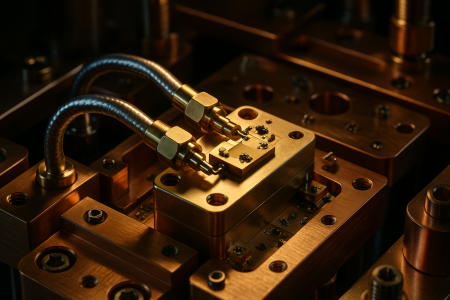
The Quiet Amplifier: Boosting a Qubit's Whisper Without Drowning It in Noise
Picture trying to hear a single person whisper from across a stadium, with the crowd roaring. That is roughly the challenge of reading out a supercond...
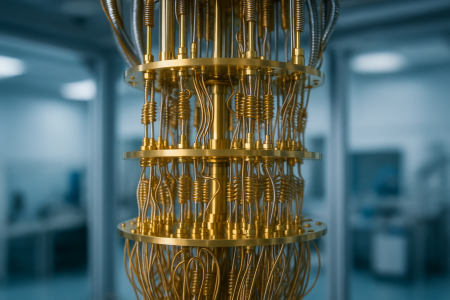
The Dilution Fridge: The Golden Chandelier That Chills Qubits Near Absolute Zero
Look at almost any photo of a superconducting quantum computer and you will not see the chip. What you see is the fridge: a gleaming brass-and-gold st...
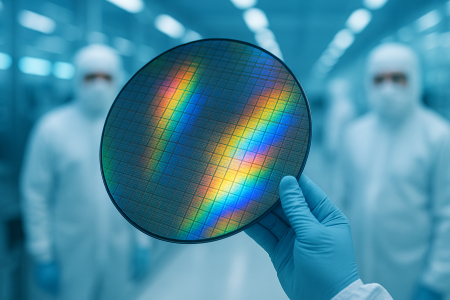
The Silicon Spin Qubit: Intel's Wager on the Transistor's Cousin
Walk through the physics of most quantum computers and you meet exotic hardware: superconducting loops chilled to a whisper above absolute zero, or si...

The Two-Level System: The Tiny Flaw That Steals a Qubit's Life
A superconducting qubit is, at heart, a beautifully engineered circuit. But it lives on a chip made of imperfect materials, and those imperfections fi...

The Nitrogenase Riddle: The Enzyme Quantum Computers Hope to Decode
Every spring, farmers spread fertilizer made in factories that run hot enough to melt lead and squeeze gas at hundreds of times atmospheric pressure....
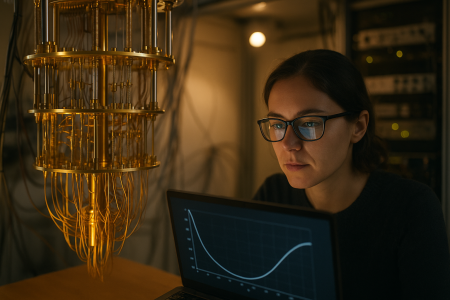
The Variational Loop: The Hybrid Trick That Keeps Noisy Quantum Computers Useful
Ask a quantum computing researcher what actually runs on their machine right now, and there is a good chance the answer involves a variational algorit...

The Trapped-Ion Edge: Why Floating Atoms Make Such Good Qubits
If you could shrink down and peer inside one of the quantum computers built by IonQ or Quantinuum, you would not see a chilled silicon chip humming wi...
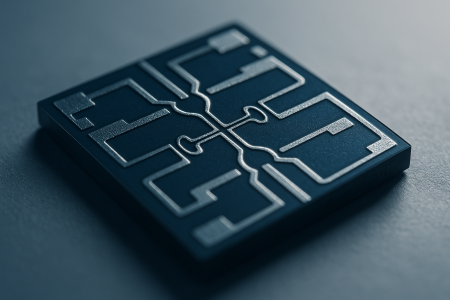
The Josephson Junction: The Weak Link at the Heart of a Qubit
Strip a superconducting quantum computer down to its most essential part and you arrive at something almost comically small: a gap in a wire. Two piec...
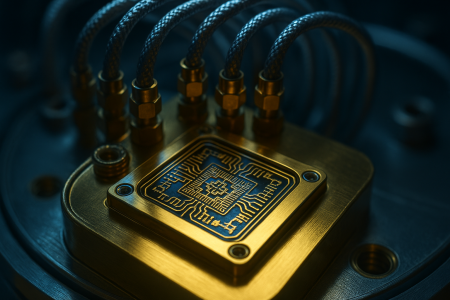
The Echo Trick: How Idle Qubits Stay Sharp by Being Nudged in Rhythm
Not every qubit in a quantum program is busy at once. While one pair of qubits entangles or a measurement reads out, others sit idle, holding a fragil...
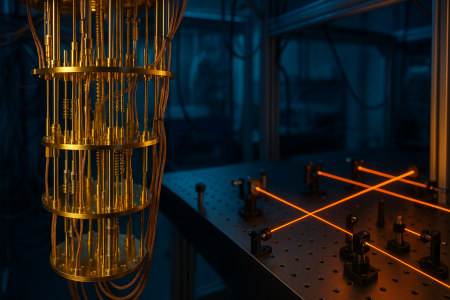
Five Ways to Build a Qubit, and Why Nobody Has Won Yet
Ask ten engineers what a quantum computer should be made of and you may get ten different answers. Unlike the classical computing industry, which stan...

The Fluxonium: The Heavy Qubit Betting on Deeper Protection
The transmon runs most of the superconducting quantum computers you can rent in the cloud today. It is simple, reliable, and well understood. But it h...
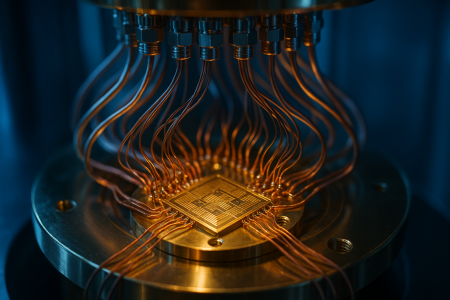
The Trotter Step: How a Quantum Computer Chops Time to Simulate Nature
Ask a physicist what a quantum computer is actually good for, and sooner or later the answer circles back to simulation. Richard Feynman's original 19...

The Mitigation Gambit: Getting Useful Answers From Noisy Qubits
Quantum error correction gets the headlines, but it is not what most quantum computers actually use today. Building a single fault-tolerant logical qu...

The Optimization Illusion: Why Quantum's Most Hyped Use Case Is So Hard
Ask a business leader what they want a quantum computer to do, and the answer is almost always some version of the same thing: find the best route, th...
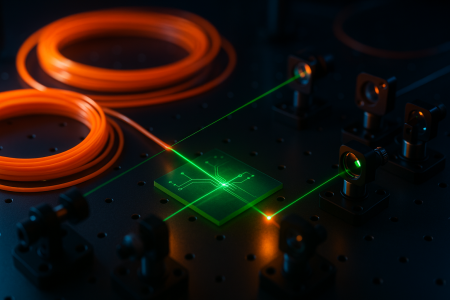
The Squeezed-Light Gambit: Xanadu's Bet on Photons You Can Network
Walk into most quantum labs and you find the same centerpiece: a gold chandelier hanging inside a fridge colder than deep space, guarding a chip of su...

The SWAP Shuffle: How a Quantum Program Bends to Fit the Chip
Write a quantum algorithm on paper and you can pretend any qubit can interact with any other. Real hardware is not so generous. On a superconducting c...