

The Erasure Trick: Turning Quantum Errors Into Blanks You Can Spot
Not all quantum errors are created equal. There is a big difference between a qubit that quietly flips the wrong way and a qubit that stops being a qu...
The Overhead Diet: New Error-Correcting Codes That Shrink Quantum Machines
Every serious plan to build a useful quantum computer runs into the same wall: error correction is expensive. Qubits are fragile, they drift and flip...

The Erasure Trick: Turning a Qubit's Errors Into Flags You Can See
Quantum error correction has a dirty secret: most of the time, the machine doesn't know an error happened. A stray microwave photon or a mistimed puls...
The CLOPS Count: How Fast a Quantum Computer Really Runs
Ask how good a quantum computer is and people reach for two numbers: how many qubits it has and how clean its gates are. Both matter. Neither tells yo...

The Frequency Collision: When Two Qubits Want the Same Note
Picture a choir where every singer is assigned a fixed note at birth and can never change it. As long as the voices stay spread across the scale, harm...

The Grid State: The Qubit Hidden in an Oscillator's Wiggles
Ask most engineers to draw a qubit and they will sketch two levels, a ground state and an excited state, with the quantum information living in the ba...
The Loading Dock: Why Getting Data Into a Quantum Computer Is So Hard
Talk about quantum computing usually fixates on the answer coming out of the machine. Far less attention goes to the awkward question at the start of...
The Annealing Detour: Why D-Wave Skipped the Gate Model
Most quantum computers you read about are trying to be universal. They chain gates together, one operation at a time, to run any algorithm you can com...

The Josephson Junction: The Flimsy Sandwich Behind Every Superconducting Qubit
Strip away the golden chandelier of a dilution fridge, the forest of coaxial cables, and the control electronics humming in the next room, and a super...
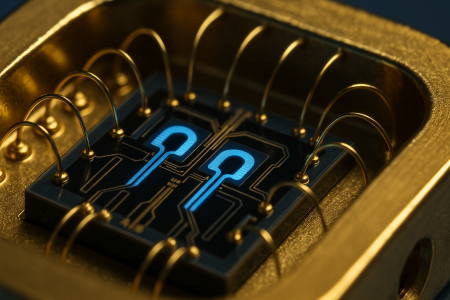
The Erasure Trick: Turning Qubit Errors Into Known Blanks
An error you can see coming is easier to handle than one that strikes in the dark. That simple intuition is behind one of the more interesting shifts...
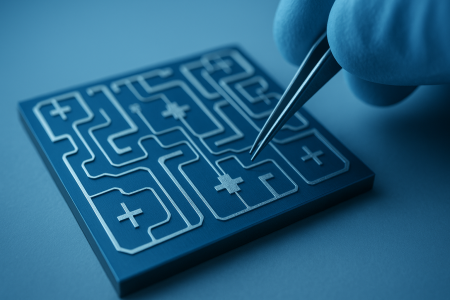
The Josephson Junction: The Tiny Switch at the Heart of the Qubit
Strip away the gold-plated wiring, the refrigerators the size of a phone booth, and the racks of control electronics, and most of today's quantum comp...
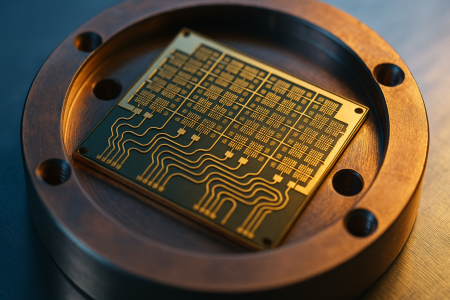
The Frequency Crowding Problem: When Qubits Run Out of Room on the Dial
Every fixed-frequency transmon on a superconducting quantum chip is a tiny resonator that answers to one particular pitch. Send in a microwave pulse a...
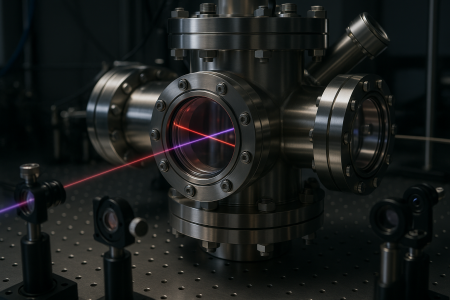
The Algorithmic Qubit: IonQ's Case for Counting Quality
Ask most people how powerful a quantum computer is and they will reach for a single number: how many qubits it has. IonQ, the trapped-ion company that...

The Tantalum Turn: How Swapping Metals Bought Qubits More Time
For most of the last decade, the superconducting qubit was a story about aluminum and niobium. Those were the metals that companies like IBM, Google,...

The Quantum Money Trail: Who Pays to Build a Quantum Computer
Quantum computing has a brutal financial shape. The science is hard, the hardware is exotic, and the payoff sits somewhere over a horizon that keeps m...
The Break-Even Line: When a Protected Qubit Outlives Its Parts
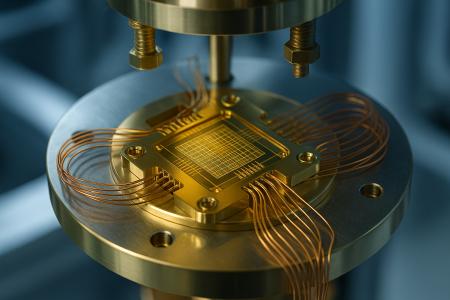
Quantum error correction has a promise baked into its name: take many flawed qubits, wire them into a code, and get one qubit that behaves better than...

The Barium Switch: Why IonQ Traded One Ion for a Brighter One
Every trapped-ion quantum computer begins with a choice that most users never see: which atom to use. The qubit is a single charged ion held in place...

The Dilution Refrigerator: Chilling Qubits a Hair Above Absolute Zero
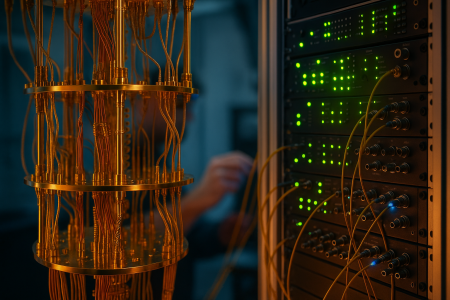
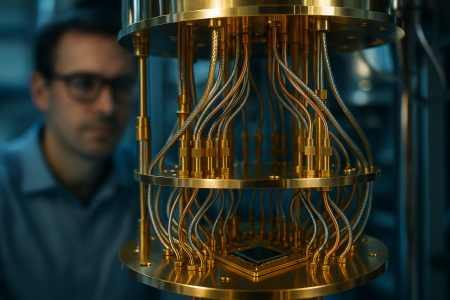
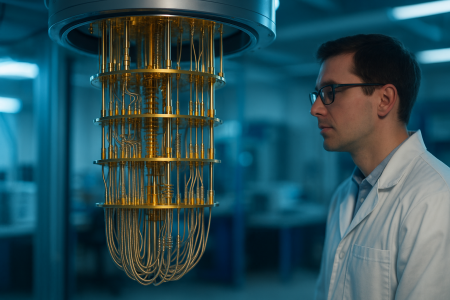
Look at a photo of a superconducting quantum computer and the thing that catches your eye is rarely the chip. It is the chandelier: a tiered tower of...
The Flip-Chip Stack: How Superconducting Qubits Went 3D
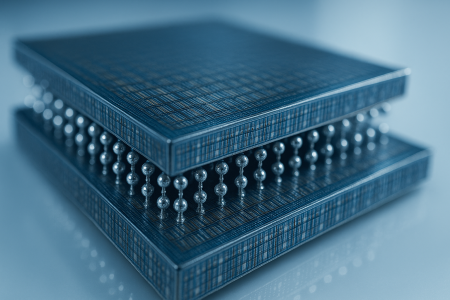
For years, a superconducting quantum chip looked like a single tile of silicon or sapphire with everything printed on one face. The qubits, the resona...
The Cross-Resonance Gate: How IBM Entangles Qubits That Never Move
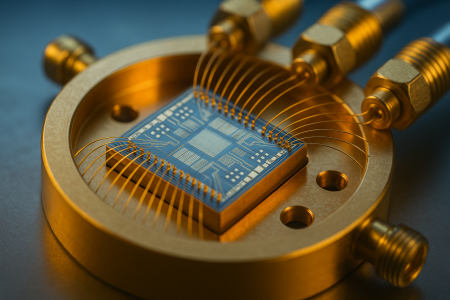
Every useful quantum program eventually needs two qubits to talk. A single qubit can rotate and twirl all day, but entanglement, the resource that mak...

The SPAC Gamble: How Quantum Companies Went Public Before the Hardware Did
Most deep-tech companies wait until they have a product before they ring the opening bell. Quantum computing took the opposite route. Starting around...