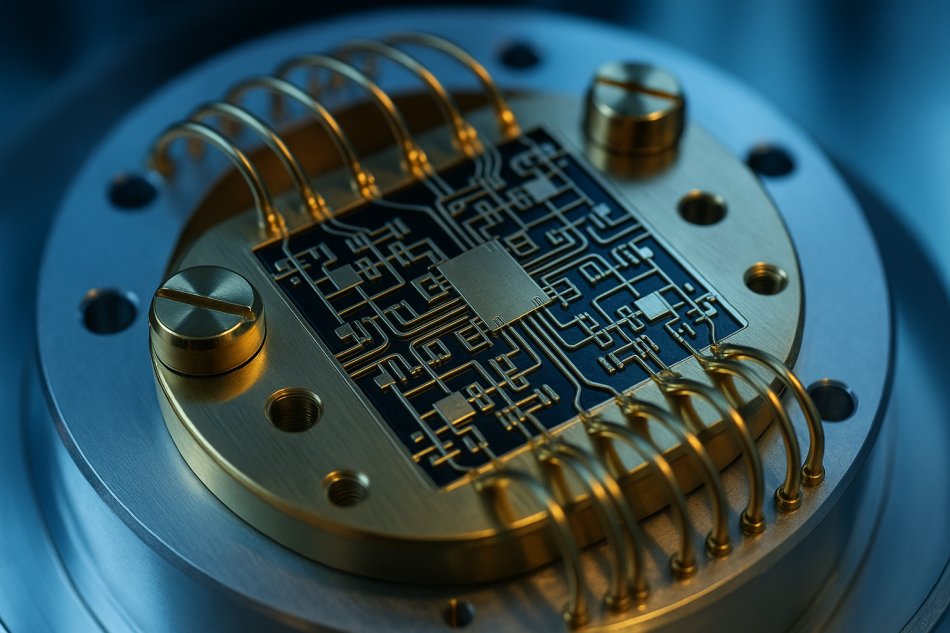

Every serious plan to build a useful quantum computer runs into the same wall: error correction is expensive. Qubits are fragile, they drift and flip and lose their state constantly, so the fix is to spread the information of a single reliable "logical" qubit across a crowd of noisy physical ones. Watch the crowd carefully, catch errors as they appear, and the logical qubit behaves far better than any of its members. The problem is the size of the crowd.
Why the surface code is so hungry
For most of the past decade, the default recipe has been the surface code. It arranges physical qubits in a flat grid where each one only talks to its immediate neighbors. That local wiring is a gift to hardware engineers, because superconducting and neutral-atom systems struggle to connect distant qubits. The surface code asks for nothing exotic in that regard, which is exactly why Google and others have built their headline demonstrations around it.
The cost shows up in the accounting. To reach the error rates that a real algorithm needs, a single logical qubit built from the surface code can swallow anywhere from several hundred to well over a thousand physical qubits. Multiply that by the hundreds or thousands of logical qubits a chemistry or cryptography workload demands, and the numbers balloon into the millions. That is the uncomfortable subtext behind every ambitious roadmap. The machines are not just hard to build; they are hard to build at that scale.
Trading locality for efficiency
This is where quantum low-density parity-check codes, usually shortened to qLDPC, enter the story. The underlying idea comes from classical coding theory, where LDPC codes already protect everything from Wi-Fi to hard drives. The quantum versions borrow the same principle: use a sparse, cleverly chosen set of checks so that each qubit participates in only a few measurements, keeping the bookkeeping manageable while packing far more logical information into the same hardware.
A recent line of work on so-called bivariate bicycle codes made the promise concrete. One widely discussed example encodes a dozen logical qubits into a few hundred physical ones while tolerating roughly the same error rate as a surface code that would need an order of magnitude more parts. That is not a small improvement. Cutting the overhead by ten times is the difference between a machine that needs a warehouse and one that fits in a room.
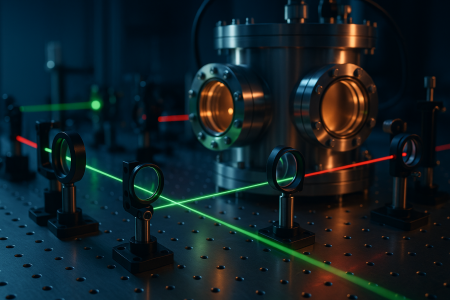
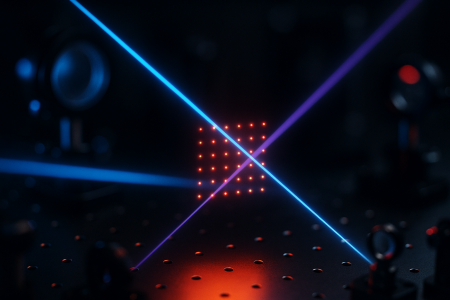
Nothing comes for free. The reason qLDPC codes are so efficient is that their checks reach across the chip rather than staying local. A qubit might need to share information with a partner on the far side of the array. On paper that is fine. In hardware it means building long-range connections that most of today's chips simply do not have. Superconducting processors, with their fixed nearest-neighbor couplers, would need extra layers of routing or clever connector components. Neutral-atom machines, which can physically shuttle atoms around with laser tweezers, look more naturally suited to the job, and several groups have leaned into that flexibility.
What it changes downstream
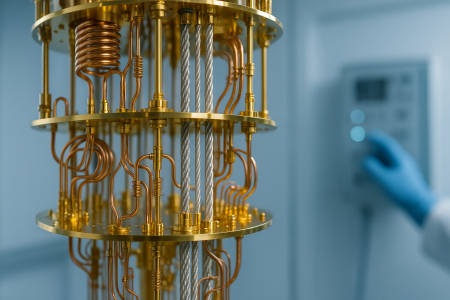
The appeal is not only about qubit count. Fewer physical qubits per logical qubit means fewer control lines, less cryogenic wiring, and a smaller burden on the classical decoder that has to interpret the flood of error data in real time. Every part of the stack gets a little easier when the crowd shrinks.
- Fewer qubits to fabricate, calibrate, and keep coherent.
- Less demand on the room-temperature electronics feeding the chip.
- A more tractable decoding problem, though qLDPC decoders bring their own complexity.
The catch is that qLDPC codes are harder to operate. Performing logic on the encoded qubits, not just storing them, is more intricate than it is with the tidy geometry of the surface code. Researchers are still working out efficient ways to run gates, inject the special resource states that quantum algorithms need, and stitch these blocks together into a full computer. The surface code's simplicity remains a genuine advantage for anyone who wants something that works today rather than something that works in principle.
Which is why the field is not choosing sides so much as splitting the bet. Some teams will push the surface code as far as their wiring allows, betting on maturity. Others will chase qLDPC to escape the overhead ceiling, betting on efficiency. The winner may well be a hybrid, using dense codes for memory and simpler codes where logic gets complicated. The one thing everyone agrees on is that the qubit tax has to come down. A quantum computer that spends a thousand parts to protect one is a computer that stays in the lab.