Qubits
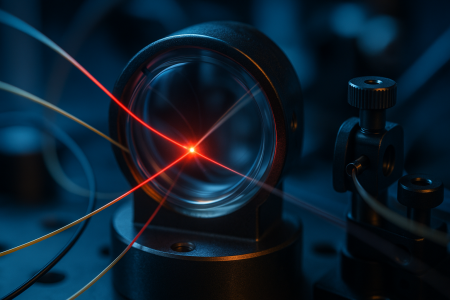
The Rydberg Blockade: How Neutral Atoms Say No to a Second Kick
 Rafayel
In a neutral-atom quantum computer, the qubits are single atoms held a few microns apart by lasers. They do not touch. They do not share a wire. Left...
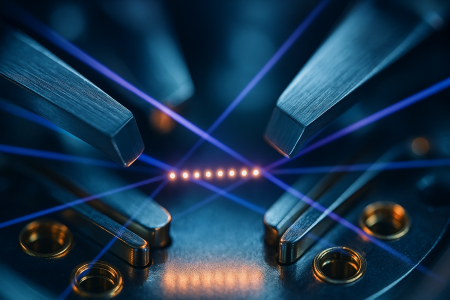
The Molmer-Sorensen Gate: How Trapped Ions Entangle Through Shared Motion
Every quantum computer needs a way to make two qubits talk to each other. In superconducting chips, that job falls to microwave gates like cross-reson...
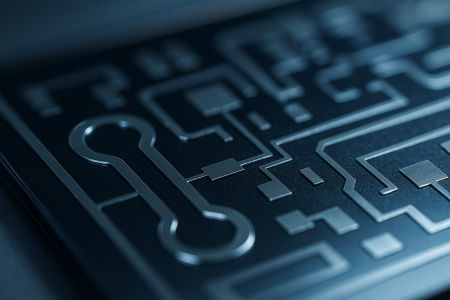
The Tantalum Turn: The Metal That Stretched a Qubit's Life
A superconducting qubit is a tiny electrical circuit that behaves like an artificial atom. Cool it to a fraction of a degree above absolute zero and i...
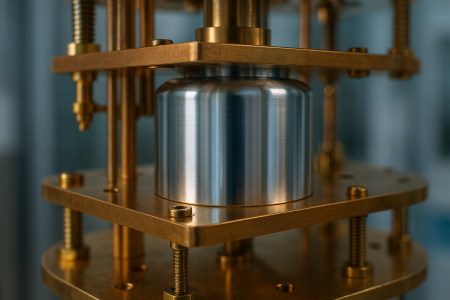
The Grid in the Cavity: Nord Quantique's Bet on Comb-Shaped Qubits
Nearly every qubit you have read about stores information in two states: an ion's two energy levels, a transmon's lowest two rungs, an atom's ground a...
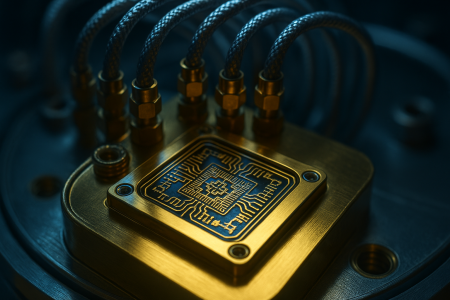
The Echo Trick: How Idle Qubits Stay Sharp by Being Nudged in Rhythm
Not every qubit in a quantum program is busy at once. While one pair of qubits entangles or a measurement reads out, others sit idle, holding a fragil...

The Fluxonium: The Heavy Qubit Betting on Deeper Protection
The transmon runs most of the superconducting quantum computers you can rent in the cloud today. It is simple, reliable, and well understood. But it h...

The Random Gauntlet: How Scrambled Gates Reveal a Qubit's True Fidelity
Ask a quantum hardware team how good their gates are and you will usually get a number like 99.9 percent fidelity. That figure sounds precise, almost...
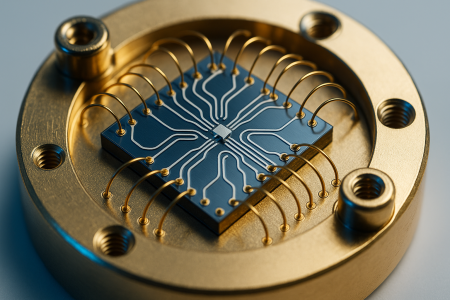
The Unimon: Finland's Qubit That Rethinks the Transmon
Most superconducting quantum computers run on a qubit called the transmon, a design so dominant that it powers nearly every machine IBM, Google, and R...
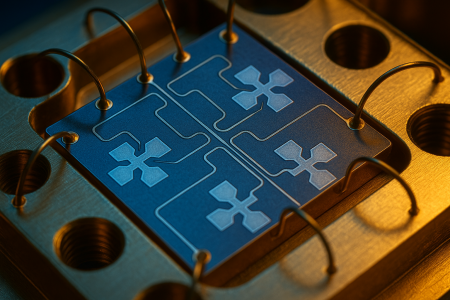
The Transmon: The Charge-Shy Qubit That Runs the Cloud
If you log into a quantum computer today through IBM's cloud, Google's lab, or a Rigetti processor, odds are you are talking to a transmon. It is the...
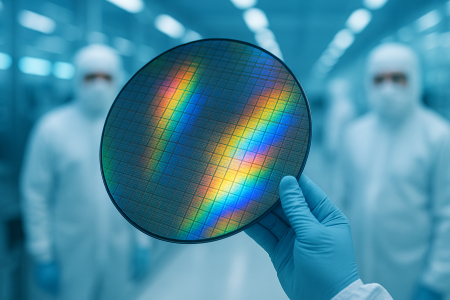
The Silicon Spin Qubit: Intel's Wager on the Transistor's Cousin
Walk through the physics of most quantum computers and you meet exotic hardware: superconducting loops chilled to a whisper above absolute zero, or si...
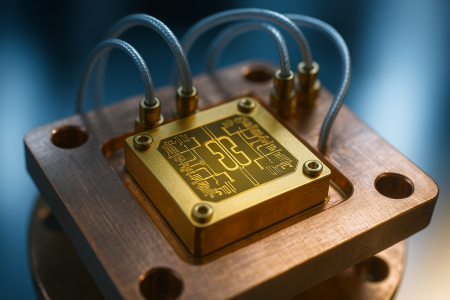
The Cat Qubit: Alice & Bob's Bet on Killing Bit-Flips
Every qubit suffers two basic ways of going wrong. It can flip its value, swapping a 0 for a 1, the way a classical bit does when a cosmic ray or a st...
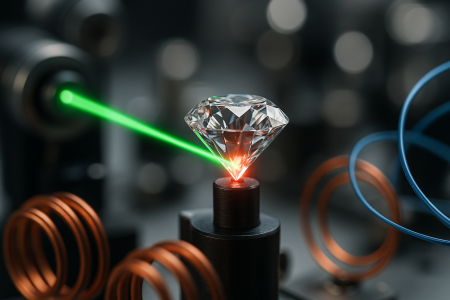
The Diamond Flaw: The Qubit That Runs Warm
Nearly every quantum computer you read about lives inside a refrigerator that hangs like a golden chandelier and chills its chip to a hair above absol...
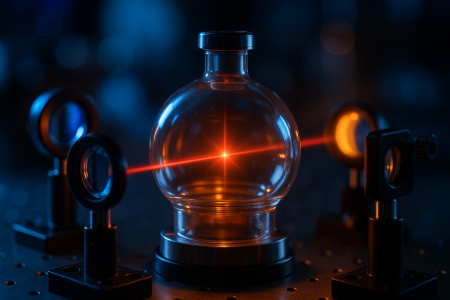
The Optical Tweezer: How a Laser Grabs One Atom to Make a Qubit
Most descriptions of a neutral-atom quantum computer start with the qubits themselves, single rubidium or cesium atoms floating in a vacuum. But befor...
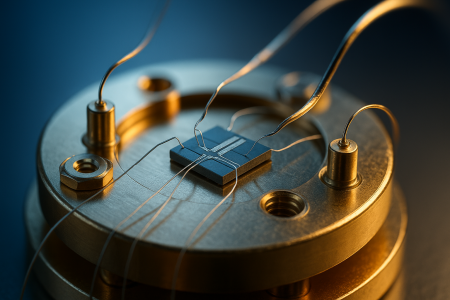
The Braided Qubit: Microsoft's Long Bet on Topological Matter
Most quantum computers fight noise with brute force. You take a fragile physical qubit, surround it with dozens or hundreds of helpers, and run a cons...
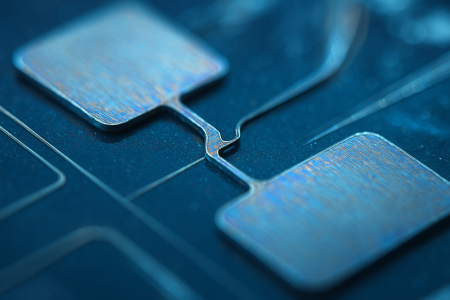
The Two-Level System: The Tiny Flaw That Steals a Qubit's Life
A superconducting qubit is, at heart, a beautifully engineered circuit. But it lives on a chip made of imperfect materials, and those imperfections fi...
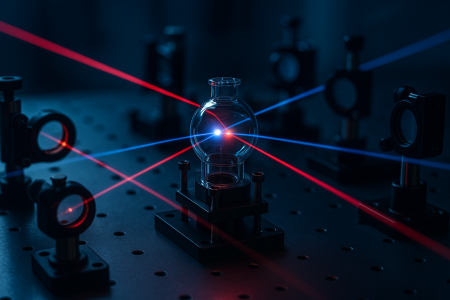
The Rydberg Blockade: Why Two Atoms Refuse to Light Up Together
In a neutral-atom quantum computer, the qubits are single atoms, held in place by tightly focused laser beams and floating in near-perfect vacuum. To...
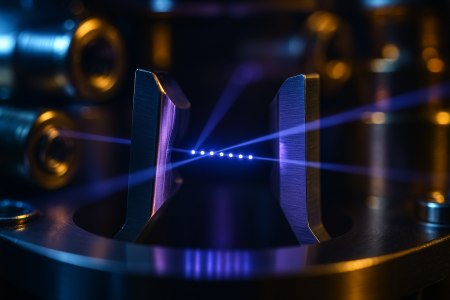
The Mølmer-Sørensen Gate: How Trapped Ions Entangle Through a Shared Wiggle
Two ions floating in a trap, held apart by electric fields, never actually touch. Yet a trapped-ion quantum computer has to entangle them, weaving the...
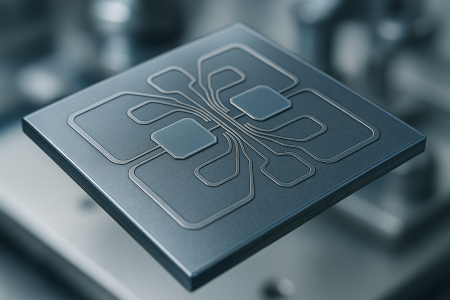
The Tantalum Turn: The Metal That Doubled a Qubit's Memory
For most of the last two decades, superconducting qubits were built from a short list of metals: aluminum for the delicate Josephson junction, and nio...
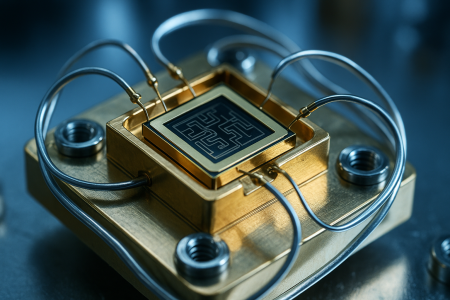
The Leakage Ladder: When a Qubit Climbs Out of Its Two States
A qubit is a fiction the hardware agrees to maintain. Physicists talk about two states, a crisp 0 and 1, but almost every real qubit is carved out of...
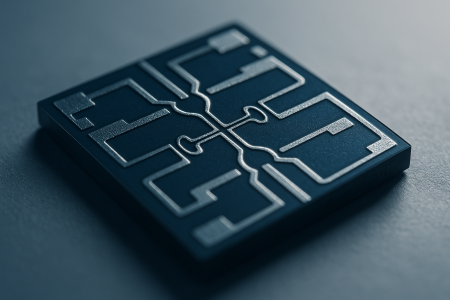
The Josephson Junction: The Weak Link at the Heart of a Qubit
Strip a superconducting quantum computer down to its most essential part and you arrive at something almost comically small: a gap in a wire. Two piec...
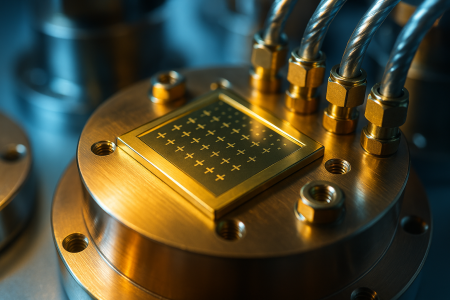
The Two Clocks: T1 and T2, the Timers Every Qubit Races
Ask an engineer how good a qubit is and, sooner or later, two numbers come up: T1 and T2. They sound like model names, but they are timers. Each measu...