Hardware
The Quiet Amplifier: Boosting a Qubit's Whisper Without Drowning It in Noise
 Rafayel
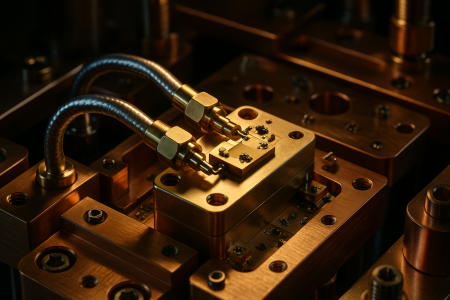
Picture trying to hear a single person whisper from across a stadium, with the crowd roaring. That is roughly the challenge of reading out a supercond...
The Tunable Coupler: The Switch That Turns Entanglement On and Off
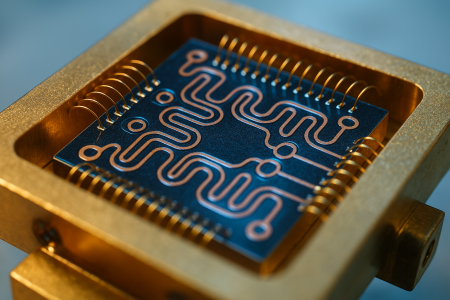
Put two superconducting qubits close enough to talk and you have the beginning of a quantum processor. The trouble is that they never stop talking. A...
The Cold Controller: Intel's Chip That Runs Qubits From Inside the Fridge
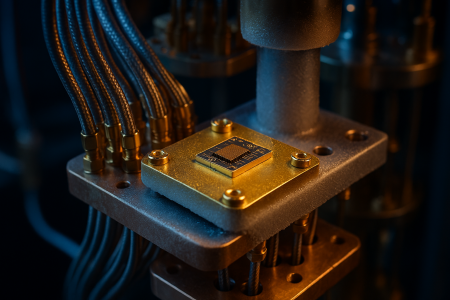
Every superconducting or spin qubit lives at the bottom of a dilution refrigerator, a few thousandths of a degree above absolute zero. But the electro...
The Shared Wire: How One Cable Reads a Dozen Qubits at Once
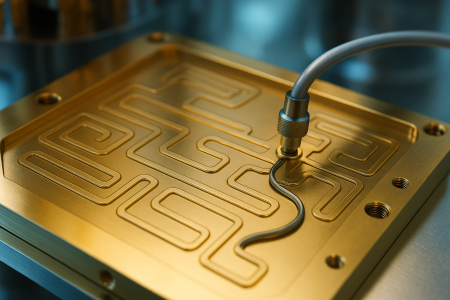
Every quantum computation ends the same way: you have to look. After the gates are done, each qubit holds a fragile superposition that collapses the i...
The Daily Retune: Why Every Quantum Computer Drifts Out of Tune
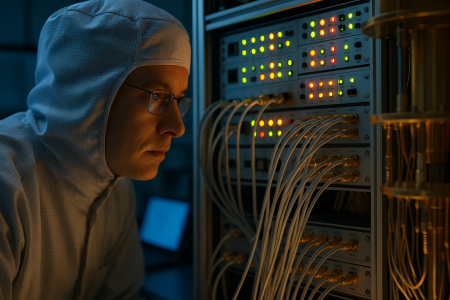
Buy a classical chip and it behaves the same on Tuesday as it did on Monday. A quantum processor does not offer that courtesy. Left alone overnight, i...
The Josephson Junction: The Flimsy Sandwich Behind Every Superconducting Qubit
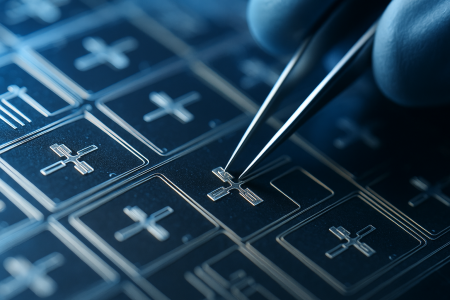
Strip away the golden chandelier of a dilution fridge, the forest of coaxial cables, and the control electronics humming in the next room, and a super...
The Reset Button: How a Qubit Gets Wiped Clean Between Runs
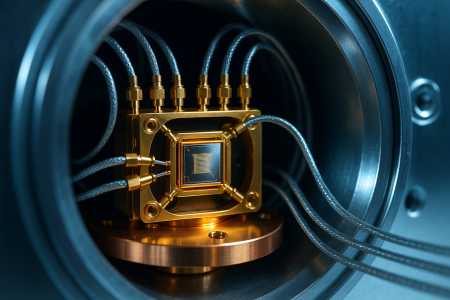
Every quantum program begins with a demand that sounds trivial and turns out to be surprisingly hard: start from zero. Not an approximate zero, not a...
The Dilution Fridge: The Golden Chandelier That Chills Qubits Near Absolute Zero
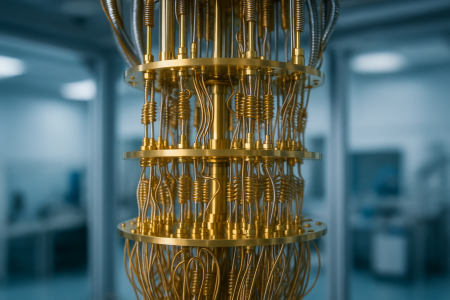
Look at almost any photo of a superconducting quantum computer and you will not see the chip. What you see is the fridge: a gleaming brass-and-gold st...
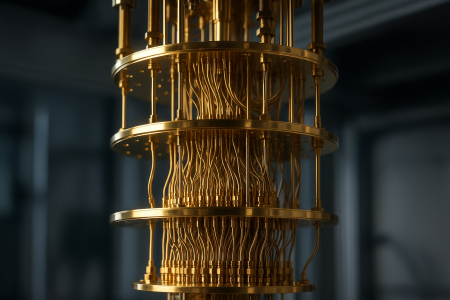
The Wiring Wall: Why Every New Qubit Needs Its Own Cable
Look at a photograph of a superconducting quantum computer and your eye goes to the golden chandelier, tier after tier of plates and coiled cables des...
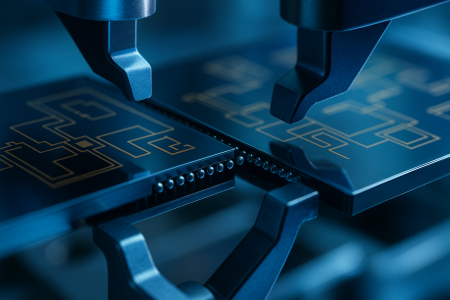
The Flip-Chip Stack: Why Qubits Moved Into a Second Story
For years, a superconducting quantum processor lived on a single flat piece of silicon or sapphire. The qubits sat on the surface, and so did everythi...
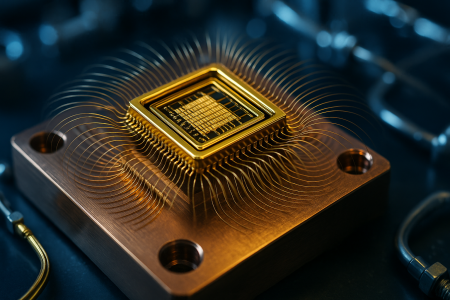
The Quantum Volume Test: The Square That Sizes Up a Whole Machine
Ask how big a quantum computer is and most people reach for a single figure: the number of qubits. It is the easiest thing to advertise and one of the...
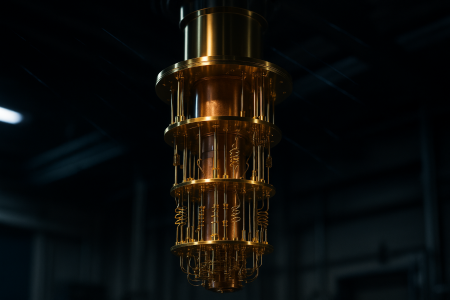
The Cosmic Ray Strike: When One Particle Blanks a Whole Quantum Chip
Quantum error correction rests on a quiet assumption: that mistakes happen one qubit at a time, more or less at random, in scattered spots a code can...
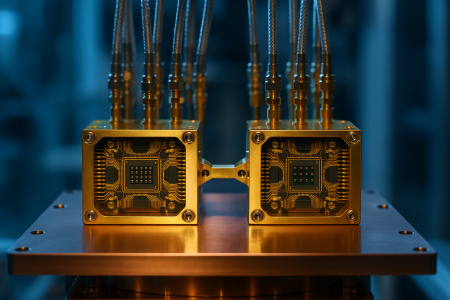
The Quantum Interconnect: How Separate Chips Learn to Act as One
There is a quiet ceiling hanging over every superconducting quantum computer. You can etch more qubits onto a chip, but only up to a point. Push past...
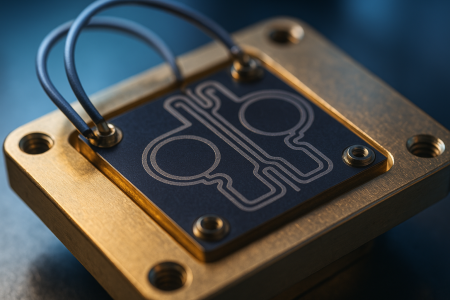
The Purcell Filter: Reading a Qubit Without Letting It Leak Away
Every superconducting quantum processor faces the same awkward bargain. You cannot compute with a qubit you cannot measure, so you wire each qubit to...
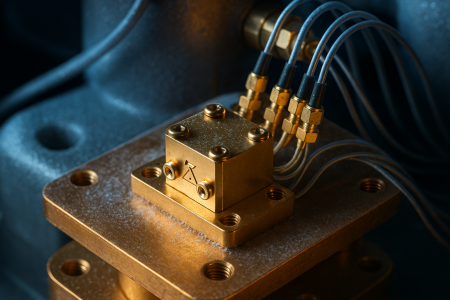
The Quantum Amplifier: Hearing a Single Qubit Over the Roar
Ask a superconducting qubit whether it is a zero or a one, and it will tell you. The trouble is the volume. The signal that leaves a qubit during read...
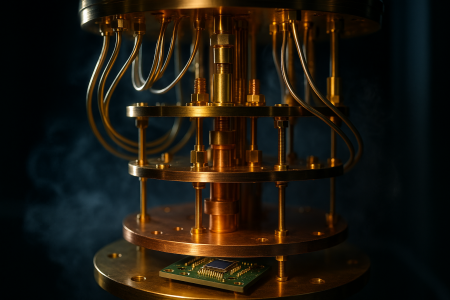
The Cryo-CMOS Bet: Moving Qubit Control Into the Cold
A quantum processor is the star of the show, but it cannot do anything alone. Each qubit needs a steady diet of carefully shaped microwave pulses to r...
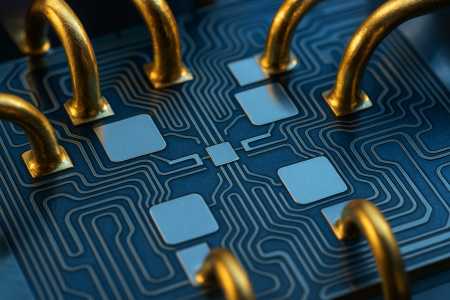
The Tunable Coupler: The Dial That Switches Qubit Chatter On and Off
Two superconducting qubits sitting next to each other on a chip have a problem: they never stop talking. Because they share electromagnetic fields, th...

The Shot Count: Why a Quantum Computer Runs the Same Program 10,000 Times
Feed a problem to a laptop and it gives you one answer. Feed the same circuit to a quantum computer and it hands you a pile of them, often ten thousan...
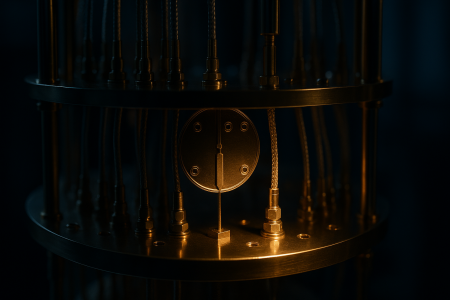
The Mid-Circuit Peek: Reading a Qubit While the Program Runs
For years the rule of a quantum program was simple: load the qubits, run the gates, then measure everything at the finish. Measurement was the wall yo...
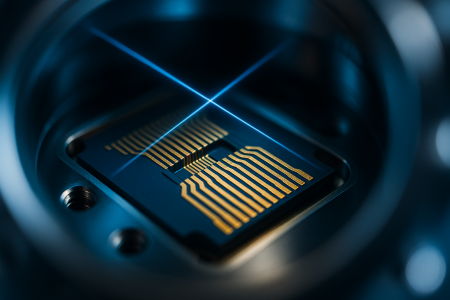
The Ion Highway: How Quantinuum Shuttles Qubits Across a Chip
In most quantum computers, the qubits sit still. Superconducting circuits are etched into a chip and stay put; entangling two of them means routing si...
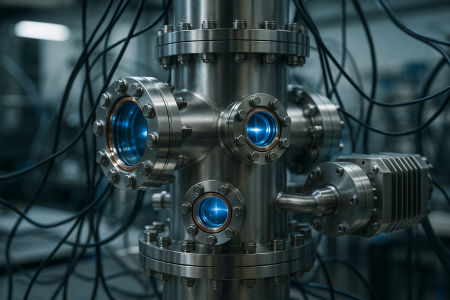
The Vacuum Chamber: Why Atom Qubits Need Space Emptier Than Orbit
Ask most people what a quantum computer looks like and they picture a golden chandelier hanging inside a refrigerator. That image belongs to the super...