Hardware
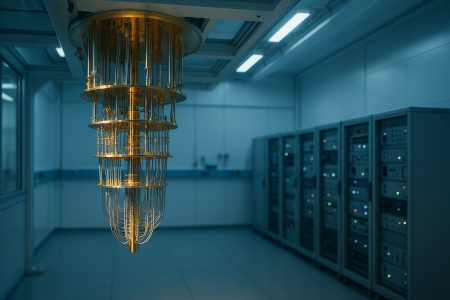
The Watt Gap: Why a Quantum Computer Sips Power a Supercomputer Guzzles
 Rafayel
Walk into a room housing a superconducting quantum computer and your first assumption is probably wrong. The gleaming gold chandelier hanging inside t...
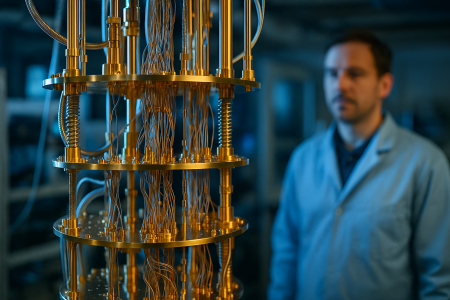
The Helium-3 Squeeze: The Rare Isotope Every Quantum Fridge Needs
Ask what limits the growth of a superconducting quantum computer and you will hear about qubit counts, error rates, and wiring. Further down the list,...
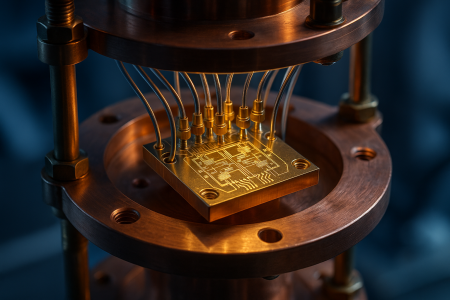
The Calibration Drift: Why a Quantum Computer Retunes Itself All Day
Buy a laptop and it behaves the same on Tuesday as it did on Monday. A quantum processor does not offer that courtesy. Left alone for a few hours, a c...
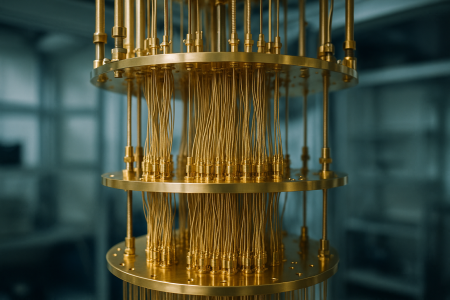
The Wiring Wall: Why a Quantum Fridge Runs Out of Cables Before Qubits
Look inside the photographs quantum computing companies love to publish and you will see a gleaming golden chandelier hanging in a laboratory. It look...
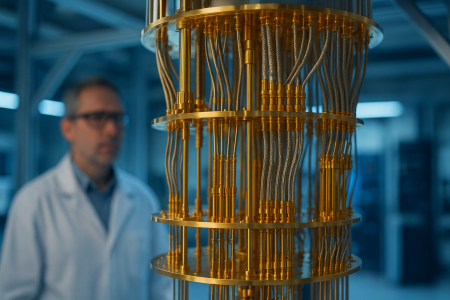
The Millikelvin Machine: The Fridge That Keeps Qubits Cold Enough to Compute
Look at almost any photo of a superconducting quantum computer and you are not really looking at the computer. The chip itself is a fingernail-sized s...
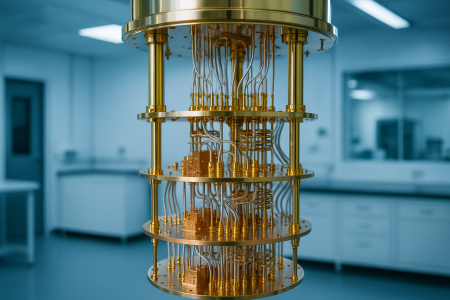
The Annealer's Wager: D-Wave's Bet That You Don't Need Gates
Ask most people to picture a quantum computer and they imagine gates: crisp logical operations flipping and entangling qubits one step at a time, like...
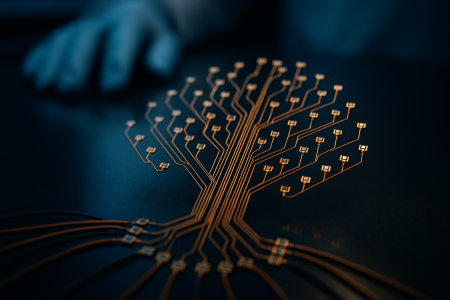
The QRAM Bottleneck: The Memory a Quantum Computer Doesn't Have Yet
Read a paper on a quantum algorithm for searching a database, recommending products, or running machine learning on a big dataset, and somewhere in th...
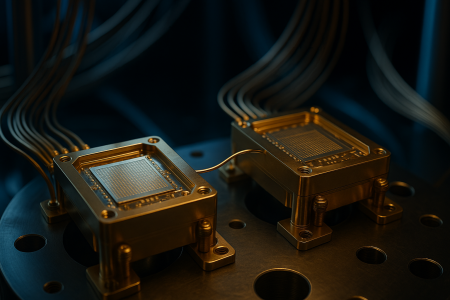
The Quantum Interconnect: Wiring Separate Chips Into One Computer
There is a ceiling on how big a single quantum chip can get. Fabrication yield drops as the wafer grows, wiring gets impossibly crowded, and a chip th...
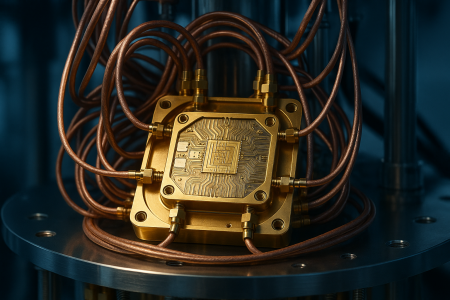
The Reset Problem: How a Quantum Computer Empties Its Qubits Between Runs
A quantum computer rarely runs a program just once. It runs the same circuit hundreds or thousands of times, collects the statistics, and reads an ans...
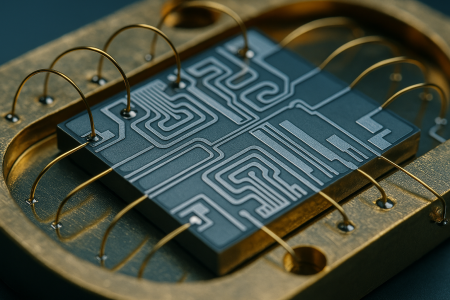
The Purcell Filter: The Guard That Lets a Qubit Be Read Without Being Killed
Every superconducting qubit faces the same awkward trade-off. To find out what state it is in, you have to connect it to the outside world through a r...
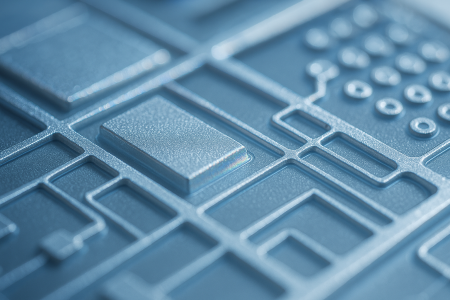
The Two-Level System: The Tiny Flaws That Drain a Qubit's Life
Ask an engineer why a superconducting qubit forgets its state so quickly, and sooner or later the conversation turns to something they can neither see...
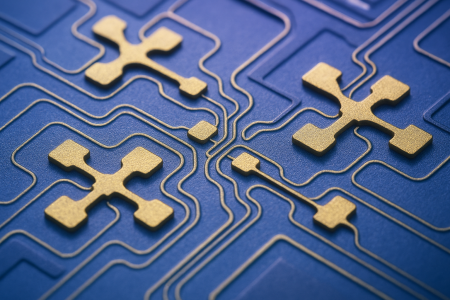
The Tunable Coupler: The Switch That Turns Qubit Chatter On and Off
Two qubits sitting side by side on a superconducting chip have a problem: they can hear each other whether you want them to or not. Physics does not c...
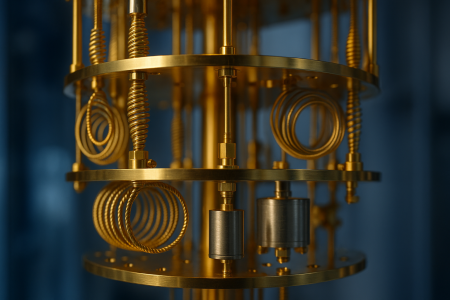
The Faint Whisper: The Amplifiers That Hear a Qubit Speak
When a superconducting qubit finishes a calculation, it has to tell you what it holds. It does this by nudging a tiny microwave signal, a pulse so wea...
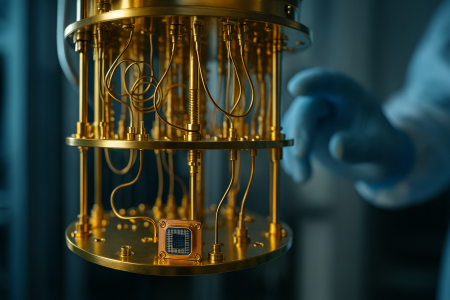
The Cold Controller: Moving Qubit Electronics Inside the Fridge
A superconducting quantum computer looks, from the outside, like a chandelier of gold-plated plates hanging inside a refrigerator the size of a fridge...
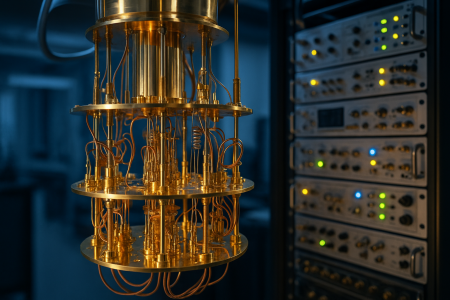
The CLOPS Count: Why a Quantum Computer's Speed Matters as Much as Its Qubits
Almost every quantum computing announcement leads with the same number: how many qubits. It is an easy figure to compare, and it feels like progress....
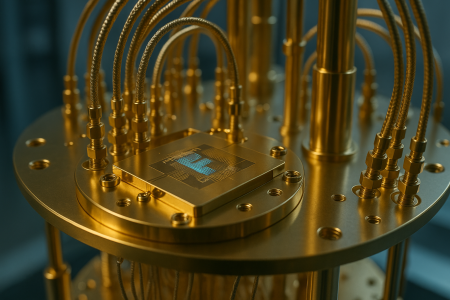
The Mid-Circuit Measurement: Reading a Qubit Without Ending the Job
For most of quantum computing's short history, measurement was a full stop. You loaded your circuit, let the qubits evolve, and only at the very end d...
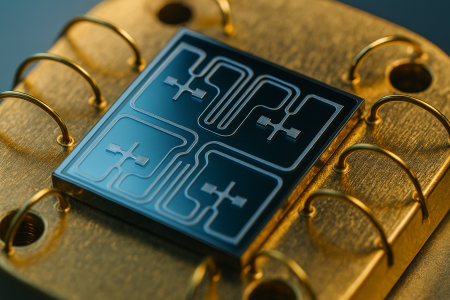
The Josephson Junction: The Tiny Gap That Makes a Superconducting Qubit Possible
Peer inside a superconducting quantum processor from IBM, Google, or Rigetti and you will find, at the core of every qubit, a device so small you woul...

The Shot Count: Why a Quantum Computer Runs the Same Job a Thousand Times
Ask a classical computer to add two numbers and it hands you the result. Ask a quantum computer to solve a problem and it hands you a coin flip. Run t...
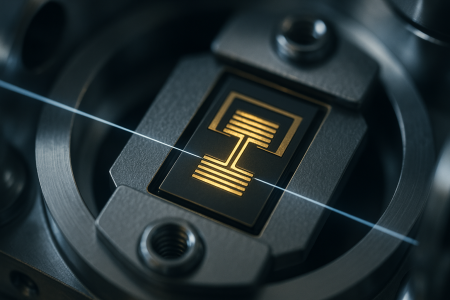
The Ion Shuttle: How Trapped-Ion Computers Move Their Qubits Around
Most quantum processors are stuck with the layout they were built with. A superconducting chip has its qubits soldered into fixed positions, and if tw...
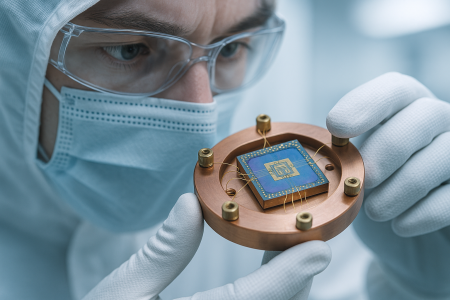
The Cosmic Ray Problem: When Space Radiation Wipes a Quantum Chip
Most of the errors that plague a superconducting quantum computer are local and boring in a useful way. One qubit drifts, a control pulse is a hair to...

The Yield Problem: Why No Two Qubits Come Out Identical
Walk into a chip fab and you expect uniformity. Modern semiconductor plants print billions of transistors that behave the same across a wafer and acro...