
For most of quantum computing's short history, measurement was a full stop. You loaded your circuit, let the qubits evolve, and only at the very end did you look. Peeking early was a kind of vandalism, because the act of measuring a qubit collapses it and destroys the fragile superposition you spent the whole circuit building. So the rule was simple: measure last, measure everything, and never in the middle.
That rule is quietly falling away. Mid-circuit measurement, sometimes shortened to MCM, lets a machine read out a chosen qubit partway through a program while leaving its neighbors untouched and still computing. It sounds like a minor scheduling change. It is actually one of the more consequential capabilities a quantum processor can gain, and it separates the machines that can attempt real error correction from the ones that cannot.
Why measuring in the middle is hard
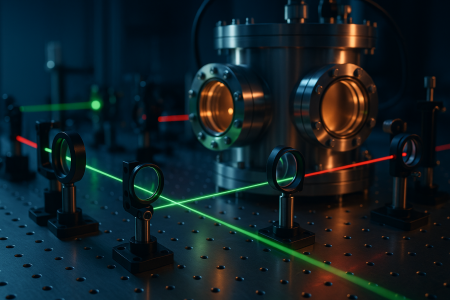
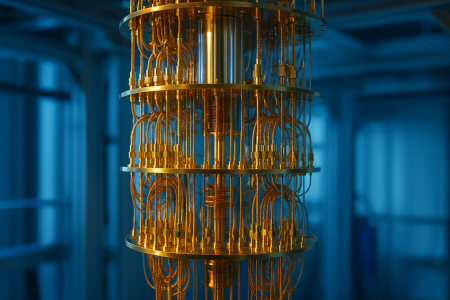
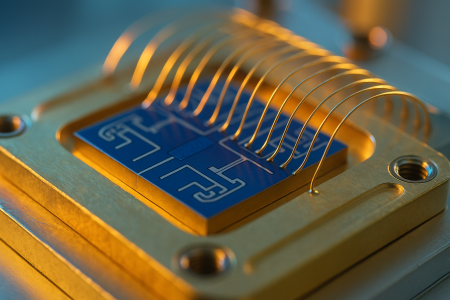
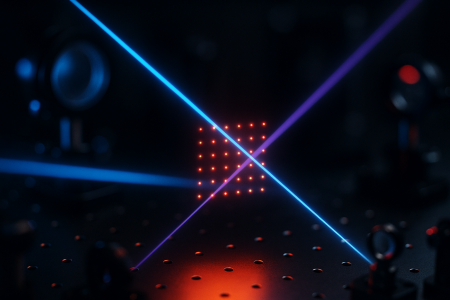
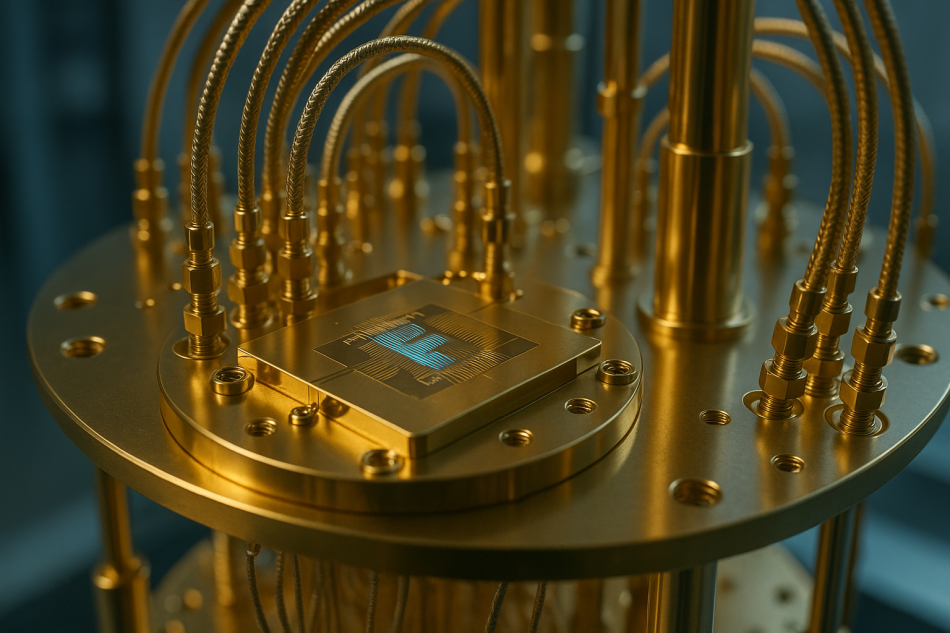
The problem is not the measurement itself. It is doing it selectively. When you read a superconducting qubit, you fire a microwave tone at the resonator attached to it and listen to how the signal comes back. That process throws energy around. Photons leak into the chip. Nearby qubits, which are supposed to be quietly holding their quantum states, can pick up that disturbance and dephase. On trapped-ion machines the classic worry is scattered light: the laser that reads one ion can strike another and corrupt it.
So building good mid-circuit measurement is largely an exercise in containment. Hardware teams add filtering to keep readout photons from wandering, they engineer readout resonators to clear quickly, and they physically or spectrally separate the qubit being measured from the ones that must stay coherent. On ion traps, a common approach is to shuttle the qubit you want to read into a separate zone, measure it there, and leave the working qubits in the dark. The goal in every case is the same: extract classical information from one qubit without spilling noise onto the rest.
What it buys you
The headline application is quantum error correction. Every error-correcting code works by repeatedly measuring extra qubits, called ancillas, that reveal whether an error has occurred without revealing the protected data itself. Those measurements happen over and over, round after round, while the logical information keeps living in the other qubits. That entire scheme is impossible without fast, clean, repeated mid-circuit measurement. When a company shows off a surface-code demonstration, the ability to measure and reset ancillas many times inside a single run is doing the heavy lifting.
There is a second payoff that matters even before full error correction arrives: reuse. If you can measure a qubit mid-circuit and then reset it back to a known starting state, you can recycle it for a later part of the computation. A machine with 30 physical qubits can, with clever measurement and reset, run circuits that would naively seem to need many more. That stretches scarce hardware and shrinks the width of programs.
Mid-circuit measurement also enables what people call dynamic circuits, where the result of a measurement steers what happens next. Measure a qubit, and if you got a 1, apply a correction; if you got a 0, do nothing. This classical feedback, threaded live into the quantum program, lets certain algorithms replace long chains of gates with a measurement and a conditional move. Teleportation-based gates, state preparation, and several error-mitigation tricks all lean on it.
The catch: speed and feedback latency
The usefulness of a mid-circuit measurement depends on how fast the whole loop runs. A qubit does not wait patiently while classical electronics decide what to do. Its coherence is ticking down the entire time. So the measurement has to be quick, the classical processing has to be quicker, and the resulting instruction has to reach the qubit before it forgets its state. That is why control-system latency has become such a fixation for hardware builders, and why some vendors are moving control logic closer to the chip.
There is also a fidelity tax. A mid-circuit measurement is rarely as clean as a final one, and the disturbance it causes to spectator qubits, however small, accumulates. Benchmarks now report how much a nearby idle qubit degrades when its neighbor is measured, a number that would have seemed exotic a few years ago.
None of this shows up in a headline qubit count. But when you read that a processor supports mid-circuit measurement and reset with low crosstalk, you are looking at one of the real gates between today's noisy demonstrations and the error-corrected machines everyone is chasing.