qubits

The Rydberg Blockade: How Neutral Atoms Say No to a Second Kick
 Rafayel
In a neutral-atom quantum computer, the qubits are single atoms held a few microns apart by lasers. They do not touch. They do not share a wire. Left...
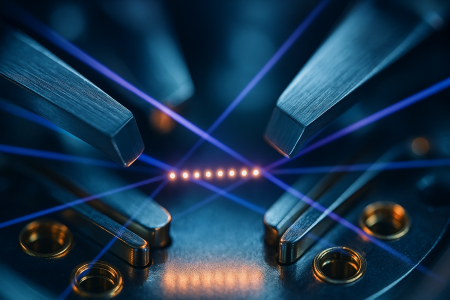
The Molmer-Sorensen Gate: How Trapped Ions Entangle Through Shared Motion
Every quantum computer needs a way to make two qubits talk to each other. In superconducting chips, that job falls to microwave gates like cross-reson...
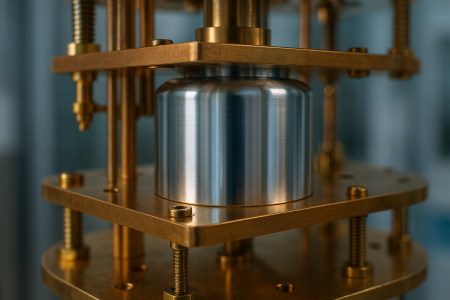
The Grid in the Cavity: Nord Quantique's Bet on Comb-Shaped Qubits
Nearly every qubit you have read about stores information in two states: an ion's two energy levels, a transmon's lowest two rungs, an atom's ground a...
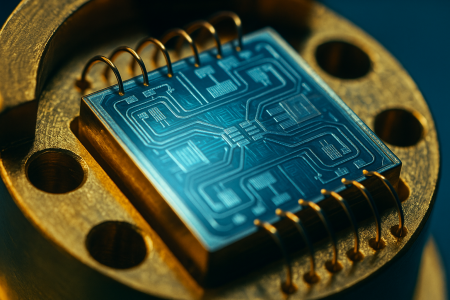
The Leakage Ladder: When a Qubit Climbs Out of Its Lane
A qubit is a promise of simplicity. Two states, zero and one, and nothing in between to worry about. That promise is what makes the whole edifice of q...
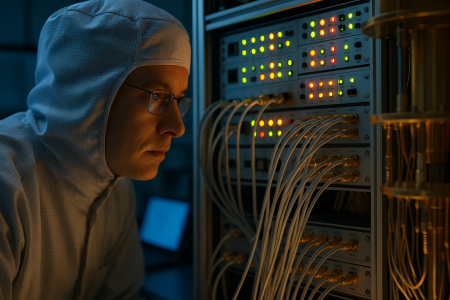
The Daily Retune: Why Every Quantum Computer Drifts Out of Tune
Buy a classical chip and it behaves the same on Tuesday as it did on Monday. A quantum processor does not offer that courtesy. Left alone overnight, i...

The Fluxonium: The Heavy Qubit Betting on Deeper Protection
The transmon runs most of the superconducting quantum computers you can rent in the cloud today. It is simple, reliable, and well understood. But it h...

The Random Gauntlet: How Scrambled Gates Reveal a Qubit's True Fidelity
Ask a quantum hardware team how good their gates are and you will usually get a number like 99.9 percent fidelity. That figure sounds precise, almost...
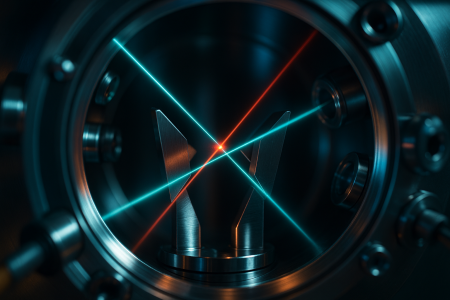
The Barium Switch: Why IonQ Traded One Ion for a Brighter One
Every trapped-ion quantum computer begins with a choice that most users never see: which atom to use. The qubit is a single charged ion held in place...

The Noise Dial: How a Quantum Computer Fakes a Cleaner Answer
Ask a quantum computer to do anything useful right now and it will hand you back a number that is wrong. Not catastrophically wrong, but polluted by t...
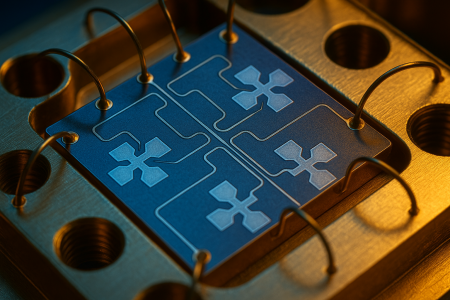
The Transmon: The Charge-Shy Qubit That Runs the Cloud
If you log into a quantum computer today through IBM's cloud, Google's lab, or a Rigetti processor, odds are you are talking to a transmon. It is the...
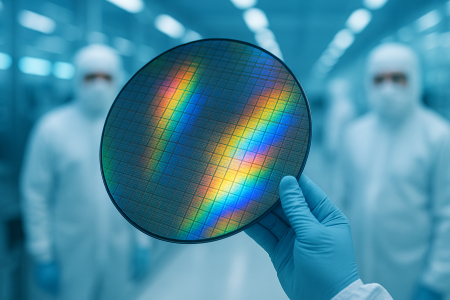
The Silicon Spin Qubit: Intel's Wager on the Transistor's Cousin
Walk through the physics of most quantum computers and you meet exotic hardware: superconducting loops chilled to a whisper above absolute zero, or si...
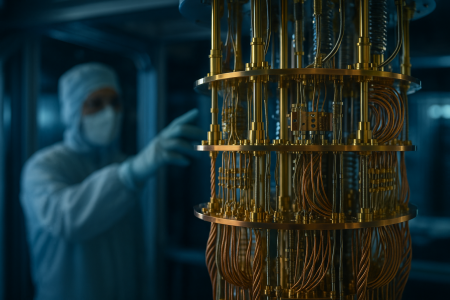
The Magic State Factory: The Costly Fuel of a Fault-Tolerant Computer
Imagine a quantum computer with perfect error correction: every logical qubit is protected by a swarm of physical ones, and stray noise gets caught an...
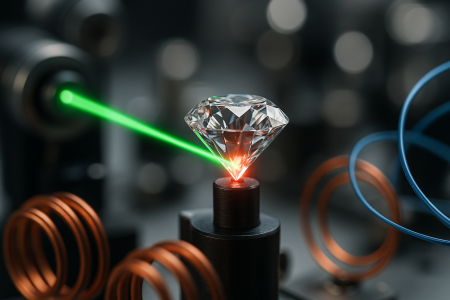
The Diamond Flaw: The Qubit That Runs Warm
Nearly every quantum computer you read about lives inside a refrigerator that hangs like a golden chandelier and chills its chip to a hair above absol...

The Optical Tweezer: How a Laser Grabs One Atom to Make a Qubit
Most descriptions of a neutral-atom quantum computer start with the qubits themselves, single rubidium or cesium atoms floating in a vacuum. But befor...
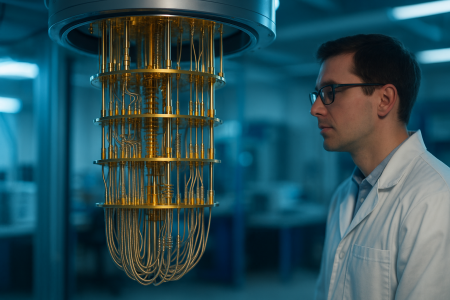
The Annealing Detour: Why D-Wave Skipped the Gate Model
Most quantum computers you read about are trying to be universal. They chain gates together, one operation at a time, to run any algorithm you can com...
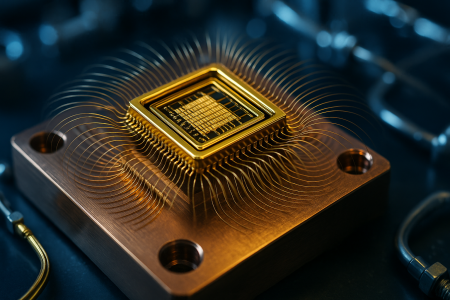
The Quantum Volume Test: The Square That Sizes Up a Whole Machine
Ask how big a quantum computer is and most people reach for a single figure: the number of qubits. It is the easiest thing to advertise and one of the...
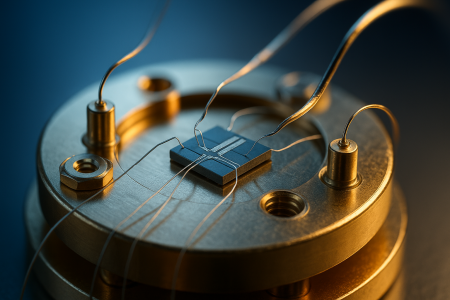
The Braided Qubit: Microsoft's Long Bet on Topological Matter
Most quantum computers fight noise with brute force. You take a fragile physical qubit, surround it with dozens or hundreds of helpers, and run a cons...
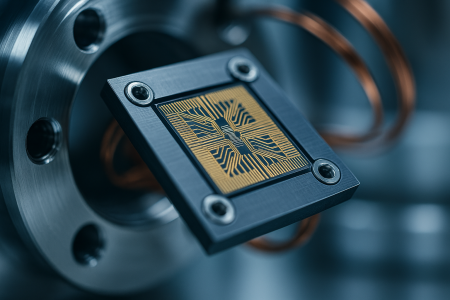
The Etched Trap: Oxford Ionics' Bet on Ions Above a Chip
Most trapped-ion quantum computers look like optics labs that got out of hand. Beams from a dozen lasers thread through mirrors and lenses, each one t...
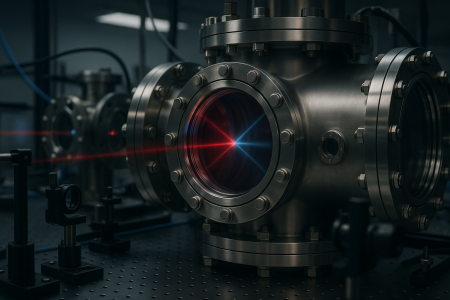
The Thousand-Atom Machine: Atom Computing's Wager on Sheer Scale
In the arms race to build a useful quantum computer, most companies talk about quality first: cleaner gates, longer coherence, fewer errors. Atom Comp...
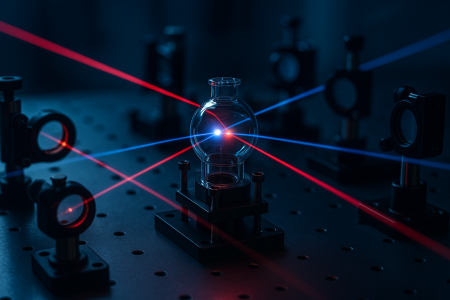
The Rydberg Blockade: Why Two Atoms Refuse to Light Up Together
In a neutral-atom quantum computer, the qubits are single atoms, held in place by tightly focused laser beams and floating in near-perfect vacuum. To...
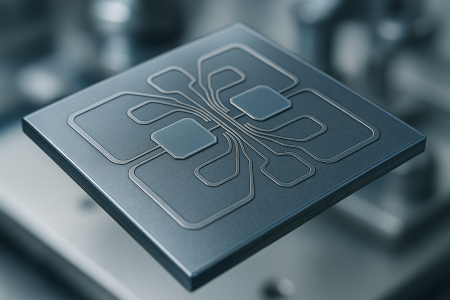
The Tantalum Turn: The Metal That Doubled a Qubit's Memory
For most of the last two decades, superconducting qubits were built from a short list of metals: aluminum for the delicate Josephson junction, and nio...