qubits

The Room-Temperature Wager: Xanadu's Bet on Photonic Qubits
 Rafayel
Walk into most quantum computing labs and you will find a chandelier of copper and gold plating hanging inside a refrigerator colder than deep space....

The Rabi Flop: How a Microwave Nudge Rotates a Qubit
Every quantum program, no matter how elaborate, bottoms out in the same humble act: pushing one qubit from where it is to where you want it. On a supe...
The Rydberg Blockade: How Atom Qubits Talk Without Touching
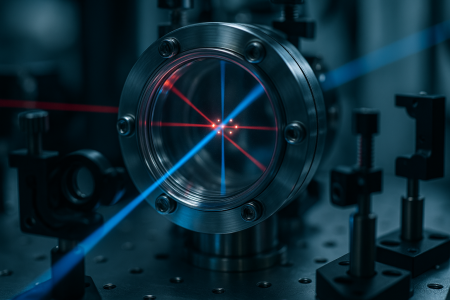
In a neutral-atom quantum computer, the qubits are individual atoms held motionless by tightly focused laser beams. They don't touch. They aren't wire...
The DiVincenzo Checklist: Five Boxes Every Qubit Must Tick
In 2000, the physicist David DiVincenzo wrote down a short list of requirements that any physical system must meet to work as a quantum computer. It w...

The Two-Level System: The Tiny Flaws That Drain a Qubit's Life
Ask an engineer why a superconducting qubit forgets its state so quickly, and sooner or later the conversation turns to something they can neither see...
The Leakage Problem: When a Qubit Escapes Its Two States
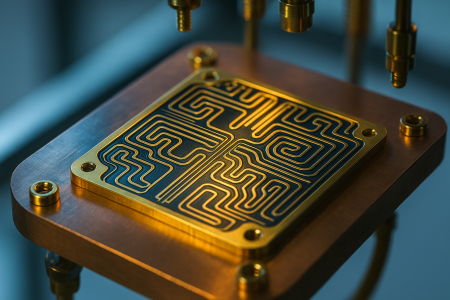
Every explanation of a qubit starts the same way: it lives in two states, call them 0 and 1, and it can be any blend of the two. That picture is a con...

The Erasure Trick: Turning Quantum Errors Into Blanks You Can Spot
Not all quantum errors are created equal. There is a big difference between a qubit that quietly flips the wrong way and a qubit that stops being a qu...
Randomized Benchmarking: How to Grade a Gate You Can't Watch
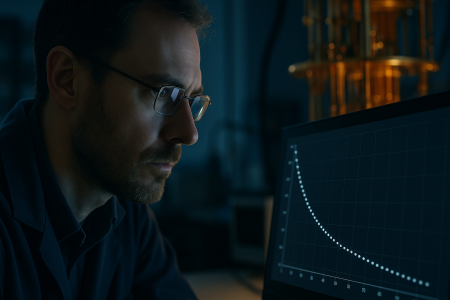
Every quantum computing company loves to quote a number: 99.9 percent gate fidelity, 99.99 percent, and so on. It sounds like a spec you could read of...

The Mølmer-Sørensen Gate: How Trapped Ions Get Entangled by Laser
Ask a trapped-ion company why its machines post such high two-qubit gate fidelities, and sooner or later the conversation lands on a piece of physics...
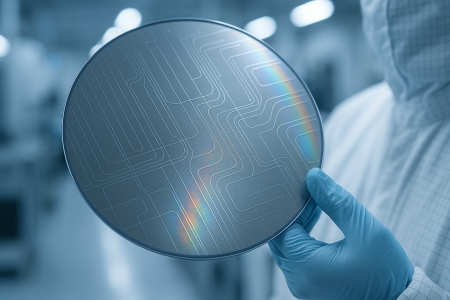
The Foundry Play: PsiQuantum's Bet on Printing Qubits Like Chips
Almost every quantum computing company shares a habit: they release a machine, add a few more qubits, release another, and invite customers to experim...

The Quantum Dot: Betting a Qubit Can Ride the Chip Industry
Most of the qubits that make headlines are exotic. Superconducting loops need dilution refrigerators, trapped ions float in ultra-high vacuum, neutral...
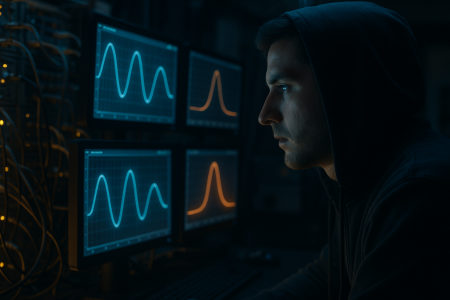
The Calibration Treadmill: Why a Quantum Computer Is Never Done Being Tuned
Picture a piano that slips out of tune not once a year but every few hours, with 100 keys that each drift in their own direction. Now imagine you cann...
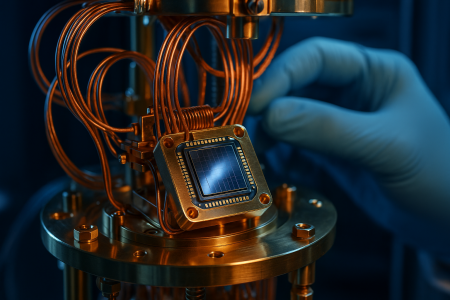
The Magic State Factory: The Costly Ingredient Quantum Computers Must Brew
There is a quiet embarrassment at the heart of quantum error correction. The codes that protect qubits from noise are brilliant at doing certain opera...

The Tweezer Array: How Lasers Assemble a Grid of Atom Qubits
Most quantum computers arrive with their qubits already built in. A superconducting chip is fabricated in a cleanroom, its qubits etched and deposited...

The Two Clocks: T1, T2, and How Long a Qubit Remembers
Ask a quantum engineer how good their qubit is and they will almost always answer with two numbers. The first is called T1. The second is called T2. T...
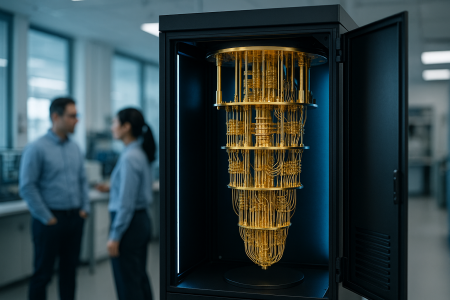
The Annealer's Wager: D-Wave's Bet on a Different Quantum Machine
Most of the quantum computing conversation revolves around gate-based machines: chips that run sequences of logical operations, the quantum cousins of...

The Benchmark Wars: Why Quantum Computers Can't Agree on a Yardstick
Ask a quantum computing company how good its machine is and you will get a number. The trouble is that no two companies quote the same number. One bra...
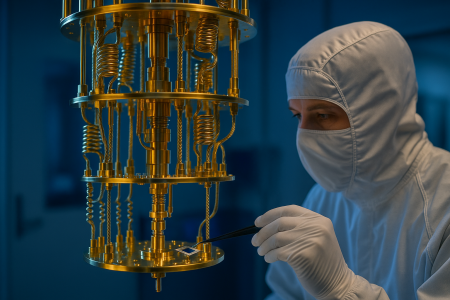
The Topological Bet: Microsoft's Long Shot at a Sturdier Qubit
Nearly every quantum computer in operation today shares a frustrating trait: the information in its qubits is fragile. A stray vibration, a wandering...
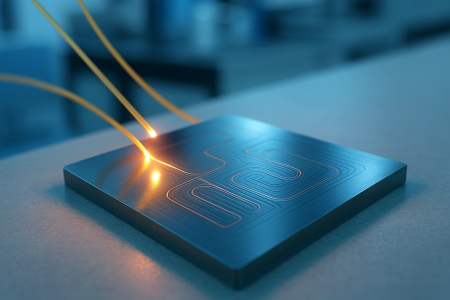
The Photon Path: Building a Quantum Computer Out of Light
Almost every quantum computer you read about stores its information in matter. Superconducting chips freeze tiny circuits to a hair above absolute zer...
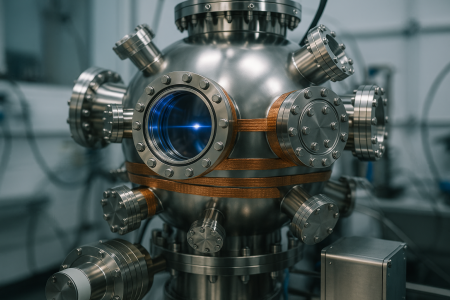
The Vacuum Trap: Why Atom and Ion Quantum Computers Chase Emptier-Than-Space Chambers
Every quantum computer needs to keep the outside world away from its qubits. Superconducting chips do it with cold, sealing themselves inside a diluti...

The Rydberg Blockade: How Neutral Atoms Say No to Their Neighbors
Neutral-atom quantum computers have a curb-appeal problem. Rows of identical atoms held in laser tweezers look almost too tidy to compute anything. Th...