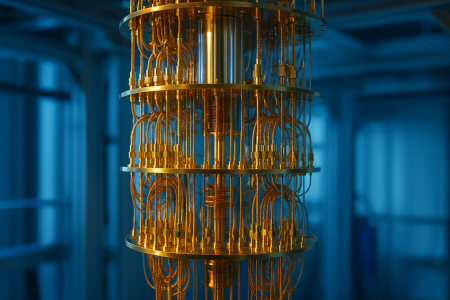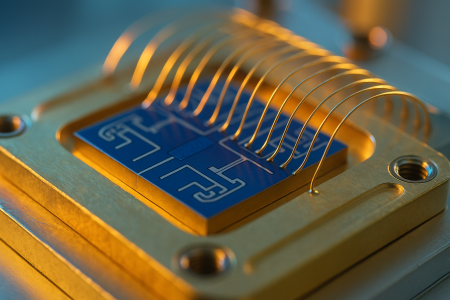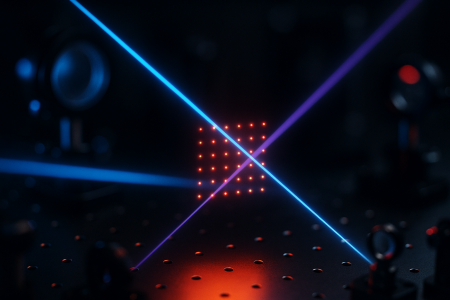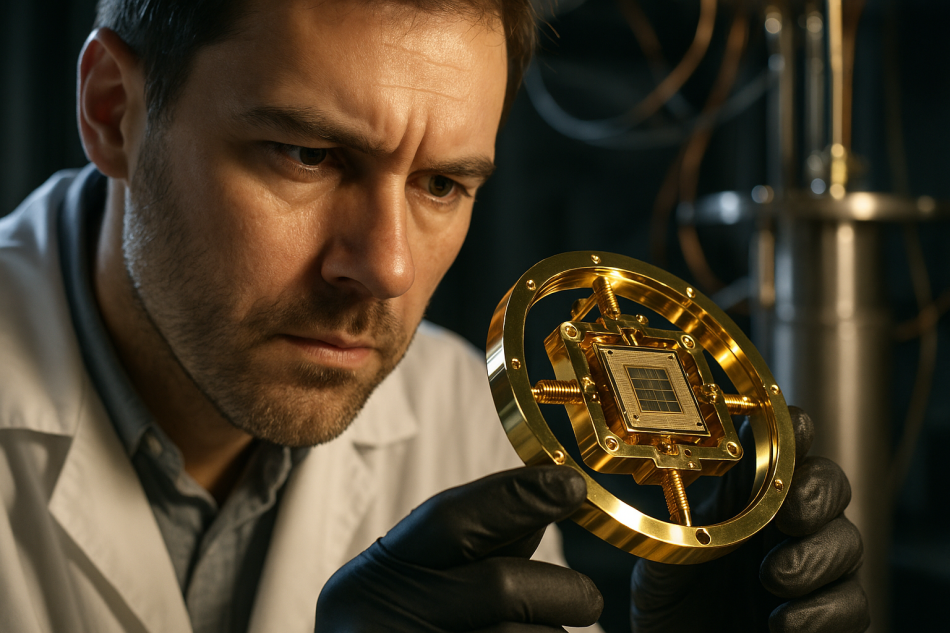

In 2000, the physicist David DiVincenzo wrote down a short list of requirements that any physical system must meet to work as a quantum computer. It was not a roadmap or a marketing pitch. It was closer to a sanity check, a way of asking whether a promising piece of physics could actually be turned into a machine that computes. More than two decades later, the list still shapes how engineers judge superconducting chips, trapped ions, neutral atoms, and everything else lining up to be a qubit.
The five core criteria
DiVincenzo's original list has five items, and each one sounds obvious until you try to build hardware that satisfies it.
- A scalable system of well-characterized qubits. You need a two-level quantum system you understand precisely, and you need to be able to add more of them without the whole thing falling apart.
- The ability to initialize qubits to a known state. Every computation starts from a clean slate, usually all zeros. If you cannot reliably reset your qubits, the answer is garbage before you begin.
- Long coherence times relative to gate operations. A qubit slowly forgets its quantum state. You need it to hold on long enough to run many operations before that memory decays.
- A universal set of quantum gates. With a small toolkit of one- and two-qubit operations, you should be able to build any quantum algorithm, the same way a handful of logic gates underpins all classical computing.
- The ability to measure individual qubits. At the end, you have to read out the result without accidentally scrambling everything else.
Why the list is harder than it looks
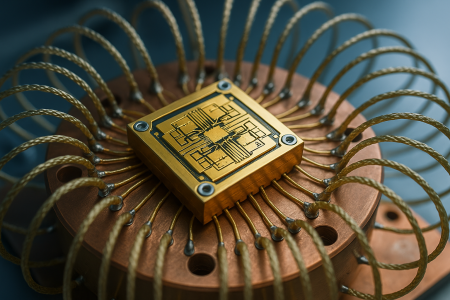
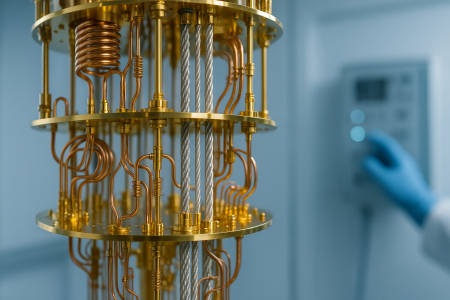
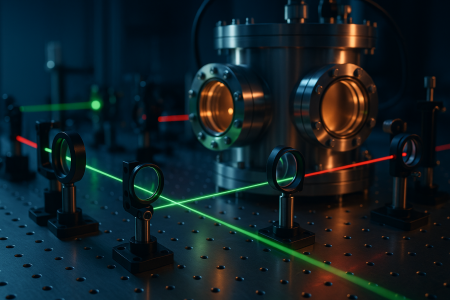
The trouble is that these requirements pull against each other. Take coherence and control. A qubit that ignores the outside world holds its state beautifully, but a qubit that ignores the outside world is also nearly impossible to steer with a gate or read with a measurement. Every quantum computing platform is a compromise between isolation and access. Superconducting circuits open themselves up to fast microwave control and pay for it with coherence times measured in fractions of a millisecond. Trapped ions guard their states for seconds or longer and pay for it with slower operations and elaborate laser systems.
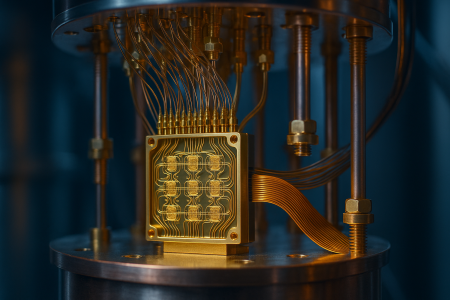
The word scalable in the first criterion is where most of the modern anguish lives. Building ten excellent qubits is a physics achievement. Building ten thousand that are all well characterized, individually addressable, readable, and resettable is an engineering nightmare involving wiring, heat, crosstalk, and manufacturing yield. DiVincenzo flagged scalability precisely because a lab demo that cannot grow is a dead end.
The two extra criteria
DiVincenzo actually added two more requirements aimed at quantum communication: the ability to convert stationary qubits into flying qubits, and the ability to send those flying qubits between locations. These matter for linking processors together, an idea that has grown more relevant as companies talk about networking many smaller modules rather than building one gigantic chip. For a standalone computer, the first five are the ones that decide whether you have a machine or a curiosity.
How today's platforms score
The checklist is useful because it exposes where each technology is strong and where it is bleeding. Superconducting qubits ace gate speed and fabrication borrowed from the chip industry but fight constantly against short coherence and calibration drift. Trapped ions post the best gate fidelities and long coherence but struggle to scale a single trap past a few dozen ions, which is why architectures now shuttle ions around or link separate traps. Neutral atoms in optical tweezers can assemble hundreds of qubits quickly and reconfigure them, but fast, reliable readout and gates are still being refined. Photonic approaches win on room-temperature operation and natural networking but wrestle with making photons interact at all.
None of this is a scorecard where one platform wins outright. That is the point. DiVincenzo's criteria are not a race to be won but a set of constraints that every serious effort has to respect. When you read a company's claim about a new qubit record, it is worth mentally walking the list. A stunning coherence time means little without a universal gate set. A huge qubit count means little without individual readout. The checklist keeps the hype honest, which is roughly what it was built to do.