
Ask an engineer why a superconducting qubit forgets its state so quickly, and sooner or later the conversation turns to something they can neither see nor fully remove: the two-level system, or TLS. These are microscopic defects scattered through the materials that make up a quantum chip. Individually they are invisible. Collectively they are one of the reasons a qubit that should hold its state for milliseconds sometimes gives up in a fraction of that time.
What a TLS actually is
A two-level system is exactly what its name suggests: something in the chip that can sit in one of two configurations and flip between them. Picture an atom trapped in an amorphous material that can rest in either of two nearby positions, like a marble that can settle in one of two dimples. Or an electron that can hop between two trapping sites, or a dangling chemical bond that can reorient. In the disordered oxides and interfaces of a real device, there are countless such defects, each with its own energy and its own preferred spot.
The trouble is that a two-level system is, in a rough sense, a tiny accidental qubit. It has two states and an energy gap between them. When that gap happens to match the frequency of a real qubit, the two can trade energy. The qubit hands its carefully prepared excitation to a defect that promptly loses it to heat and vibration. From the outside, the qubit simply decoheres. The information is gone.
Where they hide
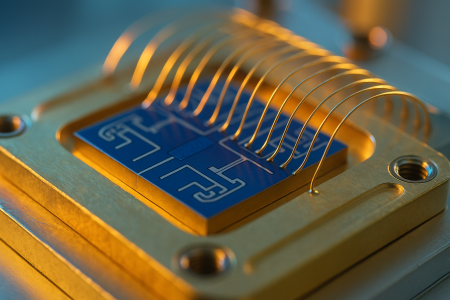
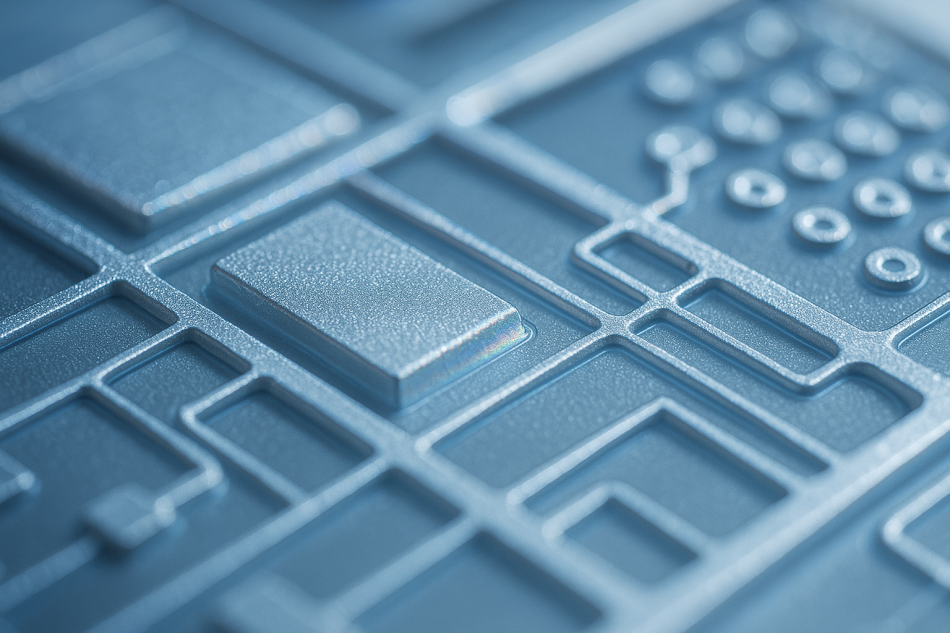
TLS congregate in the messy parts of a chip. The thin oxide layer inside a Josephson junction is a notorious home for them. So are the native oxides that form on metal surfaces when a device is exposed to air, and the interfaces where the superconducting film meets the substrate underneath. Anywhere the crystal structure breaks down into something glassy and disordered, defects find room to live.
This is why materials work has become so central to building better qubits. When teams switched from aluminum or niobium to tantalum films, coherence times jumped, in part because tantalum forms a thinner, more stable surface oxide with fewer lossy defects. Careful cleaning of interfaces, etching away problematic oxides, and growing cleaner films all chip away at the TLS population. None of it eliminates the problem, but each improvement buys the qubit a little more time to remember.
The fingerprint of a defect
One maddening feature of TLS is that they are not static. A single strong defect sitting near a qubit's frequency can be tracked over hours as it drifts, and sometimes it will suddenly jump to a new energy or vanish altogether, only to be replaced by another. This is part of why a quantum computer is never done being calibrated. A qubit that behaved beautifully yesterday can develop a bad spot today because a nearby defect wandered into resonance overnight.
Engineers hunt these individual defects with spectroscopy, sweeping a qubit's frequency and watching for dips in performance that betray a coupled TLS. On a tunable qubit, one workaround is simply to steer the frequency away from the worst offenders, parking the qubit in a quieter stretch of the dial. That helps, but it competes with every other constraint on where a qubit is allowed to sit, and in a crowded chip the safe spots are scarce.
Why they matter for the roadmap
Error correction only works if the physical qubits underneath are good enough to clear the fault-tolerance threshold. Every microsecond of extra coherence makes the codes cheaper, because fewer physical qubits are wasted compensating for noise. TLS loss sets a stubborn floor on how good a superconducting qubit can be, so squeezing the defect population is not a cosmetic tweak. It directly changes how many qubits a useful machine will need.
There is also a strange silver lining. Because a strongly coupled TLS behaves like a small quantum system in its own right, researchers have learned to characterize and even manipulate individual defects. Studying them has become a way to probe the microscopic physics of amorphous solids, a puzzle that predates quantum computing by decades.
For now the two-level system remains an uninvited guest baked into the hardware. Cleaner materials, better fabrication, and smarter frequency planning keep it at bay, but nobody has banished it. Every gain in qubit lifetime is, in part, a quiet victory over a swarm of defects too small to see.