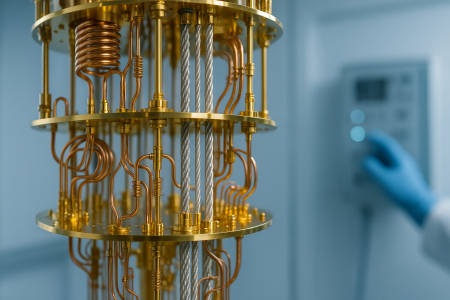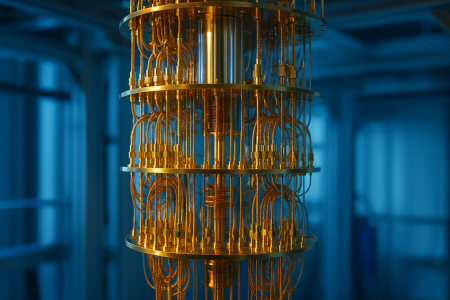

Walk into most quantum computing labs and you will find a chandelier of copper and gold plating hanging inside a refrigerator colder than deep space. Superconducting qubits and many trapped-ion systems need that punishing cold to keep their quantum states intact. Photonic quantum computers make a very different wager. Their qubits are pulses of light, and light does not need to be chilled to a hair above absolute zero to behave quantum mechanically. That single fact reshapes almost everything about how such a machine is designed.
Encoding a qubit in light
There is more than one way to store quantum information in photons. Some approaches use single photons and the paths they can take, a scheme close to what companies like PsiQuantum pursue. Xanadu, a Toronto-based company, leaned into a different flavor called continuous-variable, or CV, quantum computing. Instead of counting individual photons, it manipulates the quantum properties of light fields themselves, using a resource called squeezed light. Squeezing pushes the noise of a light field below its natural quantum limit in one direction, and that reshaped light becomes the raw material for computation.
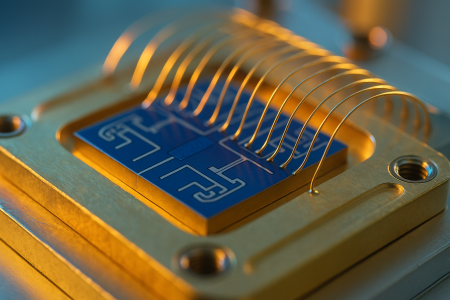
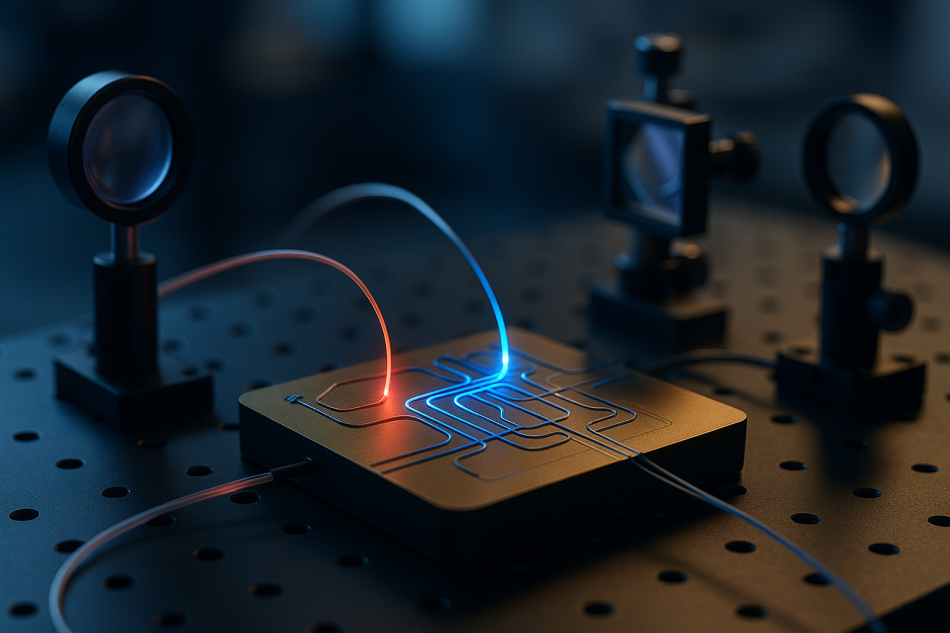
The appeal is practical. Squeezed states can be generated on-chip, routed through optical waveguides, split and combined with beam splitters, and measured with detectors that count or characterize light. Many of these components borrow directly from the telecom and integrated-photonics industries, which have spent decades learning to fabricate optical circuits on silicon. A photonic quantum processor, in principle, can be printed in the same foundries that make the optics inside data centers.
The Borealis demonstration
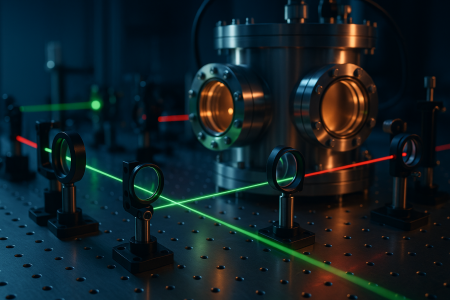
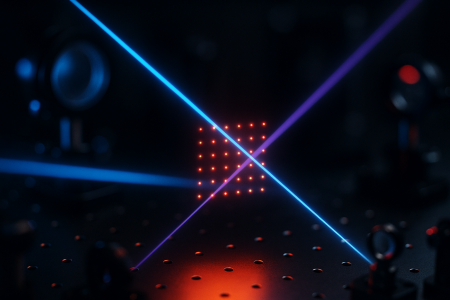
Xanadu's most cited hardware result came from a machine called Borealis, which ran a task known as Gaussian boson sampling. In that experiment, squeezed light pulses were sent through a programmable network of loops and beam splitters, and the pattern of photons detected at the output was measured. The company reported that reproducing those output patterns would be extraordinarily hard for a classical supercomputer, placing the result in the same conversation as earlier quantum-advantage claims from superconducting machines. Gaussian boson sampling is not a general-purpose algorithm, and skeptics rightly note that these demonstrations are chosen because they favor the hardware. But Borealis showed that a room-temperature photonic system could reach a scale where classical simulation strains.
Why light is hard, too
No qubit technology gets a free lunch, and photons come with their own headaches. The biggest is loss. Every time a photon passes through a waveguide, a coupler, or a connector, there is a chance it simply vanishes. In a superconducting chip an error might corrupt a qubit; in a photonic circuit a lost photon can erase the information entirely. Detectors add another wrinkle. The best single-photon detectors are superconducting, which means that even a photonic computer that runs its logic at room temperature usually still needs a small cold stage for its measurement hardware. So the fridge does not fully disappear, it just shrinks and moves to the edges.
Photons also do not naturally interact with one another, which is exactly why they travel cleanly across a room but also why building a two-qubit gate is delicate. CV approaches get around this by using measurement-based tricks, where entanglement is woven into a large cluster of light modes ahead of time and computation proceeds by measuring pieces of that cluster in a chosen order. The quality of the squeezing sets a hard limit on how well error correction can eventually work, which is why raising squeezing levels and cutting loss are the twin engineering obsessions of the field.
The scaling argument
Xanadu has laid out a roadmap centered on networking many modest photonic chips together with optical fiber, rather than fabricating one enormous processor. Because photons are the natural carriers of information between chips, the same light that does the computing can also be shipped down a fiber to the next module. That is a genuine architectural advantage over solid-state qubits, which need separate microwave-to-optical converters or bulky cabling to link fridges. The company also runs a software platform, PennyLane, that has drawn a following among researchers well beyond its own hardware.
Whether the room-temperature wager pays off will come down to unglamorous numbers: how low the loss per component drops, how much squeezing a chip can produce reliably, and how cheaply the parts can be manufactured at volume. Photonics has a real shot precisely because it rides on an existing industry. It also carries real risk, because a single lost photon is unforgiving. For now, the field is a reminder that there is no settled answer to the most basic question in quantum computing: what a qubit should be made of.