
Not all quantum errors are created equal. There is a big difference between a qubit that quietly flips the wrong way and a qubit that stops being a qubit at all. The first kind is a spy: it corrupts your computation and hides among the good data, and the error-correction machinery has to sniff it out by inference. The second kind is more like a blank on a form. You know exactly where it is, even if you no longer know what it should have said. That known location turns out to be worth a lot.
This is the idea behind erasure conversion, one of the more clever hardware tricks to appear in quantum computing in recent years. The pitch is simple: engineer your qubits so that when they fail, they fail into a state you can detect without disturbing the information you care about. Instead of an unknown error hiding somewhere in your register, you get a labeled hole. Correcting a hole is far easier than hunting for a phantom.
Why a labeled error is cheaper
Every error-correcting code has a threshold, a break-even error rate below which adding more physical qubits makes the logical qubit better rather than worse. That threshold depends heavily on what kind of errors you are fighting. The surface code, the field's workhorse, tolerates ordinary unknown errors up to roughly one percent. But if your errors are erasures, with a known location, the tolerable rate jumps dramatically, in some analyses to well over ten percent.
The intuition is that half the decoder's job is finding out where the trouble is. A standard error requires the code to detect that something went wrong and figure out which qubit caused it, using indirect parity measurements. An erasure hands over the location for free. The decoder only has to guess the value, not the address. That extra information relaxes the demands on the physical hardware, which is exactly the kind of leverage a still-immature technology wants.
Building qubits that fail loudly
The trick only works if you can actually build a qubit whose dominant failure mode is a detectable erasure. Two hardware camps have taken this seriously.
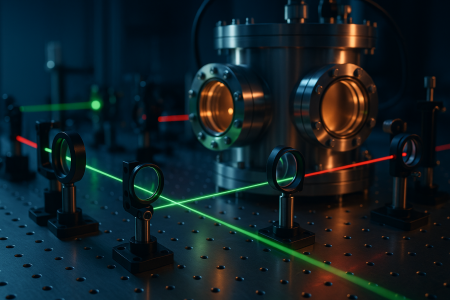
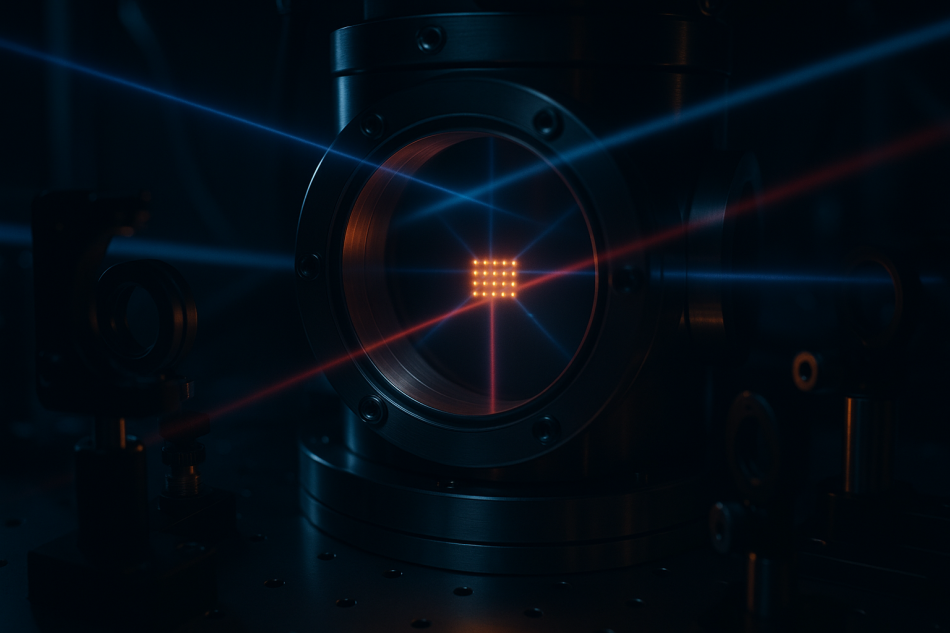
Neutral-atom teams found a natural fit. In these machines a qubit is encoded in two long-lived states of an atom held by laser tweezers. The main way things go wrong during entangling operations is that an atom gets excited to a state that then decays into a level outside the qubit's alphabet, or the atom leaves the trap entirely. Both are, in principle, spottable. By choosing atomic species and encodings carefully and by taking a quick fluorescence check, researchers can flag which sites have leaked out of the computational space without measuring the surviving qubits' actual values.
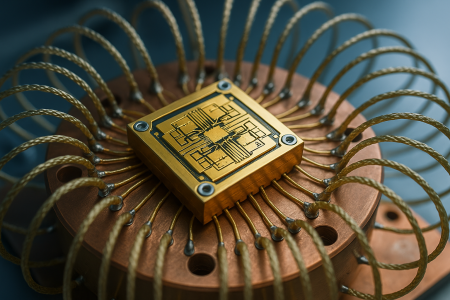
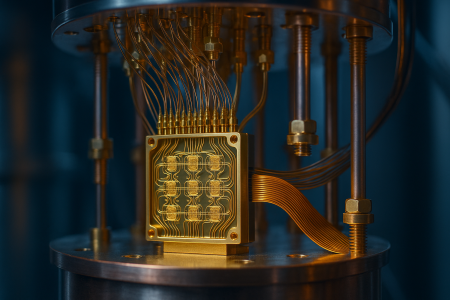
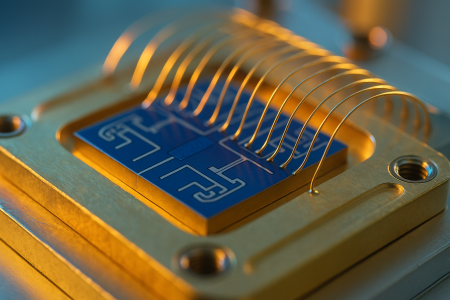
Superconducting groups pursued a different route with so-called dual-rail qubits. Here a single bit of quantum information is spread across a pair of resonators or transmons, encoded in which one holds a photon. The most common enemy of superconducting devices is photon loss. In a dual-rail encoding, losing the photon does not scramble the information into a wrong answer; it empties both rails, which is a distinctive signature you can measure directly. The dominant error converts itself into an erasure, and everything else becomes comparatively rare.
The catch, and why it still helps
Erasure conversion is not a free lunch. You have to spend extra effort on the mid-circuit checks that detect the blanks, and those checks must themselves be gentle enough not to disturb the qubits they are watching. Dual-rail encodings use two physical components to store one bit, which is an overhead. And no scheme converts every error; there is always a residual population of ordinary, unlabeled faults that the code still has to handle the hard way.
Even with those caveats, the payoff is attractive. By reshaping the error budget so that most mistakes come with a return address, hardware designers can hit an error-correction threshold with noisier, more forgiving components than a raw surface code would demand. It is a reminder that in quantum computing the character of an error can matter as much as its size. A slightly noisier machine that fails honestly may beat a quieter one that lies.