
Ask a classical computer to add two numbers and it hands you the result. Ask a quantum computer to solve a problem and it hands you a coin flip. Run the same program again and you might get a different flip. This is not a malfunction. It is the deal you strike with a machine that computes with probabilities. To get a usable answer, you have to run the identical circuit over and over, tally the outcomes, and read the answer in the statistics. Each run is called a shot, and the number of shots you request is one of the first choices you make when you submit a quantum job.
Why one run is never enough
A qubit before measurement can hold a blend of 0 and 1. A quantum algorithm spends its whole life arranging those blends across many qubits so that the right answers become likely and the wrong ones cancel out. But the instant you measure, the blend collapses to a definite string of 0s and 1s. You never see the underlying probabilities directly. You only see one sample drawn from them.
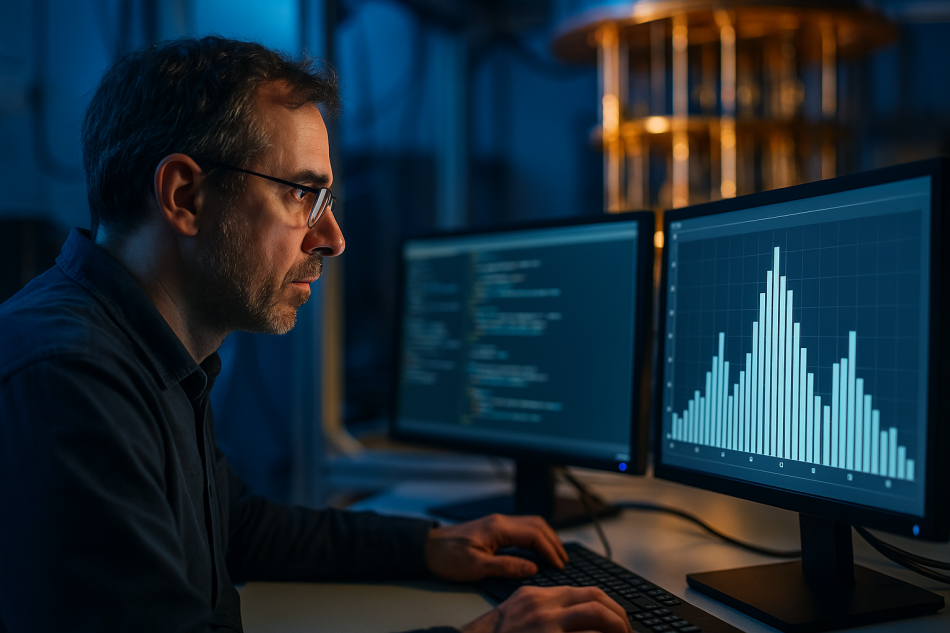
Imagine a weighted die that lands on the correct face 40 percent of the time and scatters across the wrong faces the rest. Roll it once and you learn almost nothing. Roll it a thousand times and the peak at the correct face becomes unmistakable. Quantum measurement works the same way. The circuit defines a probability distribution over bitstrings, and shots are how you reconstruct the shape of that distribution one sample at a time.
The cost of precision
Here is the uncomfortable part. The accuracy of a sampled estimate improves with the square root of the number of shots. To cut your statistical error in half, you need four times as many runs. To get one more decimal digit of precision, you need roughly a hundred times more. This scaling shows up everywhere in near-term quantum computing, and it is why estimating an expectation value to chemical accuracy can demand millions of shots.
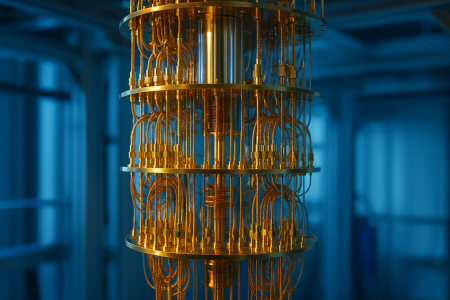
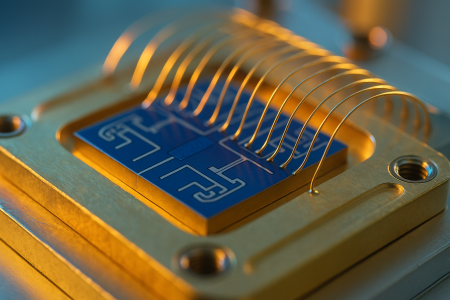
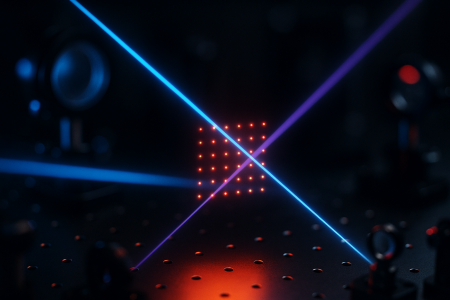
That expense collides with a hard fact about today's hardware: shots take time. On a superconducting processor a single shot might run in tens or hundreds of microseconds, so a million shots is manageable. On a trapped-ion machine, where gates are slower and the atoms have to be prepared and read out carefully, each shot takes far longer, and a million-shot experiment can eat serious wall-clock time. Different technologies buy their accuracy at very different prices.
Where the noise hides
Shots also interact with the two kinds of error that plague quantum computers. The first is fundamental quantum randomness, the coin-flip nature of measurement, which more shots will always beat down. The second is systematic error from imperfect gates, decoherence, and faulty readout. No amount of sampling fixes that. If your hardware biases the die, running it a billion times just gives you an extremely precise picture of the wrong distribution.
This is why shot budgeting is a real skill. Take too few shots and statistical noise drowns your signal. Take too many and you waste expensive machine time chasing precision your noisy hardware cannot support. Practitioners often spend their shots strategically, concentrating them on the measurements that matter most to the final answer.
The algorithms built around it
Whole families of near-term algorithms are shaped by the shot count. Variational methods, which tune a circuit by repeatedly measuring an energy or cost, live and die by how many shots each evaluation needs. Sampling-based demonstrations of quantum advantage are literally defined by the distribution of bitstrings you collect over many shots. Even error mitigation, the collection of tricks for cleaning noisy results without full error correction, tends to demand more shots, because it works by combining several noisy measurements into one better estimate.
Fault-tolerant machines will change the calculus but not eliminate it. Error correction can make each logical measurement reliable, yet many quantum algorithms still return probabilistic answers that require repetition to pin down. Grover-style search and phase-estimation routines reduce how many repeats you need, but they do not make the machine deterministic in the way a laptop is.
So when you read that a quantum computer solved something, picture the reality behind it: the same circuit fired thousands of times, the outcomes piled into a histogram, and an answer coaxed out of the pile. The shot count is not a footnote. It is the bridge between a machine that thinks in probabilities and a user who wants a number.