
Almost every quantum computing company shares a habit: they release a machine, add a few more qubits, release another, and invite customers to experiment along the way. PsiQuantum has spent most of its life refusing to play that game. The Palo Alto company has argued, loudly and repeatedly, that today's noisy processors will never do anything commercially valuable, so there is little point selling access to them. Its plan is to leap straight to a fault-tolerant machine with roughly a million physical qubits, and to build it out of light.
Photons instead of cold metal
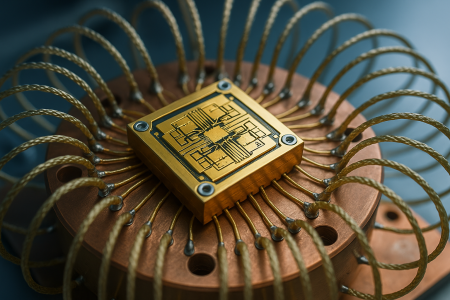
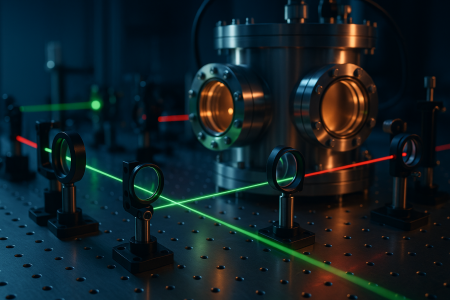
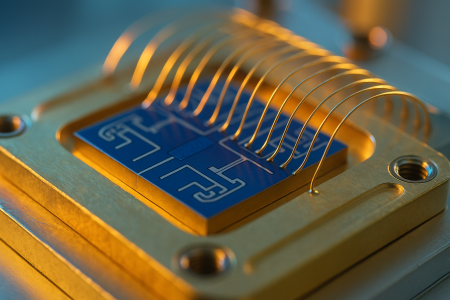
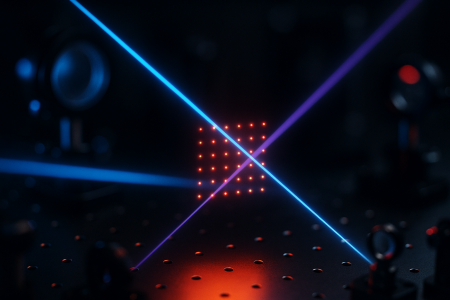
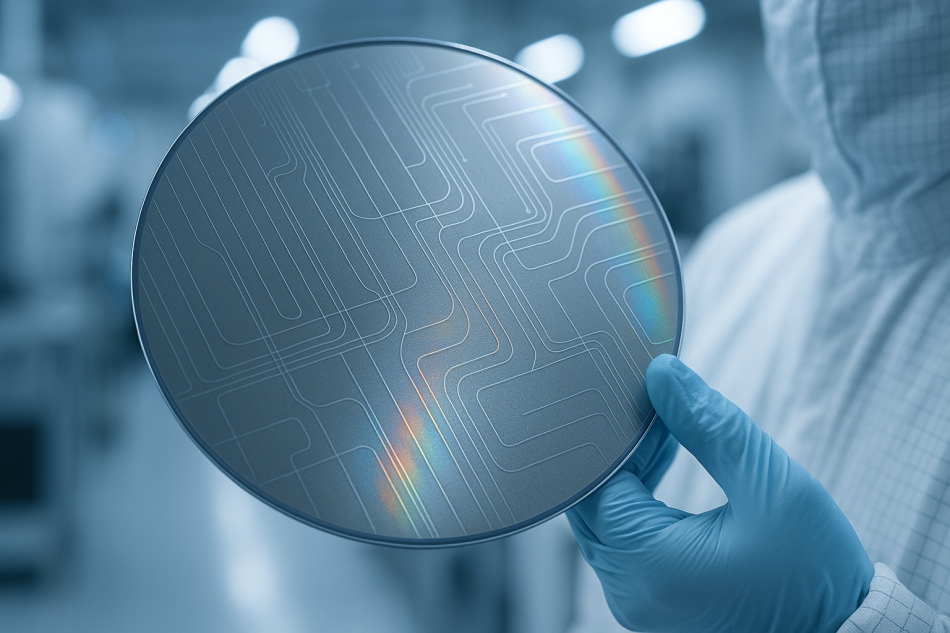
PsiQuantum's qubits are photons, single particles of light steered through waveguides etched into silicon. That choice has a big consequence. Superconducting and trapped-ion machines need custom chips fabricated in specialized labs, but a photonic circuit is, at heart, an optical component patterned onto a silicon wafer. Those are exactly the kinds of structures that a commercial semiconductor foundry already knows how to make by the millions.
This is the crux of the company's argument. Rather than inventing a new manufacturing base from scratch, PsiQuantum partnered with GlobalFoundries to produce its chips on the same 300-millimeter lines that turn out conventional silicon photonics for telecom and data centers. The bet is that scaling a quantum computer is ultimately a manufacturing problem, and that the industry already has factories capable of solving it. If you need a million qubits, you had better be able to make components at industrial volume with reliable yield.
Fusion-based computing
Photonic quantum computing has an awkward reputation, because photons barely interact with each other, which makes two-qubit gates hard. PsiQuantum's answer is an approach called fusion-based quantum computing. Instead of building one large entangled state and carefully steering it, the machine mass-produces small, standardized entangled resource states and then stitches them together with fast measurements called fusions. Errors are handled by generating extra states and throwing away the ones that fail, a strategy that leans on the fact that manufacturing more photonic resources is comparatively cheap.
The catch is that this only works if the whole system is fast, low-loss, and heavily error-corrected. Every lost photon is a potential error, so the components, the detectors, and the switches all have to perform far better than what off-the-shelf photonics currently deliver. PsiQuantum has focused much of its engineering on single-photon detectors and low-loss optical switches, the parts that most directly limit how big a fault-tolerant photonic machine can grow.
Cold, but not that cold
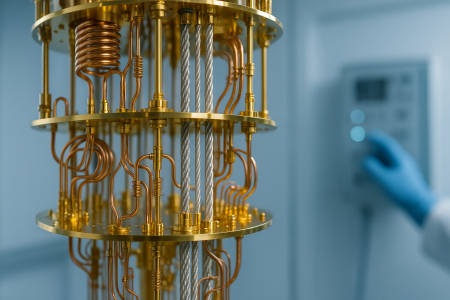
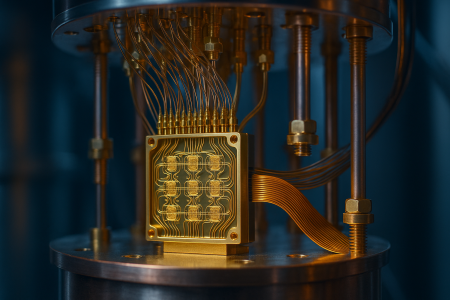
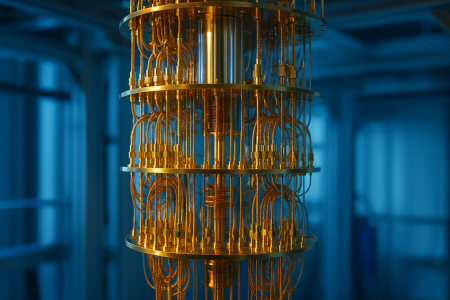
A common misconception is that photonic machines run at room temperature. They do not. The single-photon detectors PsiQuantum relies on are superconducting, so the system still needs cryogenic cooling. But the target is a few kelvin rather than the millikelvin range that superconducting-qubit processors demand. That relaxes the burden on the dilution refrigerator and, the company argues, makes it easier to pack many chips into a single cold environment without the wiring bottleneck that plagues other architectures.
An all-or-nothing wager
The strategy carries obvious risk. By declining to sell small machines, PsiQuantum forgoes the revenue and the steady public benchmarks that rivals use to show progress. Its story is essentially a promise about a future device, which is a hard thing to sell to skeptics who want to see qubits counted today. The company has answered that with capital and infrastructure, raising well over a billion dollars and committing to large facilities, including sites tied to major utility-scale computing projects in Brisbane, Australia, and Chicago.
Those buildings are telling. A trapped-ion or superconducting startup can iterate inside a lab, but a company betting on a million-qubit machine has to think about floor space, cooling plants, and power delivery on the scale of a data center. PsiQuantum is designing the surrounding infrastructure in parallel with the chips, because a fault-tolerant photonic computer is not a rack you plug in, it is a facility.
Whether the wager pays off depends on questions that remain open. Can the foundry hold tight enough tolerances at volume? Can photon losses fall far enough for error correction to close the gap? The answers will not arrive in the form of a slightly bigger chip each year. PsiQuantum has chosen a path where there is no partial credit, only a working machine or a very expensive lesson.