
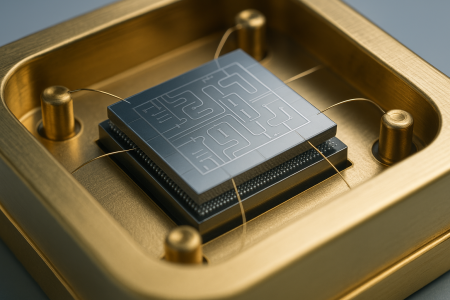
The Flip-Chip Stack: How Quantum Processors Went 3D
For years, a superconducting quantum processor was a fundamentally flat object. The qubits, the resonators that read them out, and the control lines t...
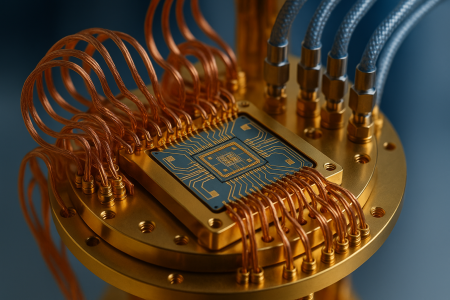
Below Threshold: The Magic Error Rate That Makes Quantum Computing Possible
Ask a quantum engineer why the field bothers with error correction at all, and eventually the conversation lands on a number. Not a qubit count, not a...
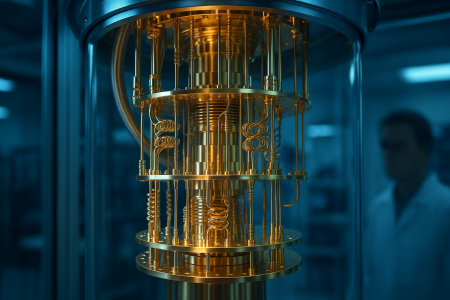
Why Quantum Computers Need to Be Colder Than Deep Space
Walk into a lab that houses a superconducting quantum computer and the thing that grabs your attention is not a screen or a server rack. It is a gleam...
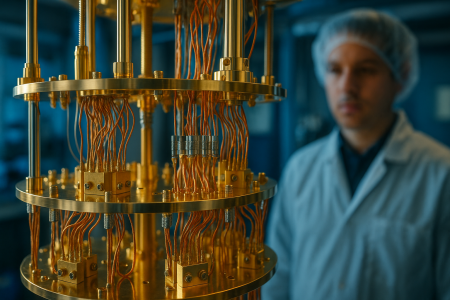
The Coherence Clock: The Race to Make Qubits Remember Longer
Ask a quantum hardware engineer what keeps them up at night and you will rarely hear about qubit counts. More often it is a single, stubborn number me...
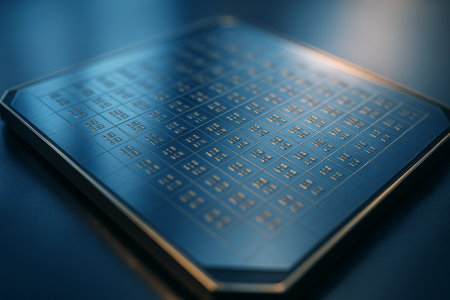
The Surface Code: Quantum Computing's Favorite Safety Net
Ask engineers at IBM, Google, or a dozen startups how they plan to build a quantum computer that actually finishes a useful calculation, and you will...
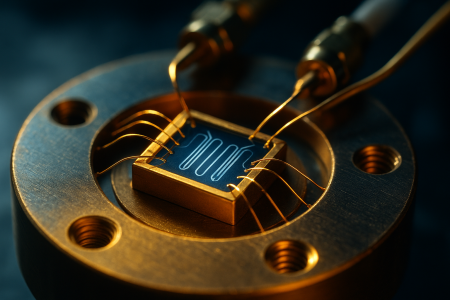
The Topological Gambit: Microsoft's Long Bet on the Braided Qubit
Most quantum computers fight noise from the outside in. Engineers wrap a fragile qubit in shielding, chill it near absolute zero, run constant error c...
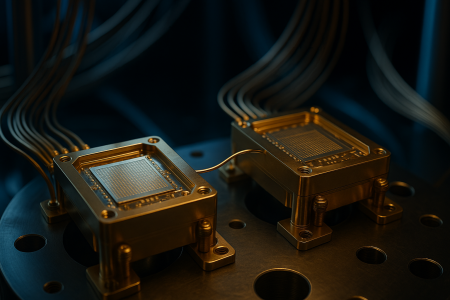
The Quantum Interconnect: Wiring Separate Chips Into One Computer
There is a ceiling on how big a single quantum chip can get. Fabrication yield drops as the wafer grows, wiring gets impossibly crowded, and a chip th...

The Sampling Tax: Why Quantum Computers Run Every Job Thousands of Times
Ask a classical computer to add two numbers and it gives you one answer. Ask a quantum computer to run a circuit and it gives you a single bitstring d...
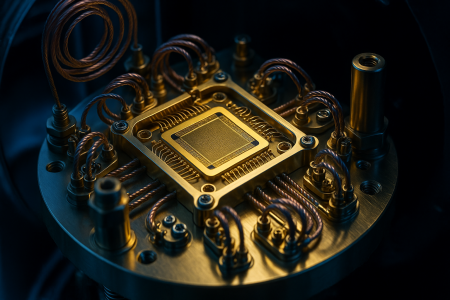
The Topological Long Shot: Microsoft's Bet on Majorana Qubits
Walk through the quantum computing landscape and you will find a familiar pattern. Companies build qubits out of superconducting circuits, trapped ion...
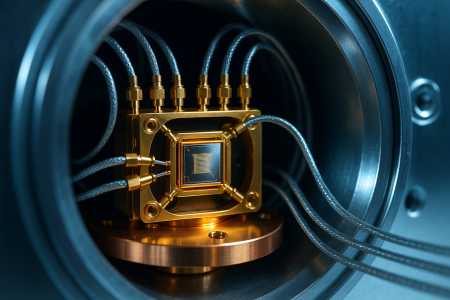
The Reset Button: How a Qubit Gets Wiped Clean Between Runs
Every quantum program begins with a demand that sounds trivial and turns out to be surprisingly hard: start from zero. Not an approximate zero, not a...
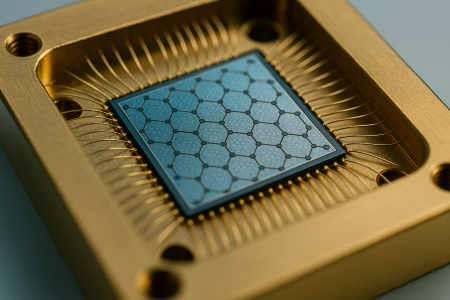
The Heavy-Hex Grid: Why IBM Spread Its Qubits Thin
Look at a photograph of one of IBM's quantum processors and you might expect a dense mesh, every qubit wired to as many neighbors as possible. Instead...

The Rydberg Blockade: How Neutral Atoms Say No to Their Neighbors
Neutral-atom quantum computers have a curb-appeal problem. Rows of identical atoms held in laser tweezers look almost too tidy to compute anything. Th...
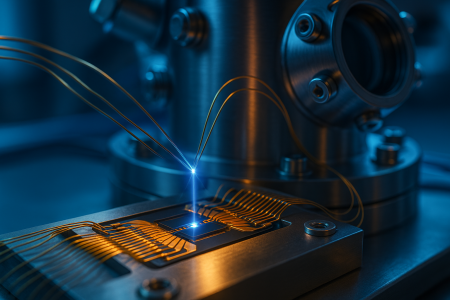
The Honeywell Spinout: How Quantinuum Bet on Trapped Ions
Most people don't associate thermostats and jet engine controls with quantum computing. Yet one of the most quietly influential quantum hardware maker...
The Cat Qubit: The Qubit That Makes Only One Kind of Mistake
Most qubits fail in two ways. They can suffer a bit-flip, where a 0 quietly becomes a 1, and they can suffer a phase-flip, where the delicate relation...
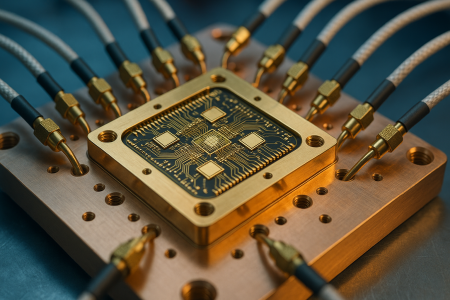
The Cross-Resonance Gate: Entangling Qubits Without Turning a Dial
Every quantum computer needs a way to make two qubits talk to each other. Without a reliable two-qubit gate, you can flip individual qubits all day an...
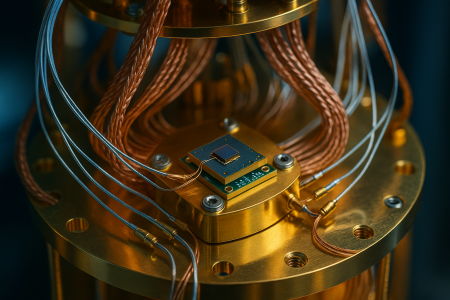
The Cold Controller: Moving Qubit Electronics Into the Fridge
Every superconducting qubit needs a babysitter. Somewhere outside the refrigerator sits a rack of signal generators, digital-to-analog converters, and...
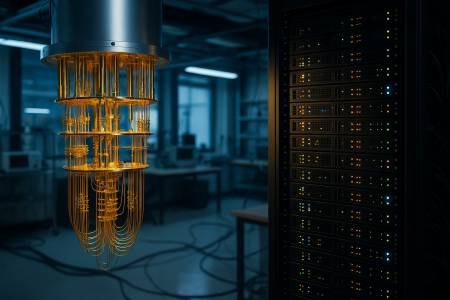
The Supremacy Rematch: When Classical Computers Fight Back
Every so often a quantum computing group announces that its machine has done something no classical computer can match. The task is usually obscure, t...
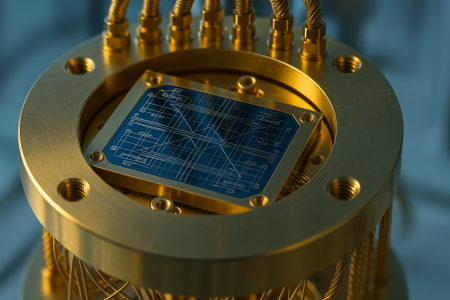
The qLDPC Bargain: The Code That Slashes the Qubit Tax
Every error-corrected quantum computer pays a tax. To keep a single logical qubit alive long enough to finish a calculation, you surround it with a cr...
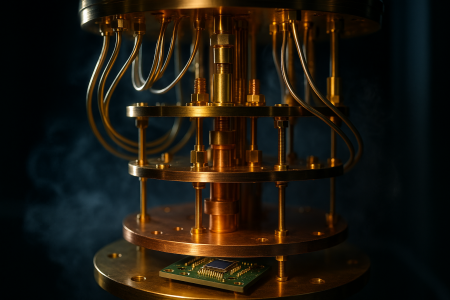
The Cryo-CMOS Bet: Moving Qubit Control Into the Cold
A quantum processor is the star of the show, but it cannot do anything alone. Each qubit needs a steady diet of carefully shaped microwave pulses to r...
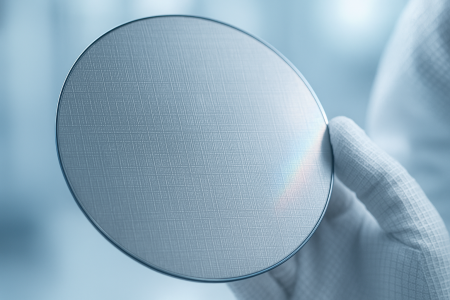
The Silicon Spin Bet: Building Qubits on a Chip Fab Line
Walk into most quantum computing labs and the hardware barely resembles a computer chip. Trapped-ion machines use vacuum chambers and lasers. Supercon...
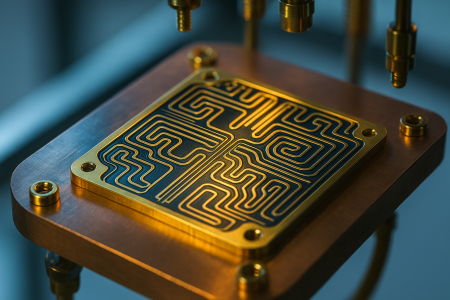
The Leakage Problem: When a Qubit Escapes Its Two States
Every explanation of a qubit starts the same way: it lives in two states, call them 0 and 1, and it can be any blend of the two. That picture is a con...