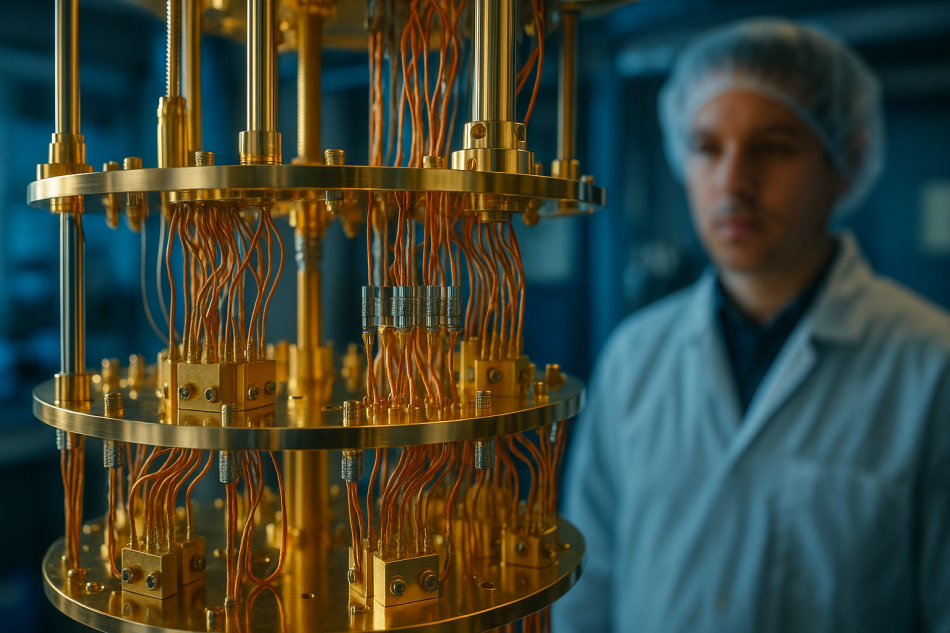

Ask a quantum hardware engineer what keeps them up at night and you will rarely hear about qubit counts. More often it is a single, stubborn number measured in microseconds: coherence time. It is the window during which a qubit holds its delicate quantum state before the outside world nudges it into nonsense. When that window closes, the computation is over. Everything quantum computers promise depends on doing useful work before the clock runs out.
What "coherence" actually means
A qubit can exist in a superposition, a blend of zero and one, and that fragile blend is what gives quantum machines their power. The problem is that nature hates leaving such states alone. Stray magnetic fields, vibrations, heat, even faint cosmic rays all conspire to disturb it. Engineers track two main numbers. T1 measures how long a qubit holds its energy before relaxing back to a ground state. T2 measures how long it keeps the phase relationship that makes superposition meaningful. When physicists talk about coherence time, they usually mean some version of T2, because that is the one that governs how many operations you can chain together.
The math is unforgiving. If a single gate operation takes tens of nanoseconds and your coherence time is a hundred microseconds, you get a few thousand operations at best before errors swamp the result. Real algorithms of commercial interest want millions or billions. That gap is the whole game.
Different qubits, different clocks
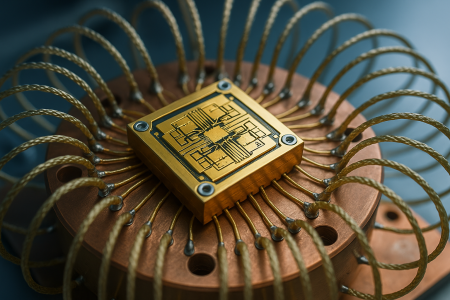
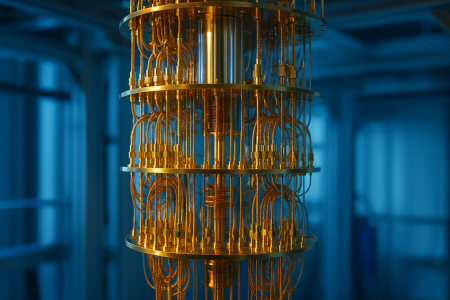
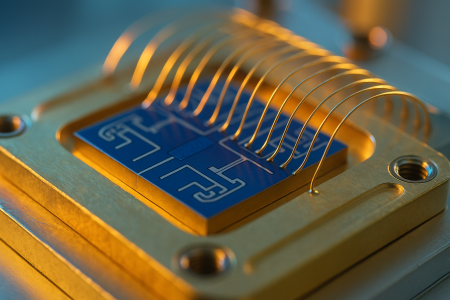
Coherence times vary wildly depending on how you build a qubit, and that variation shapes the entire competitive landscape. Superconducting qubits, the kind favored by IBM and Google, are fast to operate but historically had short memories. Early devices measured coherence in nanoseconds. Steady engineering has pushed leading superconducting qubits into the hundreds of microseconds, and some specialized designs claim more. The improvements came from cleaner materials, better fabrication, and clever circuit designs that shield the qubit from noise.
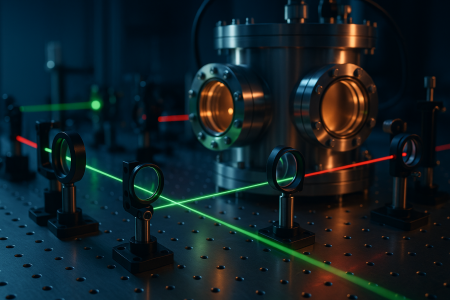
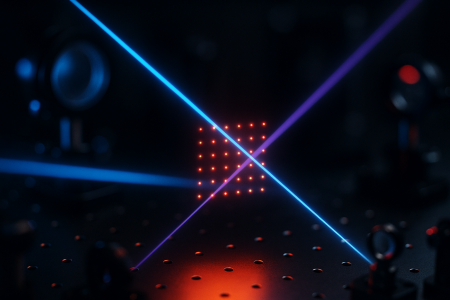
Trapped-ion systems play a different game. Atoms suspended in electromagnetic fields can hold coherence for seconds, sometimes far longer, because an isolated atom is naturally well shielded from its surroundings. The tradeoff is speed. Ion gates are far slower than superconducting ones, so the long memory partly compensates for the leisurely pace rather than handing out a free advantage. Neutral-atom platforms sit in a similar regime. The lesson is that coherence time alone tells you little. What matters is the ratio between how long a qubit lasts and how long a single operation takes.
Why longer memory changes everything
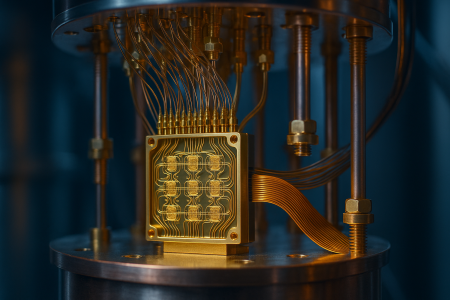
Error correction has dominated recent headlines, and for good reason, but it leans heavily on the underlying hardware. Encoding one reliable logical qubit can demand hundreds or thousands of physical qubits, and the cost of that overhead drops sharply as physical qubits get cleaner and last longer. Better coherence means fewer physical qubits per logical qubit, which means a useful machine arrives with a smaller, cheaper, more manageable chip. Improving coherence is one of the most direct ways to make the whole error-correction project tractable.
There is also a near-term payoff. Today's noisy machines run shallow circuits, meaning short sequences of operations, precisely because deeper circuits decohere into garbage. Every extra microsecond of coherence lets researchers run slightly more ambitious experiments without any error correction at all.
Where the gains are coming from
The recent progress is less about dramatic breakthroughs than relentless refinement. Teams have traced decoherence to specific culprits and attacked them one at a time:
- Two-level systems, microscopic defects in materials and interfaces that absorb energy from qubits, addressed with purer substrates and improved fabrication.
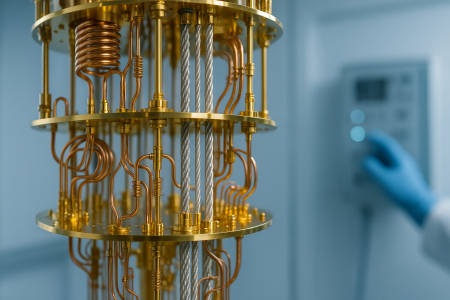
- Better shielding and filtering to keep electrical and magnetic noise out of the cryostat.
- Improved qubit designs, such as the fluxonium, that are inherently less sensitive to certain noise channels than the workhorse transmon.
- Dynamical decoupling, a software trick that periodically flips a qubit to average out slow noise, effectively extending usable coherence.
None of these alone solves the problem. Together they have moved the field forward by orders of magnitude over the past two decades, quietly and without fanfare.
It is tempting to judge quantum computers by the size of their chips. The more revealing question is how long their qubits can think before they forget. Until that clock runs long enough to outlast a real calculation, every other milestone remains provisional.