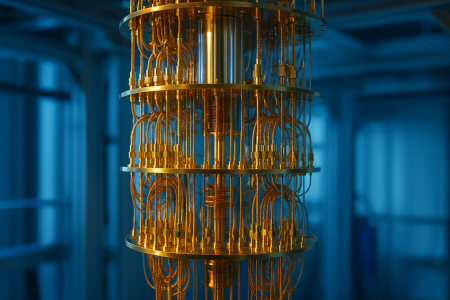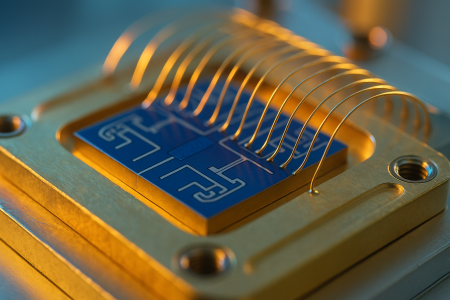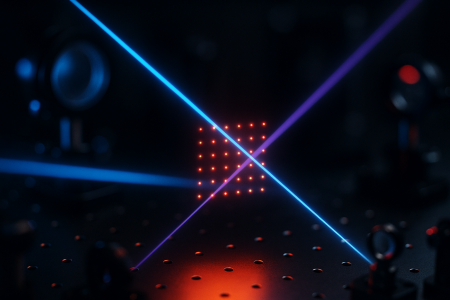

Walk through the quantum computing landscape and you will find a familiar pattern. Companies build qubits out of superconducting circuits, trapped ions, neutral atoms, or photons, then spend enormous effort fighting the noise that corrupts those qubits within microseconds. Microsoft chose a different strategy. Instead of building fragile qubits and correcting their errors after the fact, it set out to build qubits that resist errors by their very nature. The approach is called topological quantum computing, and it has been one of the most ambitious and contested gambles in the field.
The idea behind topological protection
Most qubits store information in something delicate, like the energy state of an electron or the spin of an ion. Bump it with stray heat, electromagnetic noise, or a passing cosmic ray, and the information smears away. A topological qubit aims to store information in a way that is spread out across a system rather than pinned to a single particle. The logic is that if the information is encoded non-locally, a local disturbance cannot easily destroy it.
The physical ingredient at the heart of this scheme is the Majorana zero mode, an exotic quasiparticle that can appear at the ends of certain superconducting nanowires under the right conditions. A single piece of quantum information would be split and shared between two of these modes sitting far apart on a chip. To corrupt the data, noise would have to disturb both ends in a coordinated way, which is statistically unlikely. In principle, that built-in resilience could dramatically reduce the overhead of quantum error correction, the resource-hungry process that everyone else relies on to make qubits trustworthy.
Why it took so long
The catch is that Majorana zero modes are extraordinarily hard to create and even harder to confirm. They emerge only at the boundary between specially engineered semiconductors and superconductors, cooled to near absolute zero, with magnetic fields tuned to precise values. For years the central scientific question was not how to compute with them, but whether they existed at all in these devices. Experimental signatures that looked like Majorana modes sometimes turned out to be mundane effects masquerading as the real thing, and the field learned to be cautious about claims.
That caution was warranted. The research community has seen retracted papers and walked-back results around Majorana detection, a reminder of how subtle the physics is. Distinguishing a genuine topological state from an ordinary one that mimics its fingerprints requires careful protocols and reproducible measurements, not a single promising data trace.
From physics question to engineering goal
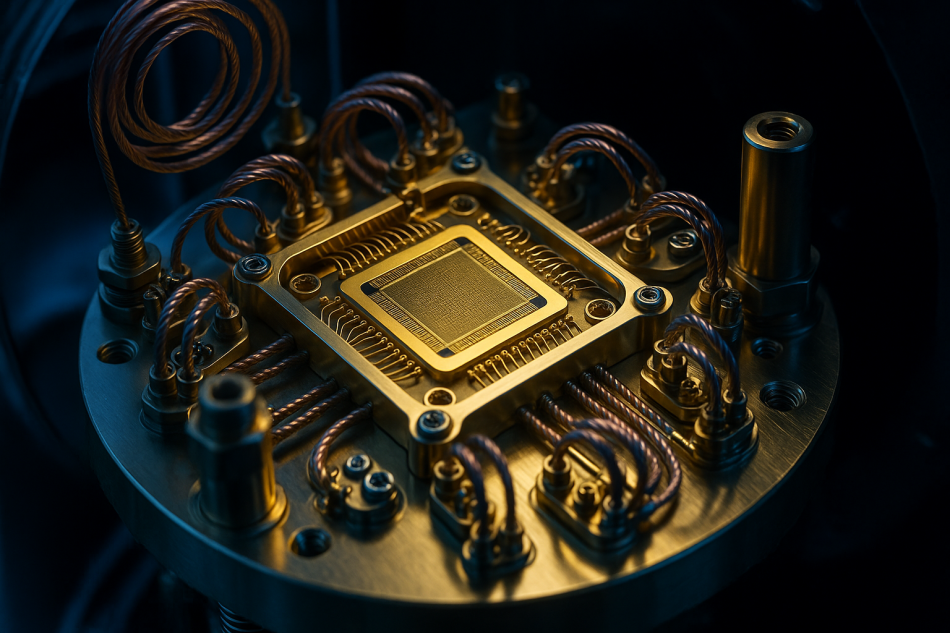
More recently, Microsoft has framed its work around fabricating a device it describes as a topological qubit built into a chip architecture, alongside a measurement-based scheme for reading and manipulating the encoded information. The company has also published peer-reviewed work laying out protocols meant to verify whether a device actually hosts the topological states it is supposed to. The shift in emphasis is telling. The conversation has moved from "can we see a Majorana" toward "can we build a manufacturable, controllable qubit out of one."
If the approach works, the payoff is structural. A topological qubit that is intrinsically stable would need far fewer physical qubits to form a single reliable logical qubit. Every other platform expects to spend hundreds or thousands of physical qubits per logical one. Cutting that ratio would change the math on how large a useful machine has to be, and how soon it could arrive.
The risk of betting against the field
The downside is equally stark. Superconducting and trapped-ion machines already run real circuits and demonstrate working error correction today. Microsoft's topological hardware is still proving its foundations while competitors scale up devices that, however noisy, indisputably function. A bet that pays off late, or not at all, is a hard place to be in a fast-moving industry.
Microsoft has hedged somewhat by offering access to other companies' quantum hardware through its cloud platform, so its software and tooling stay relevant regardless of which physical qubit wins. But its in-house hardware ambition rests squarely on topology. It is a high-variance strategy: if Majorana qubits behave as theory promises, the company could leapfrog rivals who are stuck managing oceans of error correction. If they do not, years of effort produce a beautiful piece of physics with no machine attached.
That tension makes the topological program worth watching even for people who never touch a quantum computer. It is a clean test of a deep idea, namely that the smartest way to fight noise might be to design hardware where the noise has nowhere useful to grab. The rest of the industry is correcting errors. Microsoft is trying to avoid them.