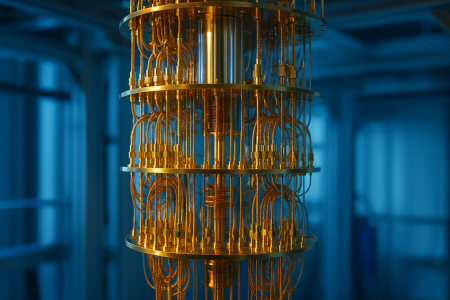

Every error-corrected quantum computer pays a tax. To keep a single logical qubit alive long enough to finish a calculation, you surround it with a crowd of physical qubits that constantly check each other for mistakes. The surface code, the industry's default choice, is greedy about this. Depending on the error rate and how long the computation runs, protecting one logical qubit can swallow a thousand physical ones. Multiply that by the hundreds or thousands of logical qubits a useful algorithm needs, and the machine balloons into the millions of qubits nobody knows how to build yet.
That arithmetic is why a different family of codes has moved from theory papers into company roadmaps. They go by the mouthful quantum low-density parity check, or qLDPC. The promise is blunt: the same protection for a fraction of the qubits.
What LDPC actually means
The name is borrowed from classical coding theory, where LDPC codes already run inside your phone and your hard drive. "Low-density parity check" describes the checks that catch errors. Each check touches only a handful of bits, and each bit is watched by only a handful of checks. That sparseness is what makes the codes practical to decode at high speed.
Quantum versions keep the same spirit. Instead of measuring every qubit against a small local patch of neighbors, as the surface code does on its two-dimensional grid, a qLDPC code lets each check reach a fixed, small number of qubits that may sit far apart. The surface code is technically a qLDPC code too, just an especially inefficient one. The interesting members of the family pack far more logical qubits into the same number of physical qubits.
The bicycle codes
The version that grabbed the most attention is a class known as bivariate bicycle codes. IBM described one instance, nicknamed the gross code, that stores 12 logical qubits inside 144 physical data qubits plus their checks. Run the same protection with a surface code and you would need roughly ten times as many qubits for comparable performance. That is not a rounding error. It is the difference between a machine you might build this decade and one you might not.
The catch lives in the wiring. The surface code earned its popularity because it is stubbornly local. Every qubit talks only to its immediate neighbors on a flat grid, which suits chips where you etch connections in a plane. Bicycle codes break that comfort. Some of their checks reach across the layout to qubits that are nowhere near each other. On paper the connections are still sparse, six per qubit in IBM's example, but a few of those six are long-range.
Why the wiring matters so much
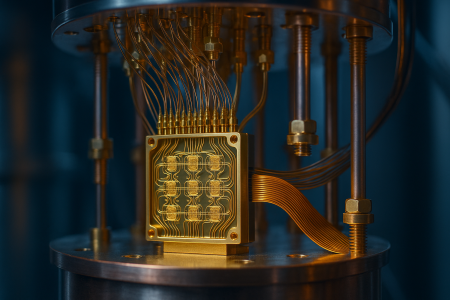
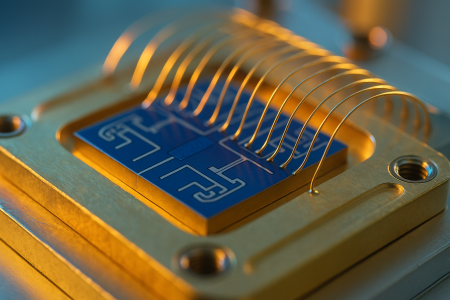
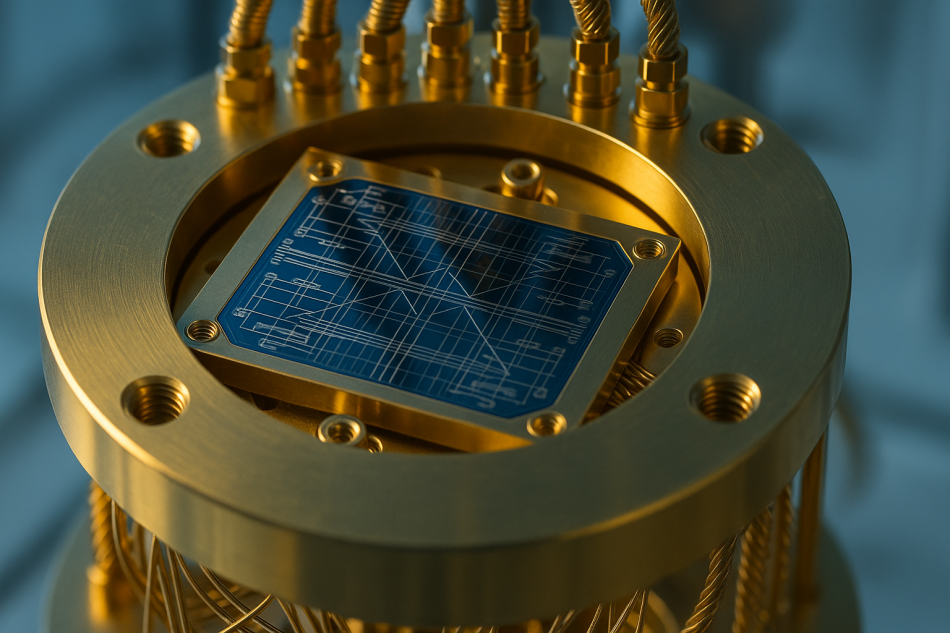
Long-range connections are exactly what superconducting chips hate. You cannot simply run a wire diagonally across the chip without crossing other wires and inviting crosstalk. IBM's proposed answer is to build the connections in layers, adding a second plane of couplers so the long links pass over the rest of the circuit rather than through it. That is a real fabrication challenge, and it is the price of admission for the qubit savings.
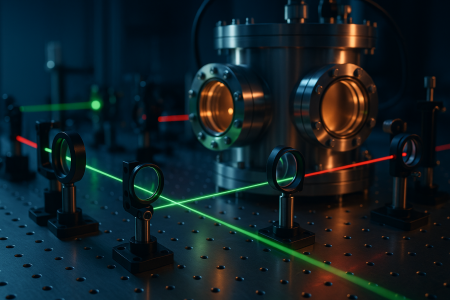
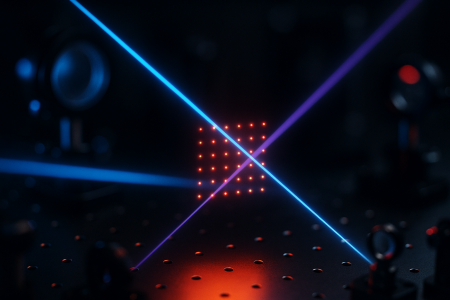
Other hardware platforms sit in a more comfortable spot. Trapped-ion and neutral-atom machines can physically move qubits around, shuttling ions or re-parking atoms with laser tweezers. For them, connecting two distant qubits is a matter of bringing them together, not routing a permanent wire. That flexibility makes qLDPC codes a natural fit, and several groups have argued that atom arrays could adopt them with less pain than superconducting chips.
The decoding problem
Cutting qubit count does not come free elsewhere. The surface code has fast, well-understood decoders that turn a snapshot of the checks into a verdict about what went wrong. Bicycle codes are harder to decode because their errors do not fall into the neat, geometrically local patterns the surface code produces. Researchers have been building specialized decoders, some borrowing tricks from classical LDPC decoding, that run fast enough to keep up with a live machine. That software race is as important as the hardware one, because a code you cannot decode in real time is no code at all.
None of this dethrones the surface code overnight. It remains the safe, well-mapped route, and plenty of roadmaps still lean on it. But qLDPC codes have shifted the conversation about what a fault-tolerant machine has to cost. If the wiring and decoding hold up, the qubit tax that has defined every serious roadmap could drop by an order of magnitude, and the finish line for a useful, error-corrected quantum computer could move a lot closer.