

The Tweezer Array: How Lasers Assemble a Grid of Atom Qubits
Most quantum computers arrive with their qubits already built in. A superconducting chip is fabricated in a cleanroom, its qubits etched and deposited...
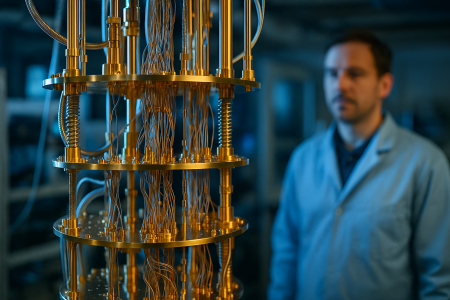
The Helium-3 Squeeze: The Rare Isotope Every Quantum Fridge Needs
Ask what limits the growth of a superconducting quantum computer and you will hear about qubit counts, error rates, and wiring. Further down the list,...

The Nitrogen Fix: The Fertilizer Molecule Quantum Computers Chase
Roughly one percent of the world's energy goes into a single chemical reaction. The Haber-Bosch process pulls nitrogen out of the air and combines it...
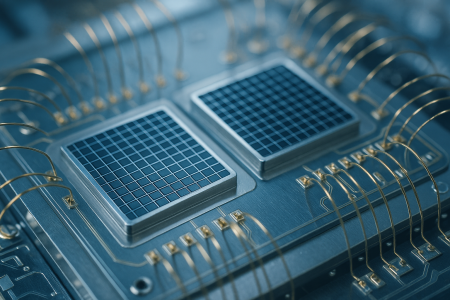
Lattice Surgery: How Two Protected Qubits Actually Touch
Building a reliable qubit is only half the battle. Once you have wrapped a fragile piece of quantum information inside a surface code, spreading it ac...

The Diamond Qubit: Quantum Computing Without the Deep Freeze
Nearly every quantum computer you read about shares one demanding requirement: brutal cold. Superconducting chips need dilution refrigerators that hov...
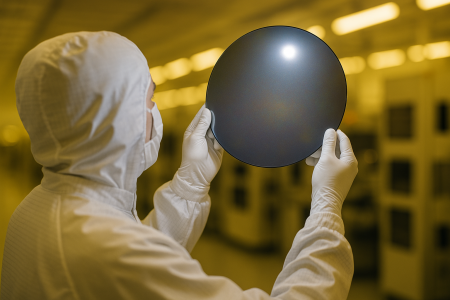
The Silicon Spin: Intel's Bet on Qubits From a Chip Fab
Walk into a modern semiconductor fab and you find an industry that has spent decades learning to print features smaller than a virus, millions of time...
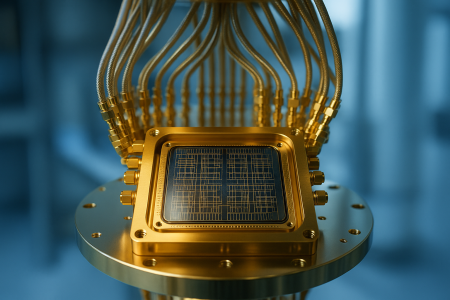
The Threshold Crossing: When More Qubits Finally Meant Fewer Errors
There is a moment every quantum computing engineer has been chasing since the 1990s, and it is almost perverse in how simple it sounds. Take a single...
The Leakage Ladder: When a Qubit Climbs Out of Its Lane
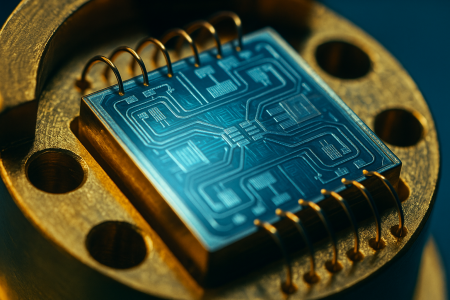
A qubit is a promise of simplicity. Two states, zero and one, and nothing in between to worry about. That promise is what makes the whole edifice of q...
The Hot Qubit Gambit: Running Quantum Chips Above a Kelvin
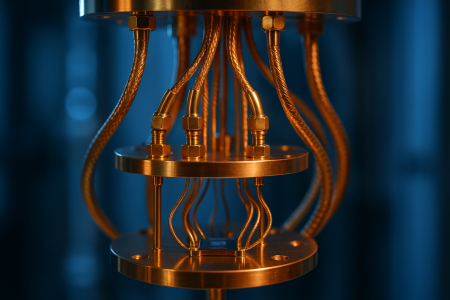
Ask why quantum computers are so hard to build and the answer usually starts with temperature. Superconducting and spin qubits typically operate aroun...
The Annealing Outlier: How D-Wave Built a Different Kind of Quantum Machine
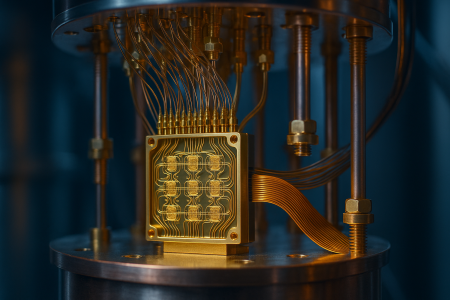
Walk into almost any conversation about quantum computing and you will hear about qubits, gates, and circuits. The mental model is borrowed from class...
The Flip-Chip Stack: Why Qubits Moved Into a Second Story
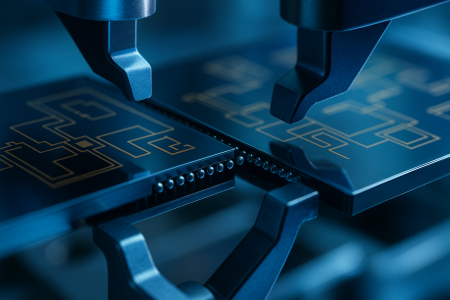
For years, a superconducting quantum processor lived on a single flat piece of silicon or sapphire. The qubits sat on the surface, and so did everythi...
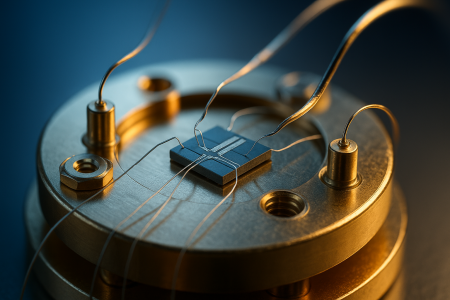
The Braided Qubit: Microsoft's Long Bet on Topological Matter
Most quantum computers fight noise with brute force. You take a fragile physical qubit, surround it with dozens or hundreds of helpers, and run a cons...
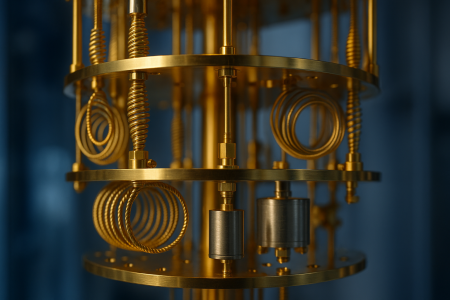
The Faint Whisper: The Amplifiers That Hear a Qubit Speak
When a superconducting qubit finishes a calculation, it has to tell you what it holds. It does this by nudging a tiny microwave signal, a pulse so wea...

Renting a Qubit: How the Quantum Cloud Actually Works
The strangest thing about quantum computing is how ordinary the front door looks. You do not need a cleanroom, a physics PhD, or a refrigerator colder...

The Derivative Price: The Monte Carlo Gamble a Quantum Computer Wants to Shorten
Ask a bank what a complicated option is worth and, behind the scenes, a computer starts rolling dice. Not literally, but close. To price a derivative...
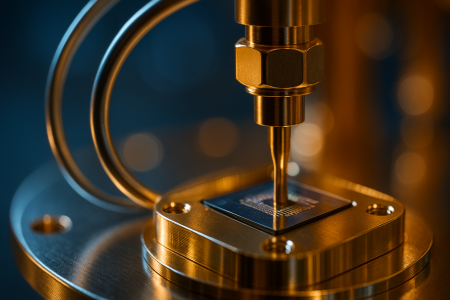
The Rabi Flop: How a Microwave Nudge Rotates a Qubit
Every quantum program, no matter how elaborate, bottoms out in the same humble act: pushing one qubit from where it is to where you want it. On a supe...
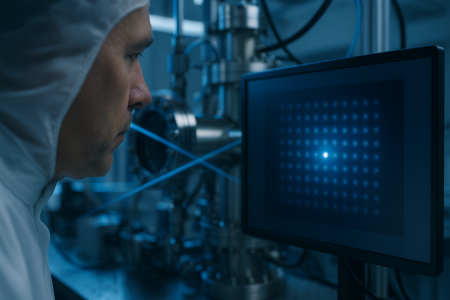
The Erasure Trick: Making Qubit Errors Announce Themselves
Every quantum computer fights the same enemy: errors. Qubits drift, decay, and flip in ways that corrupt a calculation long before it finishes. The us...
The Logical Qubit: Counting the Ones That Actually Matter
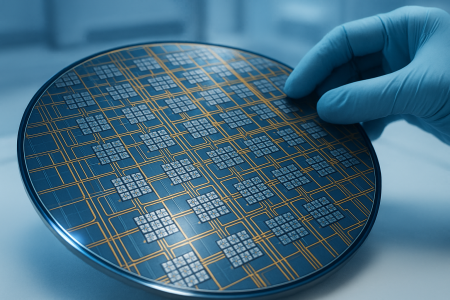
Ask how big a quantum computer is and you will get a number: 100 qubits, 1,000 qubits, someday a million. It sounds like counting transistors. It is n...
The Tantalum Surprise: How a Material Swap Stretched Qubit Lifetimes
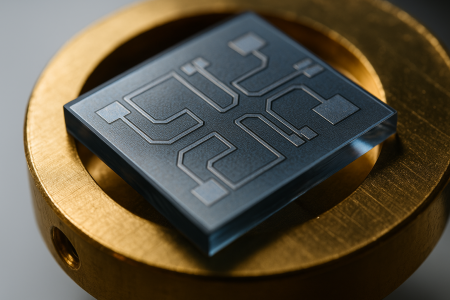
For years the standard recipe for a superconducting qubit looked settled. You patterned thin films of aluminum and niobium on a silicon or sapphire ch...
The Readout Problem: How a Quantum Computer Actually Reads a Qubit
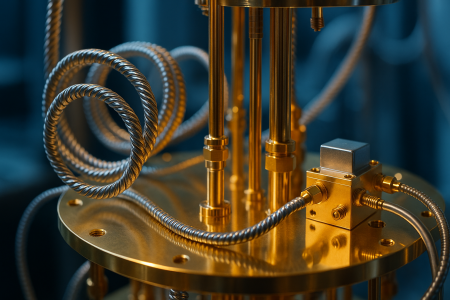
Most of the attention in quantum computing goes to the front of the calculation: how you make a qubit, how long it stays coherent, how cleanly you can...
The Magic State Problem: Quantum Computing's Hidden Tax on Useful Math
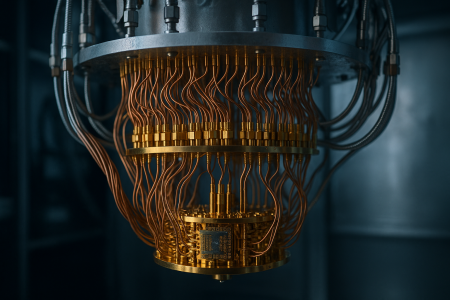
When people talk about building a fault-tolerant quantum computer, the conversation usually stops at error correction. Bundle many physical qubits int...