
Every quantum computer fights the same enemy: errors. Qubits drift, decay, and flip in ways that corrupt a calculation long before it finishes. The usual response is error correction, spreading one unit of information across many physical qubits so mistakes can be caught and reversed. But there is a subtler idea gaining traction in labs, and it changes the math in a surprising way. Instead of only trying to stop errors, some teams are engineering qubits so that when an error does happen, the machine knows immediately which qubit failed and roughly when. An error you can locate is called an erasure, and erasures are dramatically easier to fix.
Why location is worth so much
To understand the appeal, consider the difference between two situations. In the first, someone tells you a page in a book has a typo but not which page. In the second, they hand you the exact line. The typo is identical, but the second case is far cheaper to repair because you skip the search. Quantum error correction faces the same problem. A standard error hides in two ways at once: you do not know where it happened, and you do not know whether it was a bit flip, a phase flip, or both. The correction machinery has to infer all of that from indirect measurements.
Erasure errors strip away half the mystery. If the hardware can flag that a specific qubit was lost or scrambled, the decoder no longer has to hunt for the location. That single piece of side information raises the fault-tolerance threshold, the error rate a code can tolerate before correction stops helping, by a large margin. For the popular surface code, the tolerance for ordinary errors sits around one percent. For erasure errors whose positions are known, the tolerable rate climbs toward the tens of percent. The code becomes far more forgiving simply because it is told where to look.
Building qubits that fail loudly
The catch is that most qubits do not naturally announce their failures. A transmon that loses energy just quietly ends up in the wrong state. So researchers are redesigning the physical qubit itself so that the dominant failure mode pushes the system somewhere detectable, outside the normal working space, where a gentle measurement can spot it without disturbing the quantum information that survived.
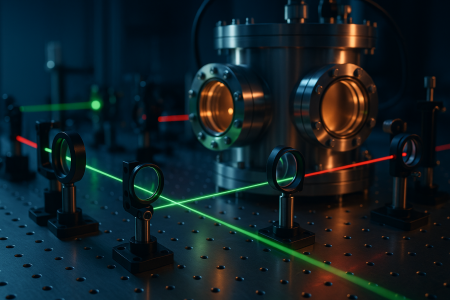
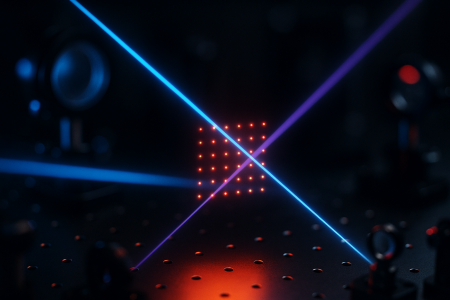
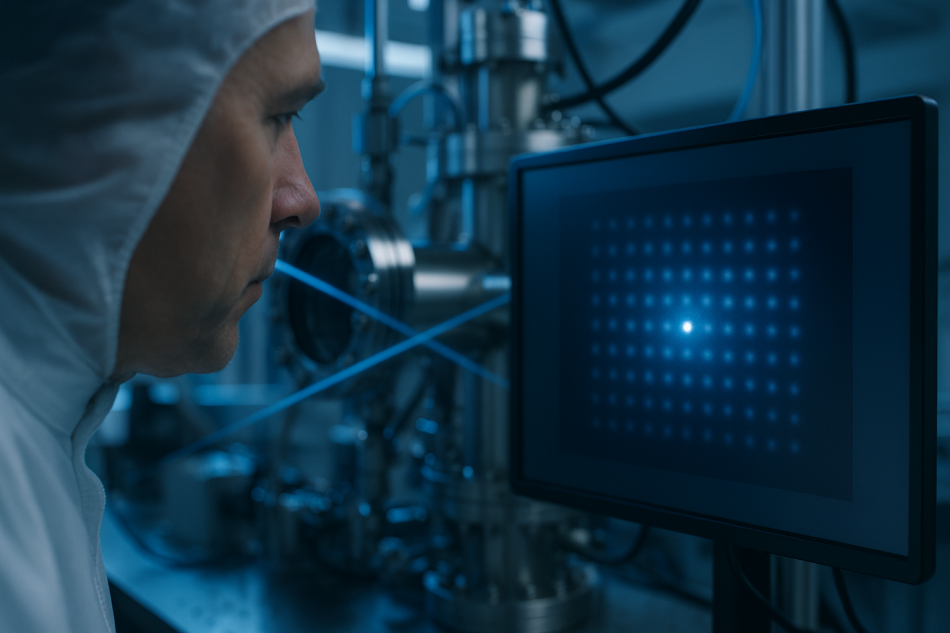
Two approaches have drawn the most attention. In neutral-atom machines, teams working with alkaline-earth-like atoms such as ytterbium encode qubits in long-lived metastable states. When one of those states decays, the atom drops into a different level that fluoresces under the right laser. A camera sees a flash of light exactly where the error occurred, converting an invisible decay into a bright, locatable erasure. Crucially, the atoms that did not decay stay dark and keep their quantum state intact.
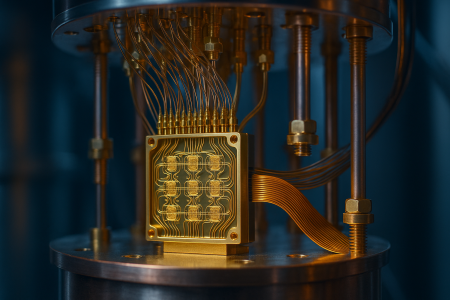
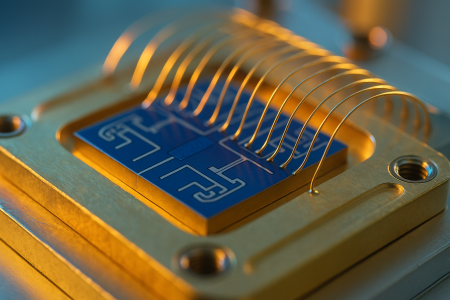
In superconducting hardware, the leading idea is the dual-rail qubit. Here a single logical bit is stored across a pair of elements, and the information lives in whether the excitation sits in the first or the second. The most common failure, the loss of that excitation, kicks the system into a state with no excitation at all. That empty state is easy to check for without reading out the encoded value, so the most frequent error becomes a flagged erasure rather than a silent corruption.
What it costs and what it buys
None of this is free. Erasure qubits often require more hardware per logical unit, extra measurement steps, or exotic atomic species that complicate control. The dual-rail approach roughly doubles the components involved. Neutral-atom erasure detection demands fast, non-destructive imaging that does not accidentally heat or eject the atoms. And converting errors into erasures only helps if the conversion is efficient. A scheme that catches ninety percent of failures as erasures but lets the rest slip through as ordinary hidden errors still has to contend with that leftover fraction.
Still, the trade tends to favor the erasure side. Doubling the physical footprint is a modest price if it multiplies the error tolerance and shrinks the total number of qubits needed for a working logical qubit. That last point matters enormously, because the overhead of error correction is the single biggest obstacle between today's noisy processors and the large fault-tolerant machines everyone is chasing.
Erasure conversion will not, by itself, deliver a useful quantum computer. It sits alongside better coherence, cleaner gates, and faster decoders as one piece of a larger puzzle. But it reframes a stubborn assumption. For years the goal was simply fewer errors. The erasure trick suggests that how an error fails can matter as much as how often it happens, and that a qubit designed to confess is worth more than one that suffers in silence.