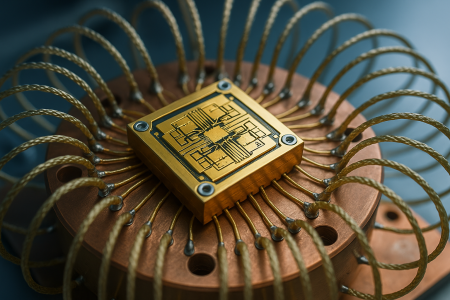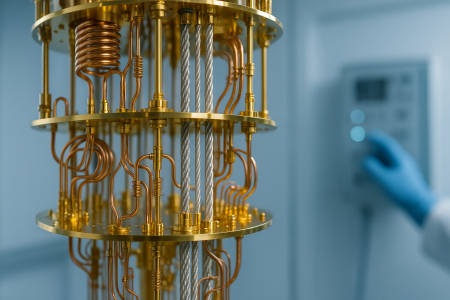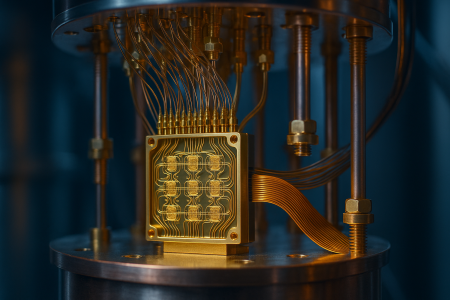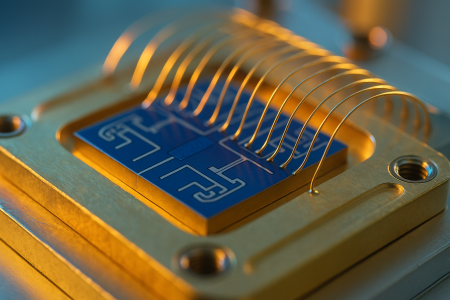

For years the standard recipe for a superconducting qubit looked settled. You patterned thin films of aluminum and niobium on a silicon or sapphire chip, added a Josephson junction, cooled the whole thing to a fraction of a degree above absolute zero, and hoped the quantum information would survive long enough to do something useful. The numbers crept up slowly. Then a quieter line of research showed that one of the biggest levers on qubit quality was not the circuit design at all. It was the metal the circuit was made from.
Where coherence goes to die
A superconducting qubit loses its quantum state through a long list of mechanisms, but a stubborn culprit is a class of defects called two-level systems, or TLS. These are tiny pockets of disorder, often sitting in the few nanometers of oxide that form on a metal surface when it meets air, or in the interface between the metal and the substrate beneath it. Each defect can absorb a sliver of the qubit's energy and hand it back at the wrong moment, scrambling the delicate phase relationship that encodes information.
Because these defects cluster at surfaces and interfaces, the bulk of the chip matters less than its skin. A qubit's electric fields concentrate at the edges of the metal film and in the first few atomic layers of oxide. That makes coherence a materials problem as much as a circuit problem. You can design a beautiful resonator, but if its surface is studded with lossy oxide, the qubit will forget faster than the schematic suggests.
The switch to tantalum
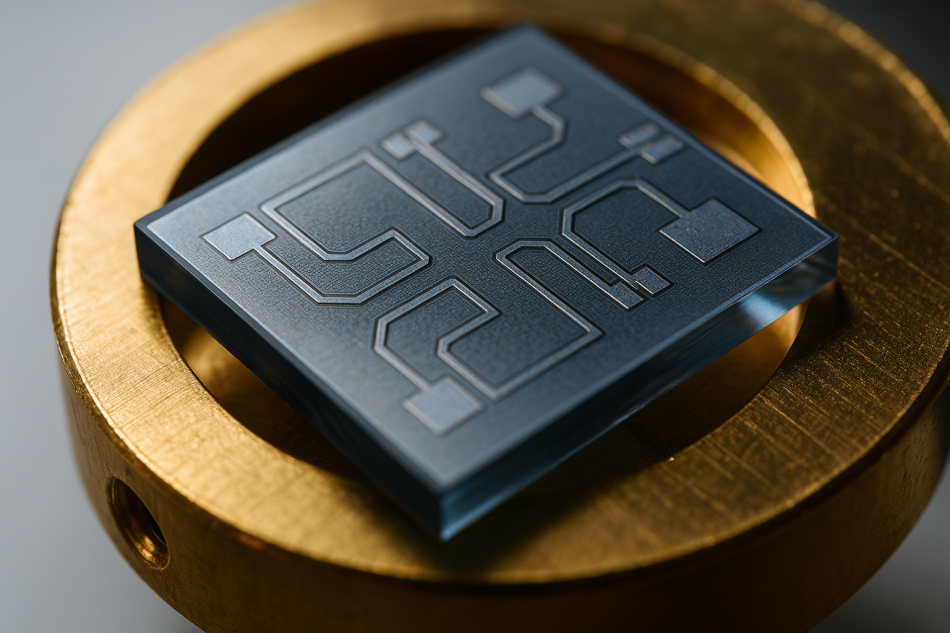
The breakthrough came when researchers tried building the qubit's main capacitor out of tantalum instead of the usual niobium. Tantalum forms a thinner, more stable, and far less lossy native oxide. When teams fabricated transmon qubits on tantalum films grown on sapphire, the relaxation times jumped well past the values that had become typical for niobium devices, crossing into the hundreds of microseconds. For a field that measures progress in tens of microseconds, that was a large step from a single ingredient swap.
What made the result striking was how mundane the change appeared. Nobody redesigned the qubit. The geometry, the junction, the control scheme all stayed familiar. The improvement came from reducing the dielectric loss baked into the material itself. It was a reminder that some of the ceiling on qubit performance is set by surface chemistry that has nothing to do with clever engineering of the circuit.
Chasing the surface
The tantalum result opened a wider hunt. If oxide chemistry is the enemy, then any process that removes oxide, prevents it, or replaces it with something cleaner is worth trying. Teams now experiment with:
- Aggressive surface treatments and etches that strip away lossy oxide before it can trap energy.
- Encapsulation layers that seal the metal so it never grows a bad oxide in the first place.
- Alternative metals and alloys, including titanium nitride and other compounds, chosen for the quality of their interfaces.
- Higher-purity substrate growth, since defects in the sapphire or silicon underneath also bleed energy away.
Each of these is fussy, fab-line work. Growing a film with the right crystal structure, keeping it free of contamination, and annealing it correctly are the kind of process-control problems that semiconductor manufacturers have spent decades on. Quantum hardware is now inheriting that discipline, because the difference between a good and a mediocre qubit can come down to how a few hundred atoms arranged themselves during deposition.
Why a material win matters
Longer coherence is not an end in itself. It buys time, and time is what lets a quantum processor run more gates before errors pile up. Error correction in particular is hungry for low-error physical qubits. Every reduction in baseline loss means fewer physical qubits are needed to build one reliable logical qubit, which compounds across a whole machine. A materials improvement that looks modest at the single-qubit level can change the economics of an entire architecture.
The tantalum episode also reset expectations about where future gains will come from. The early years of superconducting qubits were dominated by circuit cleverness. The next stretch looks more like metallurgy and surface science. Companies and labs building these chips increasingly hire people who understand thin-film growth and oxide chemistry, not just microwave engineering. The qubit, it turns out, is only as good as the material it is etched from, and that material is still far from optimized.