
Ask two engineers to name the most important number in a quantum computer and you will get two answers. One will say coherence time, the other fidelity. Almost nobody leads with gate speed, yet it quietly decides how much work a machine can finish before its fragile quantum states fall apart. And the spread between technologies is enormous. A superconducting qubit can execute a logic gate in tens of nanoseconds. A trapped-ion qubit doing the same operation might take tens of microseconds. That is a factor of a thousand.
What gate speed actually measures
A quantum gate is a single manipulation of a qubit, or a pair of qubits, that nudges its state toward the answer you want. Chaining thousands of these together is how a quantum algorithm runs. The time each gate takes sets the clock rate, in the same way a classical processor's cycle time limits how many instructions it churns through per second.
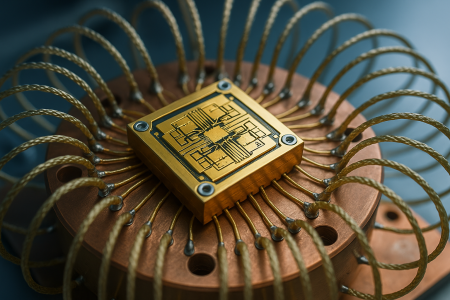
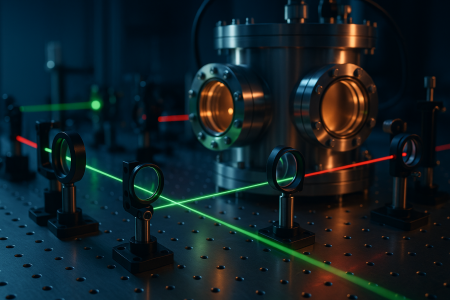
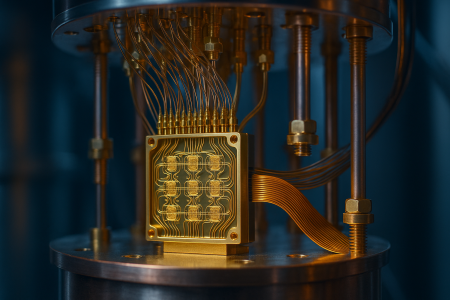
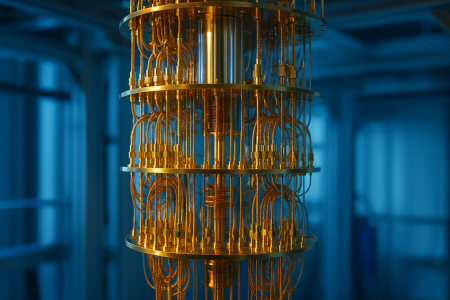
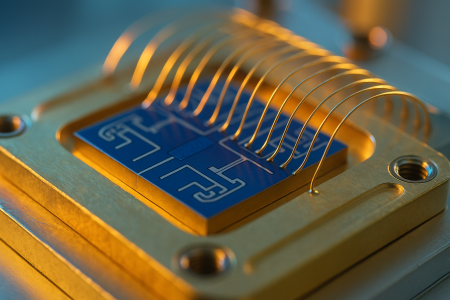
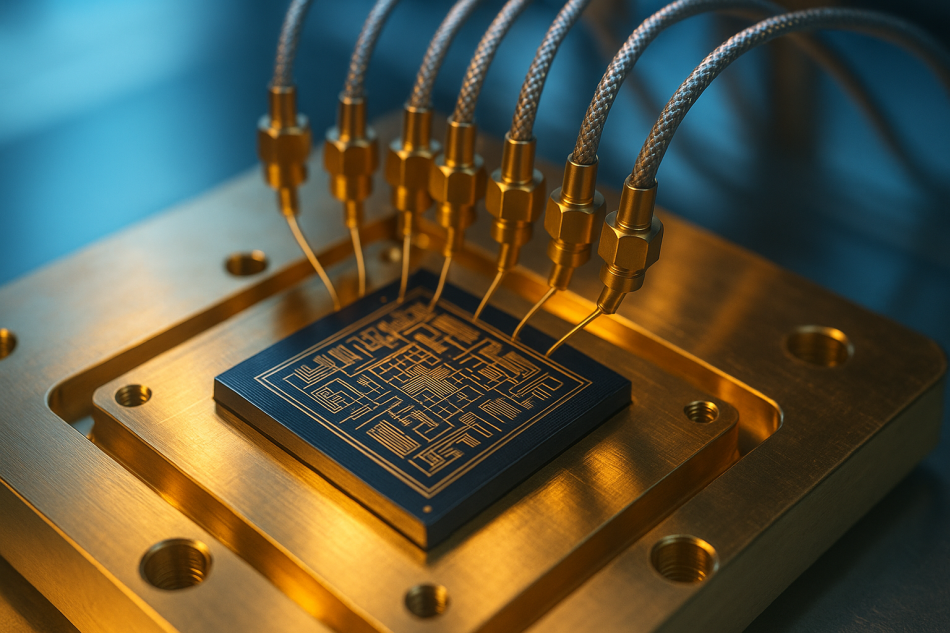
In a superconducting chip, gates are driven by shaped microwave pulses fired at circuits that behave like artificial atoms. The transitions happen fast because the energy scales involved are large and the control electronics can deliver sharp pulses. In a trapped-ion machine, the qubit lives in the internal states of a real atom held in place by electric fields. Two-qubit gates rely on nudging the ions' shared motion with lasers, and that mechanical shimmy takes time. Neutral-atom systems, which also use lasers and Rydberg interactions, land somewhere in the middle but generally closer to the ion end of the scale.
Why raw speed can be misleading
Here is the twist that keeps the trapped-ion crowd smiling. Slow gates are not automatically a disadvantage, because what matters for computation is not seconds but the number of high-quality operations you can perform before errors accumulate. Trapped ions and neutral atoms hold their quantum states for a very long time, sometimes seconds, while superconducting qubits typically lose coherence in tens to hundreds of microseconds.
Divide coherence time by gate time and you get a rough budget for how many operations fit in a single computation. A superconducting qubit with a 100 microsecond lifetime and a 30 nanosecond gate has room for thousands of operations. An ion with a one second lifetime and a 30 microsecond gate has a similar or better budget, despite being far slower on the stopwatch. The two philosophies arrive at comparable circuit depths by very different routes.
Where the speed gap bites
The difference shows up sharply in wall-clock time, which is what a customer paying for cloud access actually feels. Quantum algorithms rarely run once. Because measurement collapses a quantum state into a single random-looking outcome, you repeat the whole circuit thousands of times and build up statistics. On a fast superconducting processor, a job that needs ten thousand shots can finish in a fraction of a second. On a slower ion machine, the same job might take minutes.
That has real consequences for which problems each platform courts. Fast machines are attractive for workloads that demand huge numbers of repetitions or many iterations of a hybrid quantum-classical loop, where a classical optimizer keeps calling the quantum device. Slower but higher-fidelity machines are pitched at deep, delicate circuits where getting each gate right matters more than getting many gates done quickly.
The error-correction wrinkle
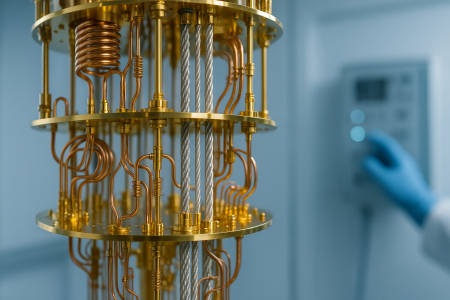
Speed becomes even more pressing once error correction enters the picture. A fault-tolerant machine constantly measures its qubits, feeds the results to a classical decoder, and applies corrections faster than new errors appear. That correction cycle has to keep pace with the physical gate rate. Fast superconducting cycles demand decoders that respond in under a microsecond, a brutal engineering target. Slower platforms give their classical control systems more breathing room, which is one reason some ion and atom teams argue their approach scales more gracefully.
None of this crowns a winner. It explains why the field has not collapsed onto a single design. A superconducting company selling raw throughput and an ion company selling pristine, deep circuits are not really competing on the same axis. Gate speed is a lever, and each platform has pulled it to a different setting based on the physics it was handed. When you next see a vendor tout its qubit count or fidelity, ask a quieter question: how long does one gate take, and how many can it fit before the qubits forget?