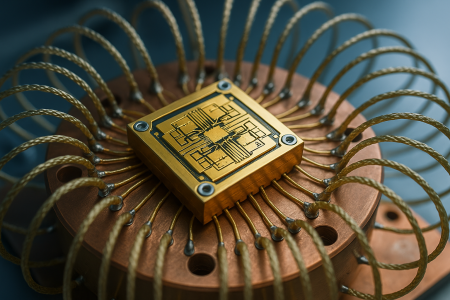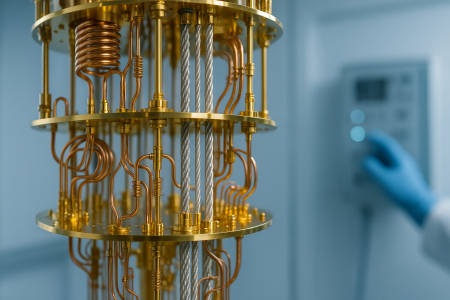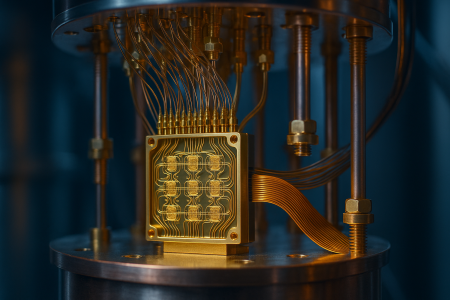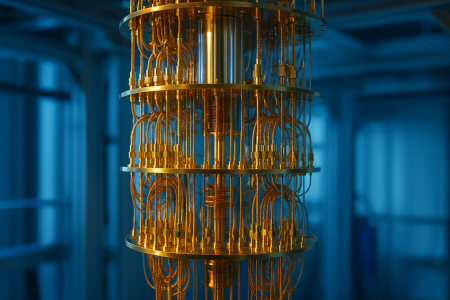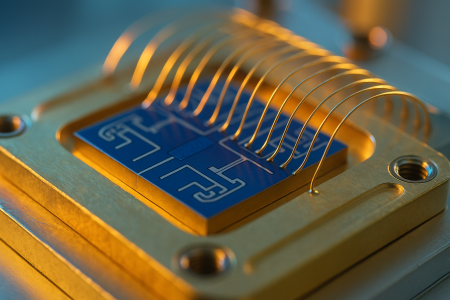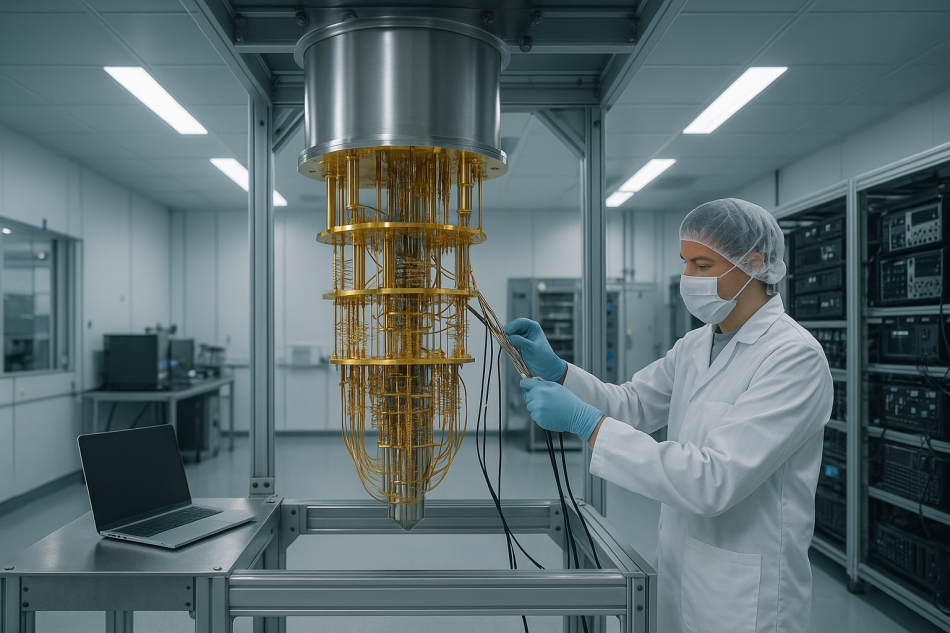

When a quantum computing company shows off a new processor, the demonstration usually comes with a polished interface and a fixed set of operations. You submit a circuit, you get results, and the physics underneath stays hidden. National laboratories have spent years building the opposite kind of machine: quantum computers that are meant to be taken apart, poked at odd angles, and pushed past the settings a commercial vendor would ever expose. These government testbeds have quietly become one of the most important sources of knowledge about how qubits actually behave.
Why a lab builds its own
A commercial quantum service optimizes for reliability. The calibration is locked, the gate set is curated, and the goal is to make the hardware feel like a stable product. That is exactly what a physicist studying error mechanisms does not want. To understand why a two-qubit gate drifts overnight, or how a stray control pulse leaks population out of the computational states, a researcher needs to reach below the abstraction and change pulse shapes, timings, and voltages directly.
That is the argument behind open testbeds. In the United States, the Department of Energy funded several. Sandia National Laboratories runs a trapped-ion system, QSCOUT, that hands users low-level control over laser pulses and lets them define their own gates rather than accepting a preset library. Lawrence Berkeley's Advanced Quantum Testbed does the same for superconducting circuits, giving academic teams the ability to reprogram control electronics and study the hardware as an experimental object, not a black box.
The user program model
Not every lab builds its own machine. Oak Ridge, home to some of the world's largest classical supercomputers, took a different route with its Quantum Computing User Program. Instead of fabricating chips, it negotiates access to commercial systems from vendors across the technology spectrum and hands allocations to researchers who apply for time. A materials scientist who would never get a purchase order approved for a quantum computer can run a chemistry problem on trapped-ion or superconducting hardware and compare the results.
This split matters. The build-your-own testbeds generate deep knowledge about a single technology. The access programs generate breadth, letting the community benchmark many platforms against the same problems using the same evaluation standards. Together they fill gaps that neither industry nor universities cover well on their own.
Not just an American habit
The pattern repeats internationally. The United Kingdom stood up the National Quantum Computing Centre to host multiple hardware types under one roof and act as a neutral evaluator. Germany's research centers, including the supercomputing site at Julich, integrated quantum systems alongside classical machines so that scientists could experiment with hybrid workflows. Japan's national institutes have installed and studied both homegrown and imported processors. In each case the state is doing something the market is slow to fund: paying for the unglamorous work of measuring what these devices can and cannot do, then publishing it.
What the testbeds actually produce
The output is rarely a headline. It is the slow accumulation of characterization data. How does gate fidelity degrade as you add qubits? What does the real error profile look like once you account for crosstalk and leakage? How reproducible is a benchmark from one week to the next? Vendors have every incentive to report their best numbers under ideal conditions. A neutral lab can report the messy average, which is far more useful to anyone deciding whether a machine is ready for a given task.
These programs also train people. A graduate student who spends a year with hands-on access to a trapped-ion system learns things that no cloud tutorial can teach, and many of those students end up at the companies building the next generation of hardware. The testbeds function as a workforce pipeline as much as a research facility.
The tension ahead
As commercial systems grow more capable, the line between a lab testbed and a product blurs. Some vendors now offer deeper low-level access precisely because researchers demanded it, partly through lessons learned in government programs. The risk is that public funding drifts toward simply renting commercial time, and the harder, less flashy work of building open experimental machines loses support. That would be a mistake. The value of a testbed is not the qubit count on its spec sheet. It is the freedom to break the machine on purpose and tell everyone what happened.