Most deep-tech companies wait until they have a product before they ring the opening bell. Quantum computing took the opposite route. Starting around 2021, a cluster of hardware startups went public through special-purpose acquisition companies, the so-called blank-check vehicles that merge with a private firm and hand it a stock listing without the scrutiny of a traditional IPO. IonQ led the way, followed by Rigetti Computing, D-Wave, and others. They raised hundreds of millions of dollars on the promise of machines that, by their own admission, could not yet solve a commercially valuable problem faster than a classical computer.
Why a SPAC and not a real product
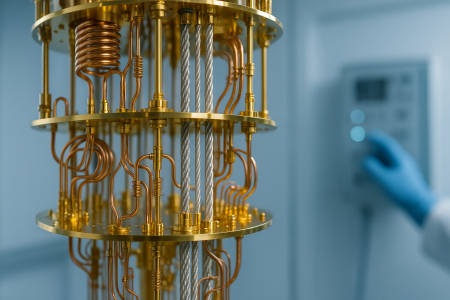
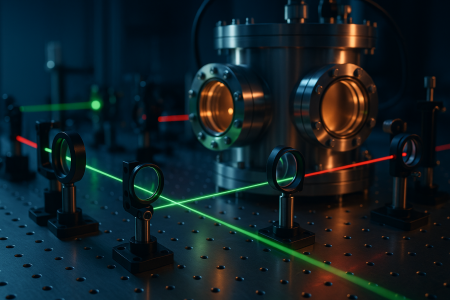
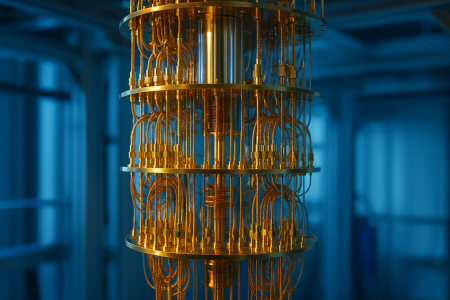
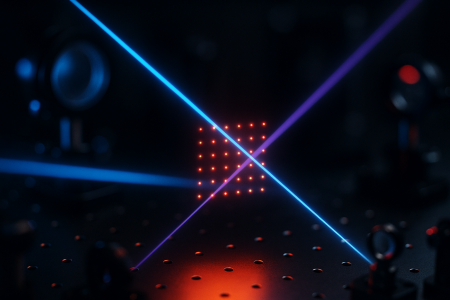
Building a quantum computer is brutally capital-intensive. Trapped-ion systems need ultra-high-vacuum chambers, banks of lasers, and exquisitely stable control electronics. Superconducting machines need dilution refrigerators colder than deep space and a small army of engineers to keep them calibrated. None of that pays for itself in the early years, and venture rounds eventually want an exit. A SPAC offered a shortcut: a fast path to public capital, a large cash injection, and a valuation set by negotiation rather than years of audited revenue.
It also arrived at a convenient moment. Interest rates were near zero, retail investors were chasing speculative tech, and "quantum" was a word that moved share prices. The pitch was straightforward. Buy in now, before the technology matures, and ride the curve from noisy prototypes to fault-tolerant machines. The companies were candid in their filings that profitability was years away and that the underlying science still had unsolved problems.
What the money actually bought
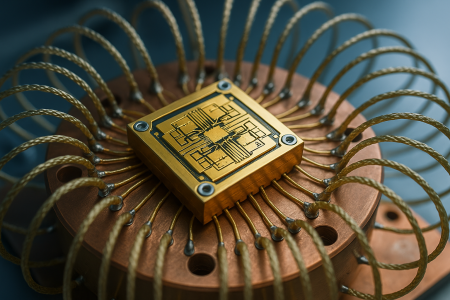
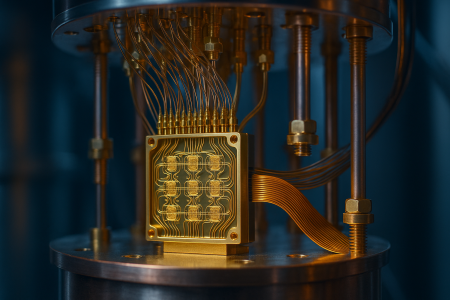
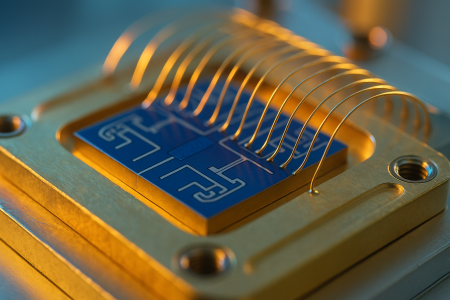
For all the skepticism the SPAC structure deserves, the cash was real and it funded real engineering. IonQ used its public listing to expand its trapped-ion roadmap and open a manufacturing facility. Rigetti continued iterating on its superconducting chips and its in-house foundry. D-Wave, already the veteran of the group with its quantum annealers, used public markets to keep its commercial cloud service running and to begin building gate-model hardware alongside its annealing line.
A public listing brings other benefits beyond the balance sheet. It creates a liquid currency for acquisitions and for recruiting scarce talent with stock incentives. It forces a discipline of quarterly reporting that, whatever its distortions, gives outsiders a clearer window into burn rate and bookings than a private startup ever offers. For a field long accused of hype, that transparency cuts both ways.
The reckoning
The honeymoon did not last. As interest rates climbed and speculative tech sold off, several quantum stocks fell hard from their post-merger peaks. Revenue figures, when they arrived, were modest, often a few tens of millions of dollars a year, much of it from government contracts, research partnerships, and cloud access rather than from customers solving problems they couldn't solve any other way. The gap between a billion-dollar market capitalization and a small-business revenue line became impossible to ignore.
That gap is the central tension of the whole episode. The companies were selling a future that depends on error correction, longer coherence times, and qubit counts orders of magnitude beyond what they ship today. Investors who treated them like ordinary software firms with predictable growth were buying the wrong story. The ones who understood they were funding a long, uncertain physics-and-engineering marathon had a better chance of stomaching the volatility.
What it tells us about the industry
The SPAC wave is worth understanding because it shaped which companies survived and how they are run. Firms that went public early got a buffer of cash to weather the slow years and a profile that helps win national-lab and defense contracts. Those that stayed private, like Quantinuum and PsiQuantum, raised enormous sums through strategic backers and sovereign funds instead, betting that patient capital beats public-market quarterly pressure.
Neither path has been proven right yet, because the prize itself remains unclaimed. No one has shipped a machine that delivers durable commercial advantage on a problem businesses care about. Until that happens, the value of any quantum company is a wager on engineering timelines. The SPAC era simply made that wager tradable, put it on a ticker, and let the market argue about it in real time. The arguing continues, and the fridges keep humming.