

The Utility Era: What Quantum Computers Can Do Before They're Perfect
For years the quantum computing conversation has been split between two poles. On one end sits the noisy machine of today, error-prone and small. On t...
Dynamic Circuits: When a Quantum Computer Reads a Qubit Mid-Job
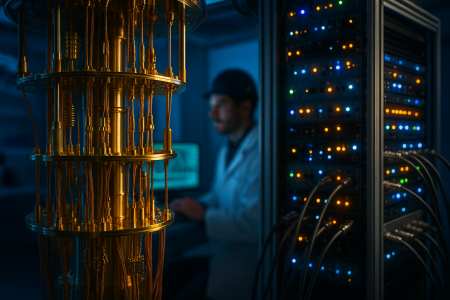
The textbook version of quantum computing goes like this: you prepare a batch of qubits, run a sequence of gates, and then measure everything at the e...
The Tunable Coupler: The On-Off Switch Between Two Qubits
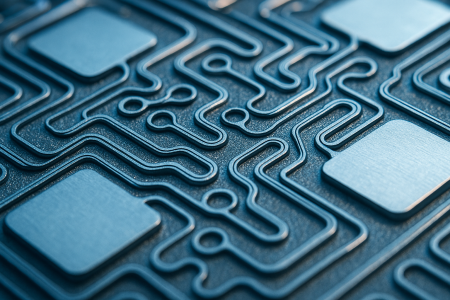
Two qubits that need to talk to each other face an awkward problem: the wiring that lets them interact never really switches off. In a superconducting...
The Quantum Volume Test: Cramming a Whole Machine Into One Number
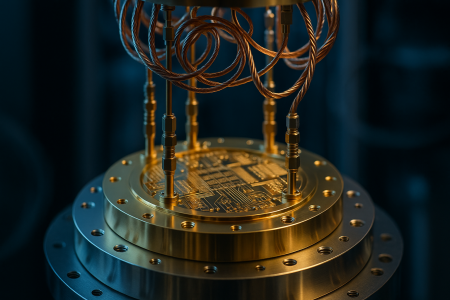
Ask how good a quantum computer is and the easy answer is a qubit count. Fifty, a hundred, a thousand. It sounds like progress you can rank. But a mac...
The Mølmer-Sørensen Gate: How Trapped Ions Get Entangled by Laser
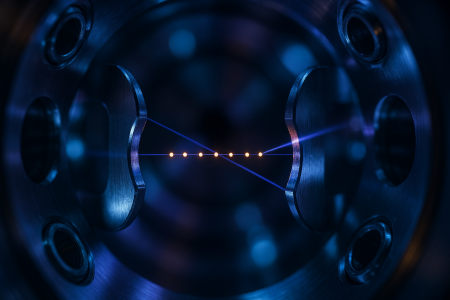
Ask a trapped-ion company why its machines post such high two-qubit gate fidelities, and sooner or later the conversation lands on a piece of physics...
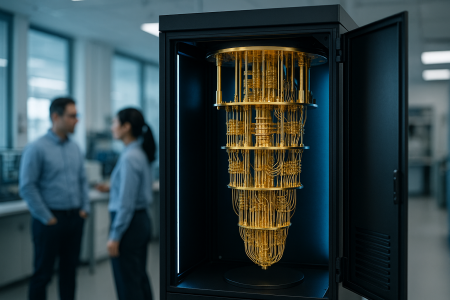
The Annealer's Wager: D-Wave's Bet on a Different Quantum Machine
Most of the quantum computing conversation revolves around gate-based machines: chips that run sequences of logical operations, the quantum cousins of...

The Molmer-Sorensen Gate: How Trapped Ions Entangle Through Shared Motion
Every quantum computer needs a way to make two qubits talk to each other. In superconducting chips, that job falls to microwave gates like cross-reson...
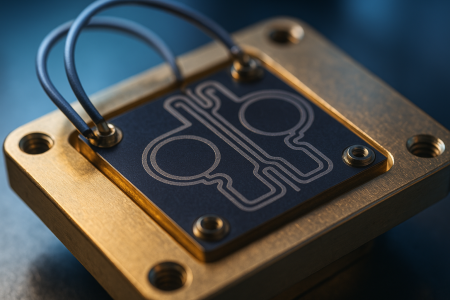
The Purcell Filter: Reading a Qubit Without Letting It Leak Away
Every superconducting quantum processor faces the same awkward bargain. You cannot compute with a qubit you cannot measure, so you wire each qubit to...

The Quantum Dot: Betting a Qubit Can Ride the Chip Industry
Most of the qubits that make headlines are exotic. Superconducting loops need dilution refrigerators, trapped ions float in ultra-high vacuum, neutral...
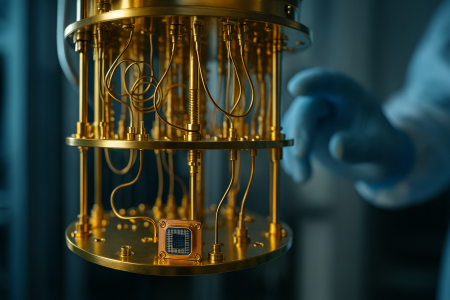
The Cold Controller: Moving Qubit Electronics Inside the Fridge
A superconducting quantum computer looks, from the outside, like a chandelier of gold-plated plates hanging inside a refrigerator the size of a fridge...
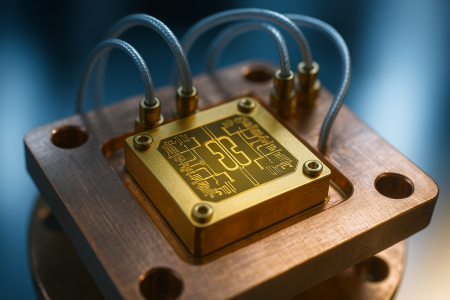
The Cat Qubit: Alice & Bob's Bet on Killing Bit-Flips
Every qubit suffers two basic ways of going wrong. It can flip its value, swapping a 0 for a 1, the way a classical bit does when a cosmic ray or a st...
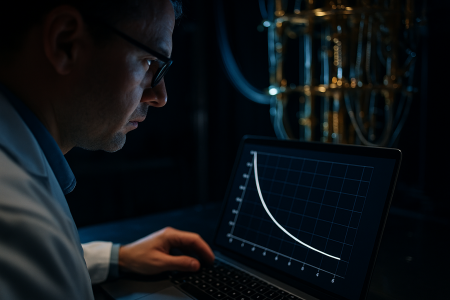
The Randomized Benchmark: How a Quantum Computer Grades a Single Gate
Ask a quantum engineer how good their machine is and you will get a lot of numbers. Qubit counts, coherence times, connectivity maps. But the number t...
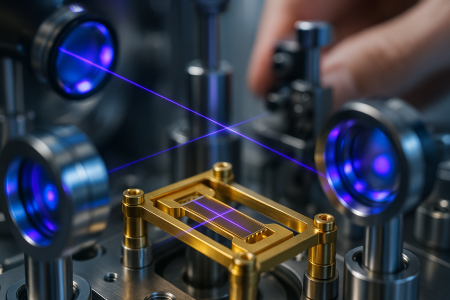
The Algorithmic Qubit: IonQ's Bet That Only Working Qubits Count
Every quantum computer maker likes to lead with a big number. So many qubits, up from so many last year. It is the easiest figure to print and the lea...
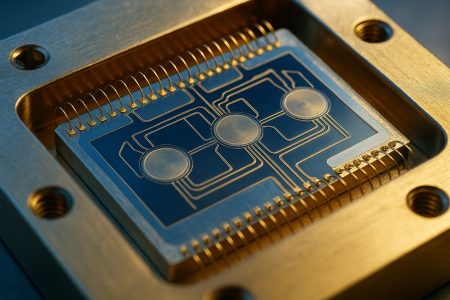
The Repetition Code: The Toy Cipher That Taught Qubits to Fix Themselves
The oldest error-correcting trick in the book is also the dumbest, and that is exactly why it is a good place to start. If you want to send a single b...
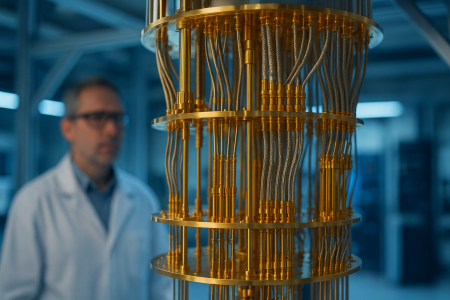
The Millikelvin Machine: The Fridge That Keeps Qubits Cold Enough to Compute
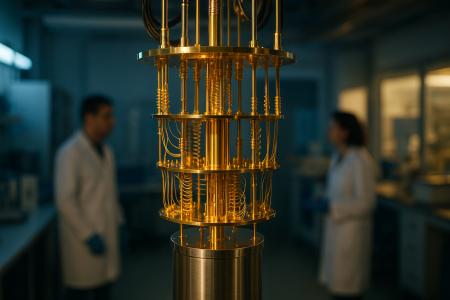
Look at almost any photo of a superconducting quantum computer and you are not really looking at the computer. The chip itself is a fingernail-sized s...
The Helium-3 Squeeze: The Rare Isotope Quantum Computers Can't Run Without
Ask a quantum hardware engineer what keeps them up at night and you might expect an answer about coherence times or gate fidelity. Sometimes the hones...
The Thousand-Atom Machine: Atom Computing's Wager on Sheer Scale
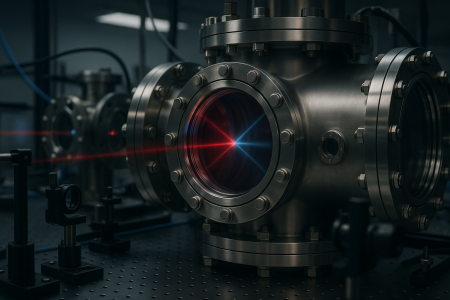
In the arms race to build a useful quantum computer, most companies talk about quality first: cleaner gates, longer coherence, fewer errors. Atom Comp...

The Rydberg Blockade: How Atom Qubits Talk Without Touching
In a neutral-atom quantum computer, the qubits are individual atoms held motionless by tightly focused laser beams. They don't touch. They aren't wire...

The Native Gate Set: Every Quantum Computer Speaks Its Own Dialect
Ask a physicist to draw a quantum algorithm and you will get a tidy diagram of boxes and lines: a Hadamard here, a controlled-NOT there, a rotation so...
The Spin Echo: The Pulse Trick That Buys a Qubit More Time
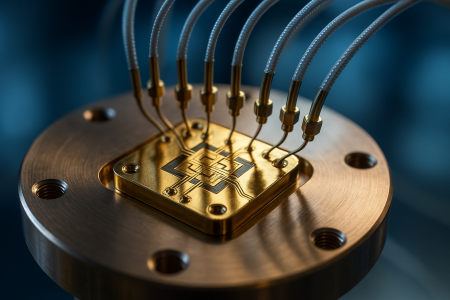
A qubit's worst enemy is not a dramatic failure. It is the slow, quiet drift of the world around it. Stray magnetic fields wobble, control lines carry...
The Quantum Interconnect: Splicing Chips Into One Bigger Machine
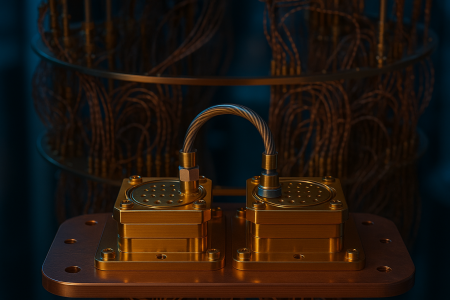
There is a ceiling on how big a single quantum chip can get. Fabrication yield drops as you cram more qubits onto one piece of silicon or sapphire, th...