
The textbook version of quantum computing goes like this: you prepare a batch of qubits, run a sequence of gates, and then measure everything at the end to read out an answer. Measurement is the finish line. Look at a qubit before then and you collapse its delicate superposition, wrecking the calculation you spent so much effort building.
That picture is now outdated. Modern processors from companies like IBM, Quantinuum, and others can measure a subset of qubits partway through a program, keep the rest computing untouched, and then change what they do next based on the result. The technique goes by a few names. The measurement part is called mid-circuit measurement. The reacting-to-the-result part is called feed-forward. Put them together and vendors market the capability as dynamic circuits. It sounds like a plumbing detail, but it quietly rewires what a quantum computer can do.
Why measuring one qubit is so tricky
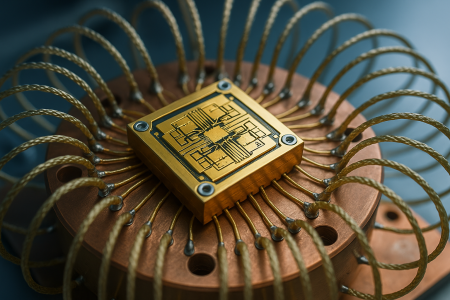
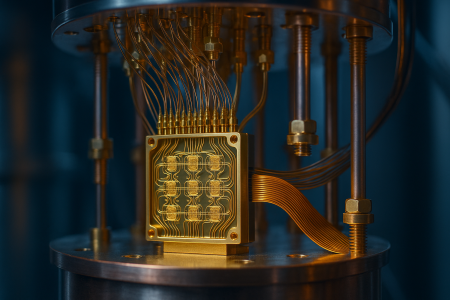
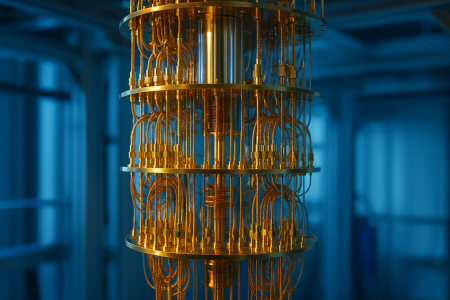
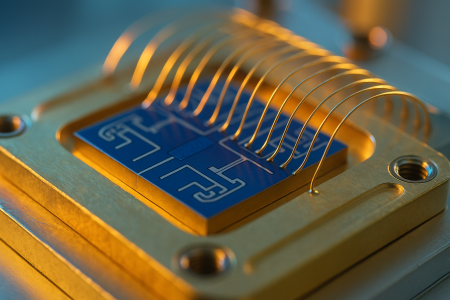
Reading a single qubit without disturbing its neighbors is harder than it looks. On superconducting chips, readout works by bouncing a microwave tone off a resonator coupled to the qubit. That tone carries energy, and stray photons can leak over to nearby qubits, nudging them out of their states. The act of measuring one qubit can, in effect, become a source of the crosstalk that engineers spend so much time fighting. Careful filter design and frequency planning keep the disturbance contained, but it took years of hardware refinement to get there.
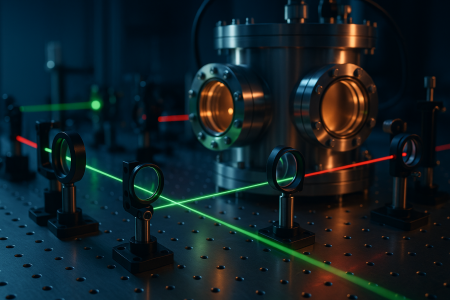
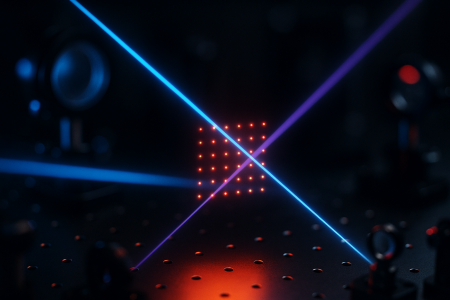
Trapped-ion machines face a different flavor of the problem. Measurement means shining a laser on an ion and watching it fluoresce. Scattered light from the ion being read can strike other ions in the same trap and scramble their information. Quantinuum's architecture handles this partly by physically shuttling ions into separate zones, so a qubit being measured sits far from the ones still doing math. The result is the same goal reached by different means: read here, compute there.
The speed problem
Mid-circuit measurement alone is not enough. To act on the outcome, the machine has to measure the qubit, get the classical bit back to the control system, decide what to do, and apply the next gate, all before the surviving qubits lose their coherence. That window is short. Superconducting qubits hold their state for a few hundred microseconds at best, and readout plus classical decision-making eats into that budget.
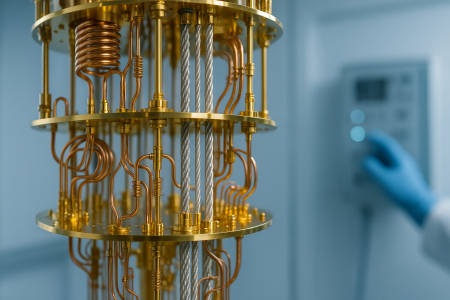
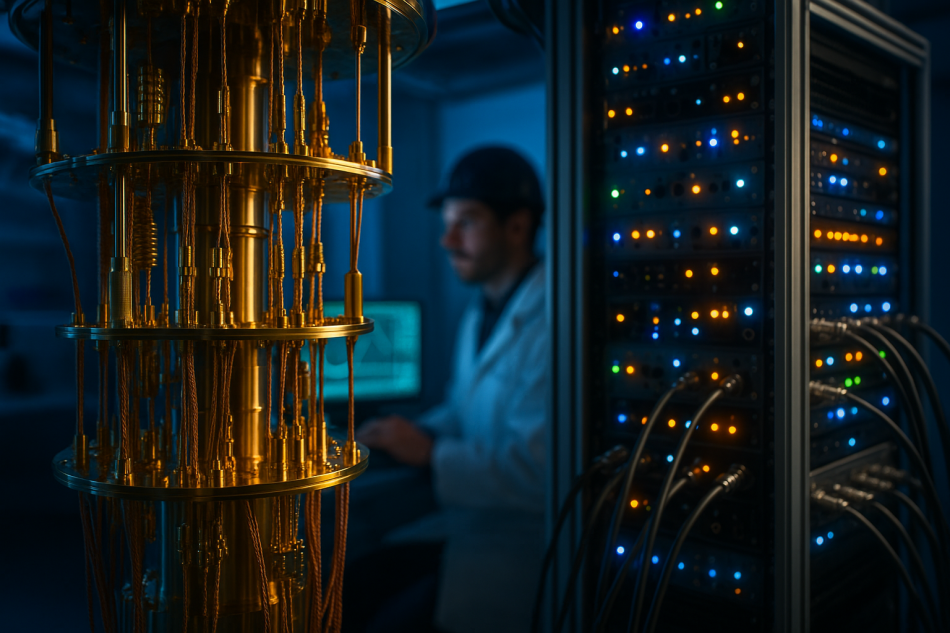
This is why feed-forward has become an engineering obsession. The classical electronics sitting beside the fridge have to run a tight, low-latency loop: digitize the readout signal, interpret it, and route a conditional instruction back to the qubits with almost no delay. Getting this loop fast enough is a control-systems challenge as much as a physics one, and it is one reason the room next to a quantum computer is packed with custom digital hardware.
What it unlocks
The payoff is large. Quantum error correction depends entirely on this capability. The whole scheme works by repeatedly measuring extra qubits called syndrome qubits to detect whether an error occurred, without measuring the data qubits directly. Those syndrome measurements happen over and over, mid-circuit, while the logical information keeps flowing. No mid-circuit measurement, no error correction, no fault-tolerant future.
Beyond error correction, dynamic circuits let programmers do things that were awkward or impossible before:
- Reset a qubit partway through a job and reuse it, effectively stretching a small chip to run a larger circuit.
- Replace long chains of gates with a measure-and-correct step, shortening circuits so they finish before noise piles up.
- Run algorithms that branch, taking one path or another depending on an intermediate result, much like an if-statement in ordinary code.
That qubit-reuse trick matters commercially right now. Because usable qubits are scarce, squeezing more work out of the ones you have is a direct win. Certain algorithms that would nominally need dozens of qubits can be reshaped to run on far fewer by measuring, resetting, and recycling.
A quieter kind of progress
Qubit counts make headlines. Mid-circuit measurement rarely does, because it is invisible in a spec sheet that just lists how many qubits a chip has. Yet the ability to look, decide, and react without ending the computation is one of the features that separates a research curiosity from a machine you can actually program in flexible ways. It is the difference between a calculator that only shows a final answer and one you can query as it works. As the field pushes toward error-corrected machines, this once-forbidden move has become foundational.