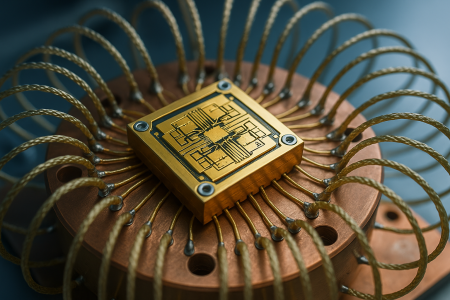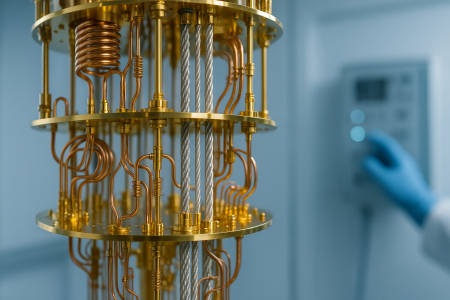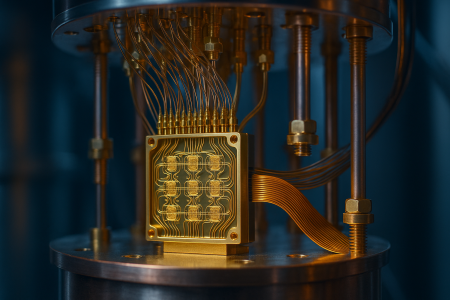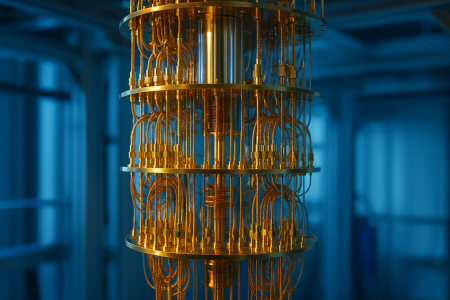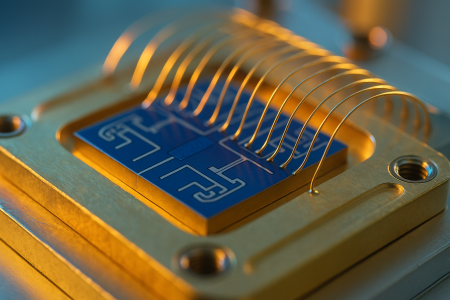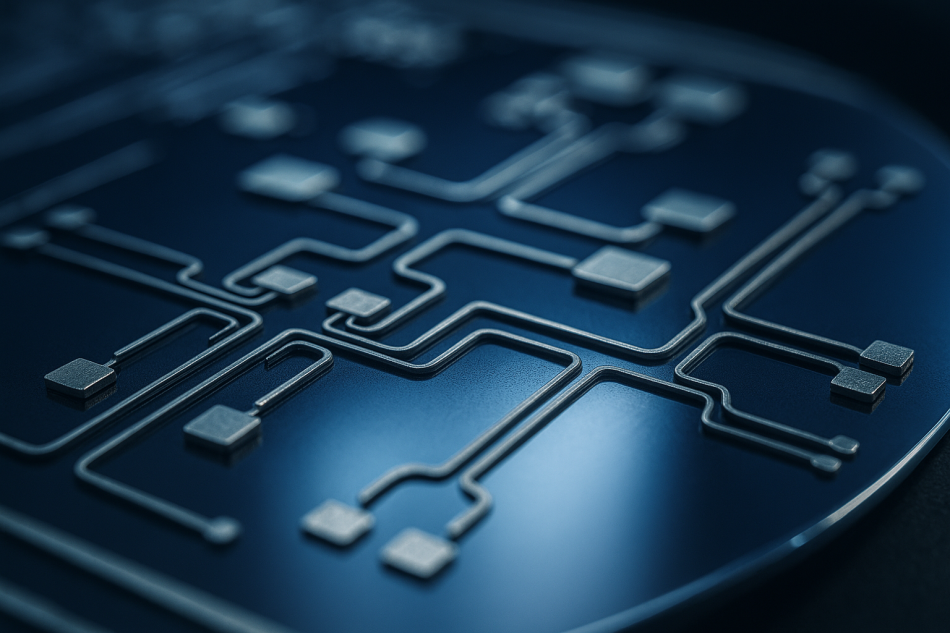

For most of the last decade, the superconducting qubit was a story about aluminum and niobium. Those were the metals that companies like IBM, Google, and Rigetti patterned onto their chips, shaping the little superconducting islands and resonators that hold quantum information. The designs got cleverer, the fabrication got cleaner, and yet one number stubbornly refused to climb: the coherence time, how long a qubit can hold its state before the world scrambles it.
The ceiling nobody could break
The relevant figure is usually called T1, the relaxation time, and its cousin T2, which tracks how long a qubit keeps its phase. For years the best transmon qubits hovered around a hundred microseconds. That sounds like a blink, but in quantum terms it sets a hard budget. Every gate you run, every measurement you take, spends some of that time. A longer-lived qubit means more operations before noise wins, which is exactly what error correction demands.
The frustrating part was that the culprit was not the qubit design. It was the stuff the qubit was made of. Superconducting circuits are haunted by what physicists call two-level systems, microscopic defects lurking in oxide layers, at metal surfaces, and at the boundary where metal meets substrate. Each defect is a tiny parasitic quantum system of its own, and it can absorb energy from the qubit at just the wrong moment. Aluminum, the workhorse metal, grows a messy native oxide that is riddled with them.
Why tantalum
The insight, developed by academic groups including researchers at Princeton and collaborators, was almost stubbornly simple. Instead of fine-tuning the circuit, change the metal. Tantalum forms a thin, stable, well-ordered oxide, tantalum pentoxide, that hosts far fewer of these lossy defects. Grow a clean tantalum film on a pristine sapphire substrate, etch it carefully, and you strip out a big chunk of the noise that had been quietly draining qubits all along.
The result made news because it broke the plateau. Tantalum transmons pushed relaxation times past the several-hundred-microsecond mark, a meaningful multiple of what comparable aluminum devices delivered. It was not a new kind of qubit or a new architecture. It was the same transmon, built from a better material, and it worked.
The unglamorous engineering underneath
What the tantalum result really illustrated is where the bottleneck in superconducting quantum computing actually lives. It is not always in the flashy layout of the processor. It is in surfaces, interfaces, and oxides, the kind of thing that belongs to metallurgists and surface chemists more than to quantum theorists.
That reframing has consequences for how labs spend their effort. Once tantalum proved the point, attention widened:
- Surface treatments that remove or passivate the lossy oxide before it can form.
- Cleaner etching recipes that avoid leaving residue at the metal edges, where electric fields concentrate.
- Alternative substrates and interface preparation to cut losses at the boundary between chip and film.
- Exploration of other clean-oxide metals and even fully oxide-free approaches.
None of this shows up in a headline the way a qubit-count milestone does. But it feeds directly into the numbers that matter. A qubit that lives twice as long gives an error-correcting code more slack, meaning fewer physical qubits are needed to protect each logical one. Materials gains and architecture gains multiply together.
What it means for the roadmaps
The tantalum turn is a useful corrective to the idea that scaling a quantum computer is mainly about adding more qubits. The companies chasing large superconducting machines all know that a processor is only as good as its worst components, and that improving the baseline quality of every qubit is at least as important as cramming more of them onto a wafer.
It also hints at how incremental this frontier can be. There was no exotic new physics in switching to tantalum. Someone asked why the losses were there, traced them to an oxide, and picked a metal with a friendlier one. That is closer to the daily grind of chip manufacturing than to the romance of quantum weirdness, and it is exactly the kind of progress that will decide whether superconducting qubits stay in the race. The next coherence breakthrough may not come from a cleverer circuit at all. It may come from whatever the next tantalum turns out to be.