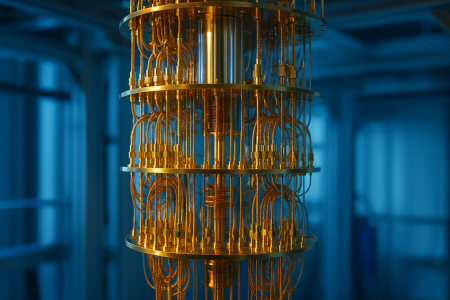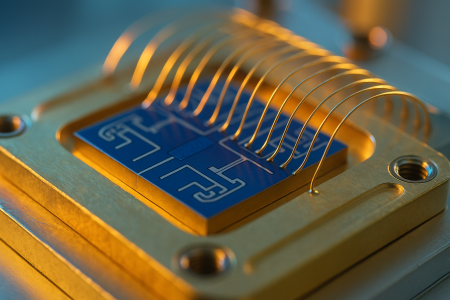

Ask a vendor what their quantum computer can do and you will hear a long list: drug discovery, battery design, logistics, financial modeling, climate simulation. Ask a working physicist the same question and the answer gets a lot shorter, and a lot more honest. The gap between those two answers is where most of the confusion about quantum computing lives.
Today's machines are best understood as early-stage scientific instruments. They are noisy, small by the standards of the problems people want to solve, and they spend a surprising amount of their working life being calibrated rather than computing. That does not make them useless. It means their genuine value is narrow and specific, and worth separating from the brochure.
The honest near-term case: simulating quantum systems
The strongest argument for quantum computers is the one Richard Feynman made decades ago. Nature is quantum mechanical, so simulating molecules and materials on classical computers gets exponentially harder as the systems grow. A quantum processor is itself a controllable quantum system, which makes it a natural fit for modeling other ones.
This is why chemistry and materials science keep coming up. Researchers have used small quantum devices to estimate ground-state energies of simple molecules and to model the behavior of toy magnetic systems. These are not yet results that beat a good classical supercomputer, but they are the closest thing to a problem that quantum hardware is structurally suited for. The work being done now is mostly about learning how to map a chemical problem onto qubits, manage the noise, and squeeze a usable answer out of an imperfect machine.
Optimization: real interest, murky payoff
Logistics, scheduling, and portfolio optimization show up in nearly every quantum sales deck because the potential market is enormous. The reality is more cautious. D-Wave's quantum annealers have been applied to scheduling and routing problems by companies experimenting with the technology, and gate-based machines have run small versions of optimization algorithms.
The trouble is that classical optimization is a mature, ferociously competitive field. Beating it is hard, and many early quantum optimization claims have later been matched or beaten by improved classical methods running on ordinary hardware. The useful takeaway is that optimization is a promising direction, not a solved one. If someone claims a clear, durable quantum advantage on a business optimization problem today, that claim deserves heavy scrutiny.
What quantum computers are not doing yet
A few popular expectations are worth correcting directly:
- They are not breaking encryption. The algorithms that threaten public-key cryptography require large numbers of stable, error-corrected qubits that no machine currently has.
- They are not running everyday software faster. A quantum computer is not a faster laptop. It offers an advantage only on specific problem structures.
- They are not replacing AI training. Training large models is a classical computing workload, and quantum hardware has no general role there today.
The most valuable use case may be the boring one
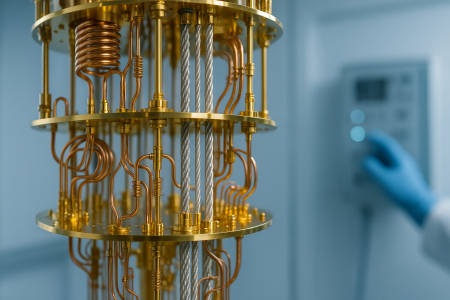
Right now, the clearest real-world value of available quantum machines is that they let researchers and companies learn. Pharmaceutical firms, chemical makers, and financial institutions are running pilot projects not because the answers beat classical methods, but because they want trained teams and working code ready for the day the hardware matures. Cloud access from IBM, IonQ, Quantinuum, Rigetti, and others has turned this into something a research group can do without building a dilution refrigerator in the basement.
That preparation work sounds unglamorous, but it is rational. The history of computing is full of organizations that waited too long to understand a new platform. A modest investment now buys familiarity with a technology that could matter a great deal later.
How to read a use-case claim
When you see a headline about a quantum breakthrough in some industry, a few questions cut through the noise. Did the machine actually outperform the best classical method, or just produce a plausible answer? Was the problem a real-world instance or a deliberately small, hardware-friendly version? Could a classical computer have solved the same case in seconds? Honest researchers answer these directly, and the strongest current results are usually framed as steps toward usefulness rather than arrivals at it.
The realistic picture is a field doing serious, incremental work on problems where quantum mechanics gives it a natural home. That is less thrilling than the promise of solving everything, but it is where the genuine progress is, and it is the part worth watching.