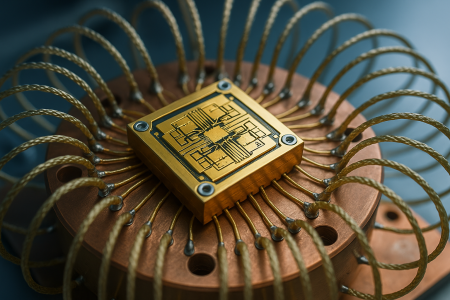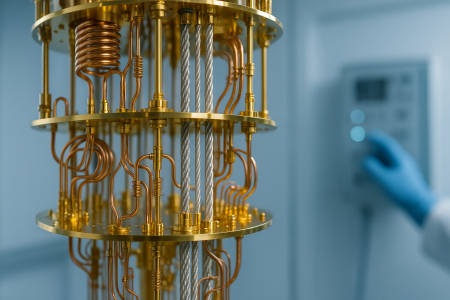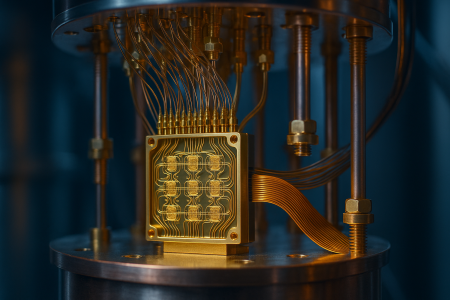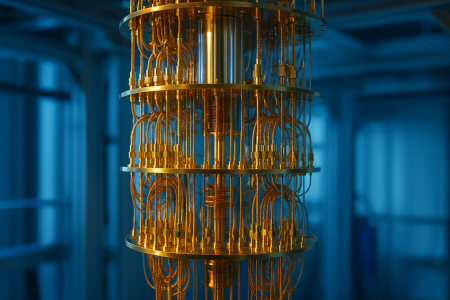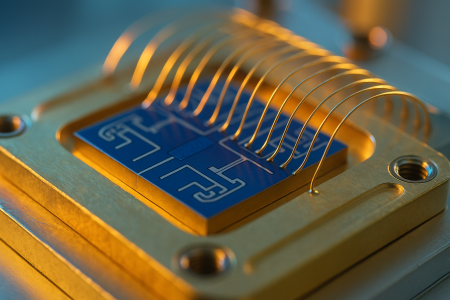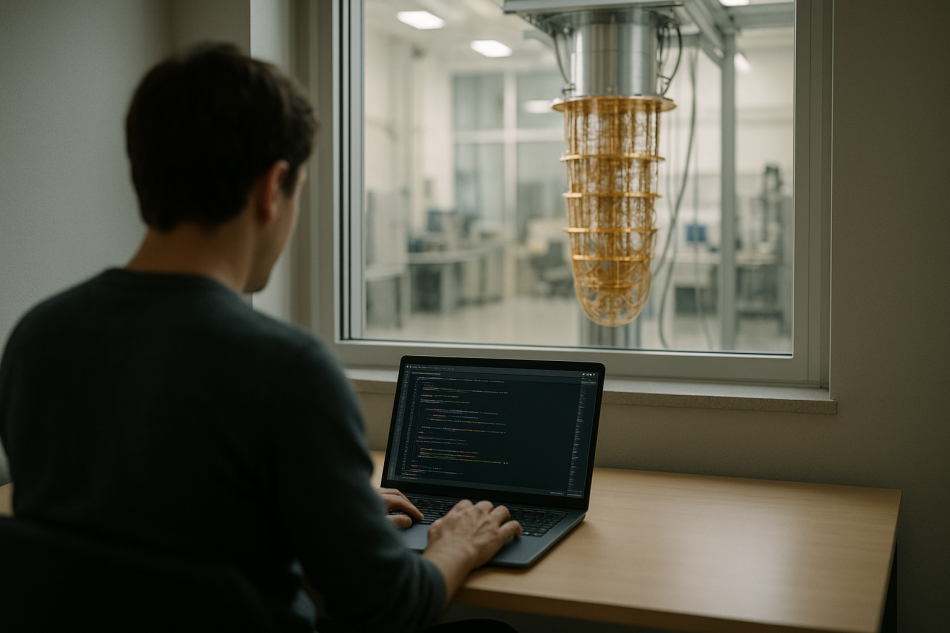

Buy a quantum computer and you are also buying a dilution refrigerator, a rack of microwave electronics, a team of physicists to keep it calibrated, and an electricity bill that never sleeps. Almost no one does this. Instead, the overwhelming majority of quantum programs are written on ordinary laptops and shipped over the internet to a machine sitting in a lab hundreds or thousands of miles away. The quantum computer became a rental long before it became a product.
The vending machine model
The pattern was set by IBM, which put a small superconducting processor online in 2016 and let anyone with a browser send it circuits. Amazon followed with Braket, a broker that resells access to hardware from several vendors, and Microsoft did something similar with Azure Quantum. IonQ, Rigetti, Quantinuum, and the neutral-atom startups all offer their machines the same way, either through their own portals or through the cloud giants.
The economics are simple enough to explain to a finance department. A working quantum computer is a scarce, fragile, expensive instrument. Slicing its time into small bookable chunks spreads the cost across thousands of users, most of whom only need a machine for seconds at a stretch. You pay per shot, per task, or per minute of dedicated access, roughly the way you rent a cloud server, except the hardware underneath is stranger and far rarer.
Why you wait in line
Here is the part newcomers find surprising. When you submit a job, it usually does not run immediately. It joins a queue. A quantum processor can only execute one circuit workload at a time, and popular machines have long lines behind them. Your job might sit for minutes or hours while other people's circuits go first. During that wait, nothing about your program is running; you are simply holding a ticket.
That queue has real consequences for how quantum software is written. A quantum computer needs frequent recalibration, and its error rates drift between calibration cycles. If your job waits six hours before executing, the machine that runs it may behave slightly differently from the one you targeted when you hit submit. Results from Monday morning and Monday afternoon are not always directly comparable. This is one reason serious users lean on hybrid workflows, where a classical computer nearby handles the logic that decides what circuits to send next.
The latency problem
Many of the most talked-about quantum algorithms are not one big circuit. They are loops. A classical optimizer proposes some settings, the quantum machine measures a result, the optimizer adjusts, and the cycle repeats thousands of times. If every single one of those round trips has to cross the public internet and re-enter a queue, the loop crawls.
Vendors have responded by moving the classical brain closer to the quantum body. IBM offers what it calls Qiskit Runtime, where your control program lives on servers next to the processor so the loop stays local. Others provide reserved windows, blocks of dedicated time when the machine is yours alone and the queue disappears. The pricing looks different, but the goal is the same: shrink the distance and the delay between a measurement and the next instruction.
What you are actually renting
The cloud abstraction hides an awful lot. You do not see the wiring, the shielding, or the technicians. You see a name, a qubit count, an error profile, and a price. That convenience is genuine, and it has trained a generation of researchers and students who may never touch a physical qubit. But the abstraction leaks. The machine's native gate set, its qubit connectivity, and its current noise levels all shape whether your results mean anything, and none of that is optional knowledge if you want useful answers.
- You rarely get the whole machine, just a time slice of it.
- Every job runs many times, since a single shot tells you almost nothing.
- The hardware you targeted may drift before your job reaches the front of the line.
- Moving classical control next to the processor can matter more than raw qubit count.
A stepping stone, not the destination
The cloud model fits the current era, when quantum computers are too few, too costly, and too temperamental to own. Whether it lasts is an open question. Some large customers already want machines on their own premises for security or latency reasons, and a few vendors will sell you one. For now, though, the fastest route to a real quantum processor runs through a login screen and a waiting line, and that quiet queue is where most of the field's actual work gets scheduled.