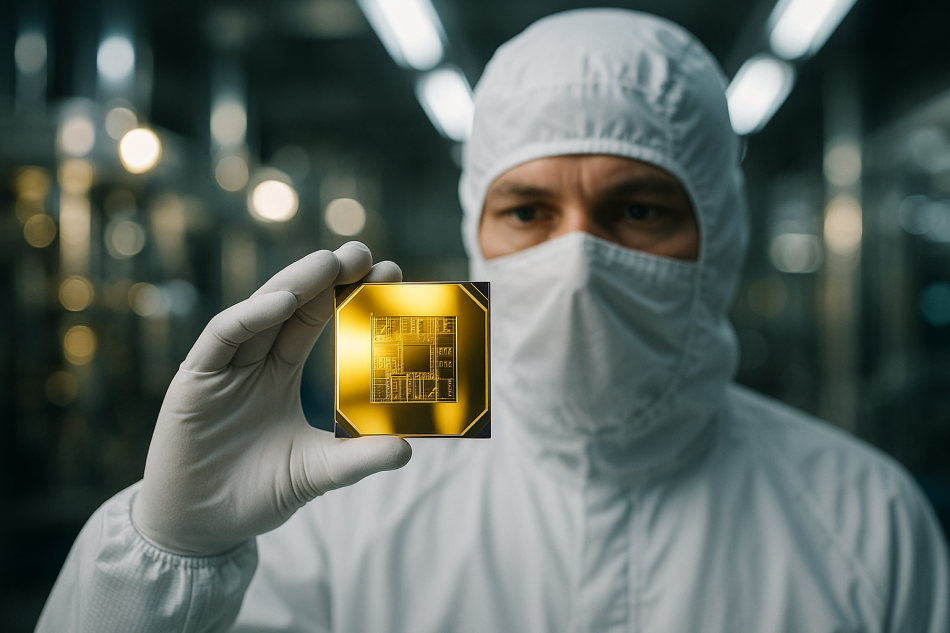

Ask most people to name a quantum computing company and IBM or Google comes up first. Rigetti Computing is smaller and scrappier, but it made a decision early on that sets it apart from almost every rival building superconducting quantum processors: it built its own chip factory. While competitors design their qubits and then send the layouts out to a foundry, Rigetti runs a dedicated fabrication facility in Fremont, California, that it calls Fab-1. The bet behind that facility says a lot about how hard it is to turn a fragile quantum device into a product.
Why owning the fab matters
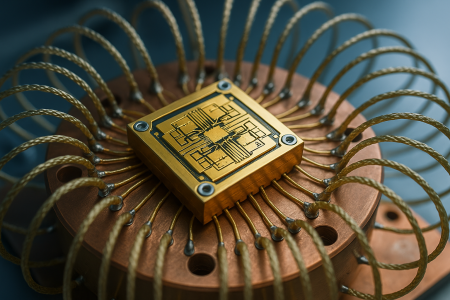
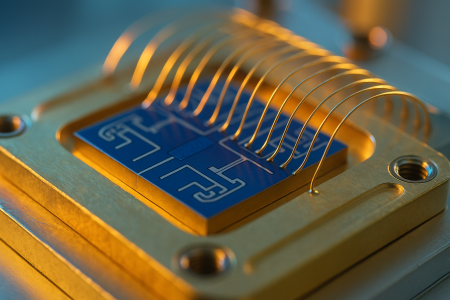
A superconducting qubit is not a mass-market chip. It is a carefully tuned circuit built from thin films of superconducting metal, patterned with Josephson junctions that are only a few hundred nanometers across. Tiny variations in how those junctions are deposited change a qubit's frequency and its lifetime. When you outsource fabrication, every design tweak means a slow round trip: request a run, wait weeks, measure the results, and adjust. Rigetti's argument is that keeping the whole loop in-house shortens that cycle to days, letting engineers try a new recipe, cool the chip down, and see whether coherence improved almost immediately.
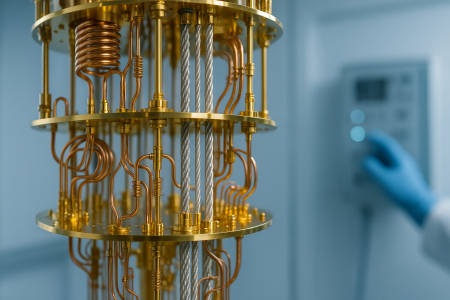
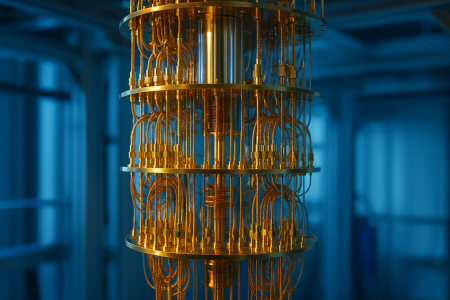
That vertical integration extends past the fridge. Rigetti designs the processors, packages them, wires them into dilution refrigerators, and exposes them to customers through its own cloud service. The company's pitch is that owning every layer removes the finger-pointing that happens when a design team and a foundry blame each other for a disappointing yield.
The tiling strategy
Rigetti's other distinctive bet is how it plans to scale. Rather than chasing ever-larger monolithic chips, where a single fabrication flaw can spoil the entire wafer, the company has pushed a modular approach: build smaller, high-yield chips and tile several of them together into one processor. The idea borrows from classical chip-making, where chiplets have become a standard way to sidestep the economics of giant dies. In quantum hardware the payoff is different. Smaller chips are easier to fabricate cleanly, and stitching them together lets Rigetti grow qubit counts without betting everything on one perfect piece of silicon.
The company's Aspen line gave way to its Ankaa architecture, which reworked the qubit layout to a square lattice with tunable couplers, the switches that turn interactions between neighboring qubits on and off. Rigetti has reported pushing median two-qubit gate fidelities toward the 99.5 percent range on its later systems, a meaningful improvement over its earlier machines, though still short of the accuracy trapped-ion competitors advertise. One technique it has highlighted is alternating-bias assisted annealing, a fabrication step meant to make junctions more uniform and coherent across a chip.
Selling the hardware, not just the cloud
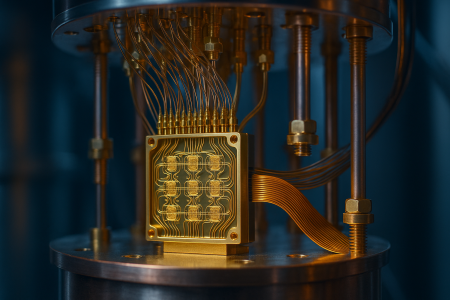
Rigetti has also tried something few of its peers do: selling a physical quantum computer you can install on your own site. Its Novera product is a compact nine-qubit QPU, packaged with the control hardware a buyer needs to run it in a suitable fridge. The market for that is narrow, mostly national labs and universities that want their own machine to experiment with, but it turns Rigetti's fabrication capacity into a second revenue stream beyond cloud access.
The company went public through a SPAC merger, which handed it cash but also exposed it to the harsh scrutoiny of public markets impatient for revenue. Quantum hardware does not generate the kind of income that satisfies quarterly investors, and Rigetti has had to manage a lean burn rate while much larger rivals spend freely.
The risk in the bet
Owning a fab is a double-edged sword. It gives Rigetti speed and control, but it also means carrying the fixed cost of a cleanroom whether or not the qubits improve fast enough. Competitors like IBM run their own advanced fabrication too, backed by far deeper pockets, while others argue the smarter move is to piggyback on the commercial semiconductor industry, as Intel does with its silicon spin qubits and PsiQuantum does with photonics.
Whether Rigetti's foundry becomes a durable advantage or an expensive anchor depends on a single question: can a small, tightly integrated team iterate its way to fidelities and qubit counts that keep pace with giants spending many times more? The Fab-1 bet is that speed of learning beats sheer scale of budget. It is a wager the company has been making since its founding, and the results are still being tallied.