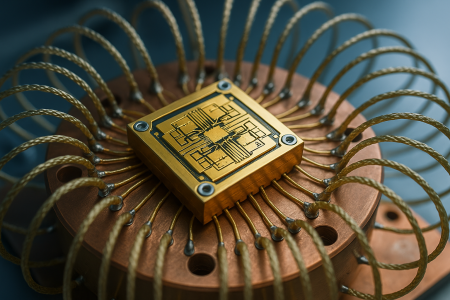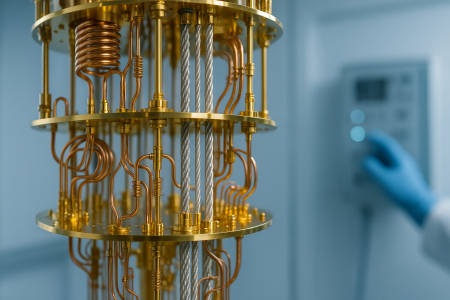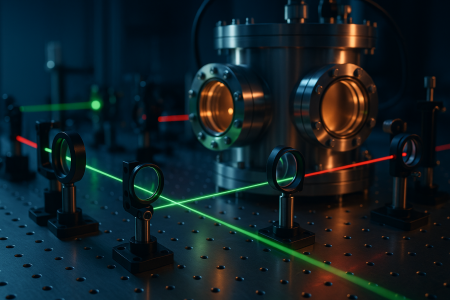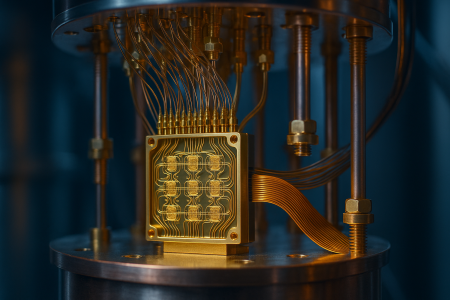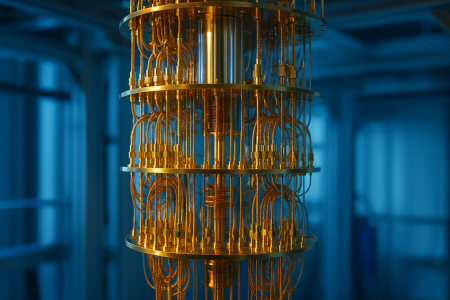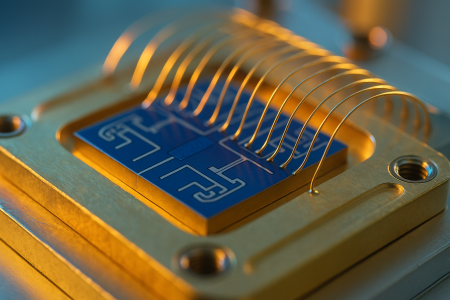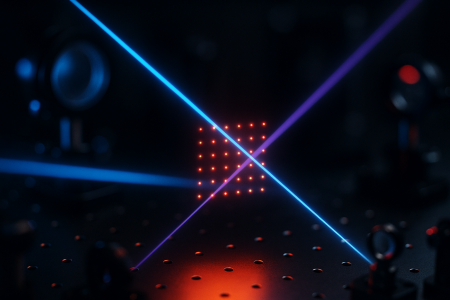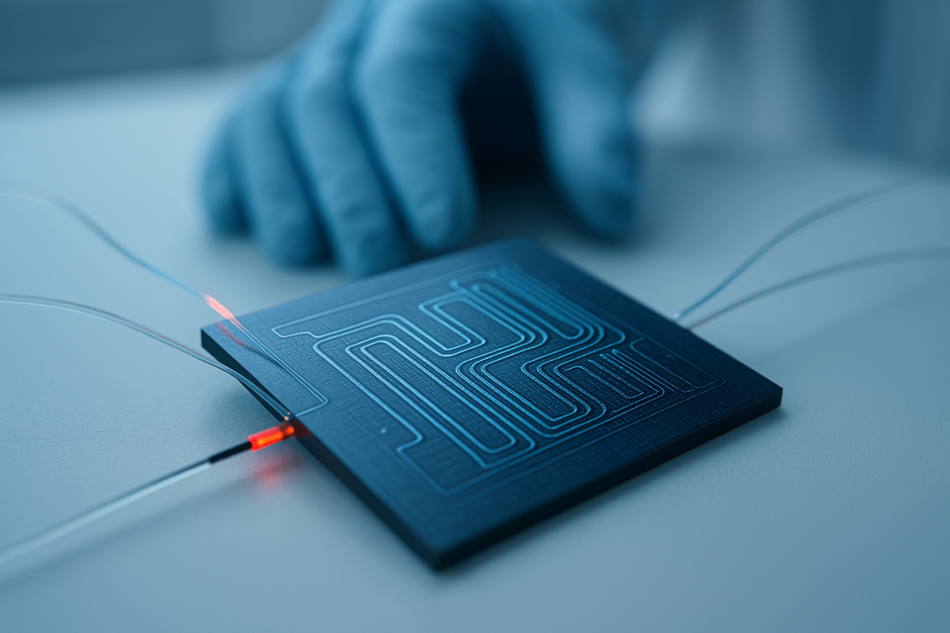

Walk into most quantum computing labs and you will find a chandelier of gold-plated plumbing, cooled to a hair above absolute zero, or a vacuum chamber where lasers pin individual ions in place. Photonic quantum computing looks nothing like that. Its core hardware can sit on a chip the size of a fingernail, etched in silicon, with much of it running at or near room temperature. The qubits are particles of light, and they travel through tiny waveguides instead of sitting still in a fridge.
The companies chasing this approach, including PsiQuantum, Xanadu, and Quix Quantum, argue that light has a structural advantage the others lack: photons barely interact with their environment. The thing that makes them hard to control is the same thing that protects them. A photon zipping through a waveguide does not pick up noise from stray heat or magnetic fields the way a superconducting qubit does. In theory, that means cleaner qubits and a shorter path to error correction.
Why light is tempting
There is also a manufacturing argument that quantum executives love to make. Silicon photonics is not exotic. The telecom and data-center industries have spent decades learning to print optical components onto chips using the same foundries that make conventional processors. PsiQuantum has leaned hard into this, partnering with GlobalFoundries to fabricate its photonic chips on standard 300-millimeter wafers. The pitch is that scaling to a million qubits becomes a problem of yield and packaging rather than inventing a brand-new fabrication science from scratch.
Detectors are the part that still needs the cold. Photonic systems rely on superconducting nanowire single-photon detectors, which do require cryogenic cooling, but only to a few kelvin rather than the millikelvin extremes of superconducting qubit processors. That is a meaningfully easier engineering target, and it is a big reason the photonic camp talks about data-center-friendly deployment.
The catch nobody can wave away
Photons are wonderful messengers and terrible socializers. To run a two-qubit gate, you need two qubits to interact, and photons mostly ignore each other. Getting them to entangle reliably is the central difficulty of the whole field. The dominant strategy is measurement-based or fusion-based quantum computing, where you generate small entangled clusters of photons and then stitch them together with probabilistic operations.
That word, probabilistic, is the heart of the problem. Many of these entangling steps simply fail. A gate might succeed only a fraction of the time, so the machine has to generate huge numbers of photons and throw most of them away, keeping only the successful events. That demands extraordinary sources of identical single photons and detectors that almost never miss. Photon loss, where a qubit literally vanishes before it is measured, is the field's equivalent of the decoherence that plagues other platforms, and it sets a brutal threshold for error correction.
Different flavors of the same bet
Not every photonic company plays the same game. Xanadu has pursued a continuous-variable approach using squeezed states of light, and it demonstrated a programmable photonic processor it calls Borealis on a sampling task. PsiQuantum has stayed focused on a discrete, fault-tolerant architecture aimed squarely at a large error-corrected machine, and has secured substantial government backing, including major commitments tied to facilities in Australia and the United States. Quix and others are building photonic processors as well, sometimes targeting specialized workloads rather than a universal machine.
What unites them is patience by necessity. The photonic roadmap tends to skip the noisy intermediate-scale era that superconducting and trapped-ion players have been mining for demonstrations. The argument is that there is little point building a small, leaky photonic machine; the technology only pays off once you reach the scale where error correction kicks in. That makes the photonic bet harder to validate along the way, because there are fewer flashy interim milestones to point at.
What to watch
The metrics that matter for this approach are not qubit counts. They are photon source quality, detector efficiency, on-chip loss measured in fractions of a decibel, and the success rate of fusion operations. Improvements there are quiet and incremental, but they compound. If the manufacturing thesis holds, a photonic machine could scale faster than rivals once the basic building blocks cross their thresholds. If photon loss proves stubborn, the same elegance that makes light appealing could keep these systems stuck below the line for years. It is one of the more polarizing bets in quantum hardware, and it will take real chips, not slides, to settle it.