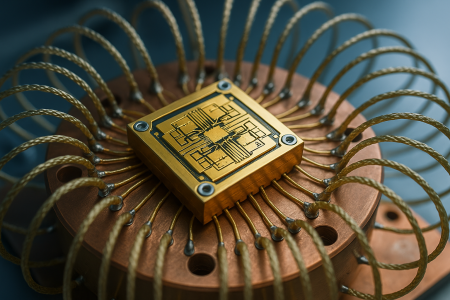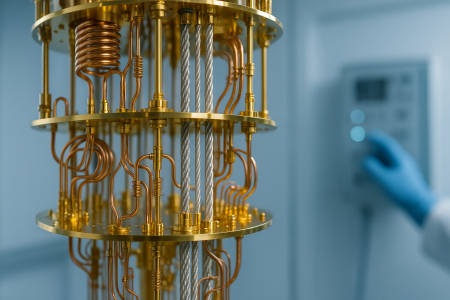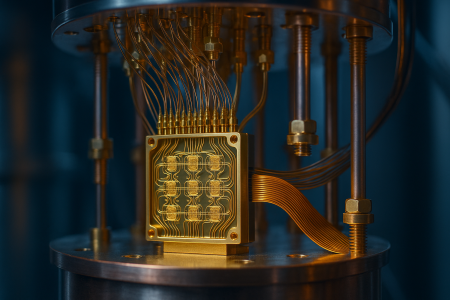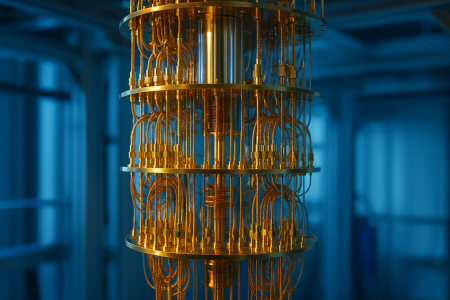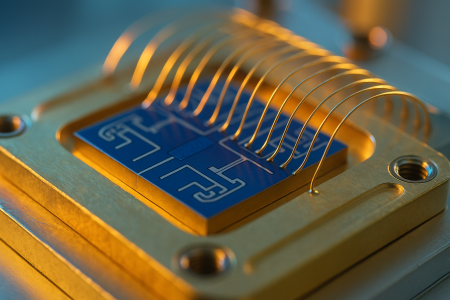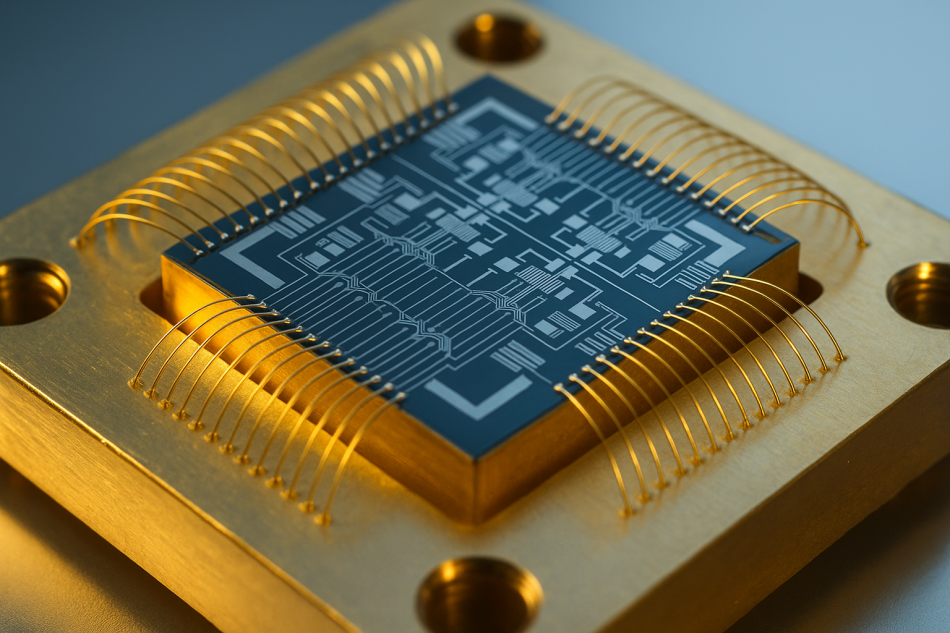

A quantum processor is a crowded neighborhood. To perform useful computation, qubits need to sit close enough to interact, exchanging the entanglement that gives a quantum computer its power. But closeness cuts both ways. When you fire a control pulse at one qubit, some of that energy inevitably spills into its neighbors. A gate meant for a single qubit nudges the ones beside it. This spillover has a plain name that hides a deep problem: crosstalk.
Two flavors of interference
Engineers usually split crosstalk into two categories, and both are stubborn. The first is control crosstalk. Superconducting qubits are steered by microwave pulses delivered through control lines. Those lines are not perfectly isolated, so a pulse aimed at qubit five leaks a faint copy toward qubits four and six. If a neighbor happens to have a similar transition frequency, that stray signal can drive an unintended rotation. The qubit you never touched ends up in a slightly wrong state.
The second is static, or 'always-on,' crosstalk. Because qubits are physically coupled so they can perform two-qubit gates, they are never fully disconnected. Even when a pair is supposed to be idle, a residual interaction keeps ticking away. Over the course of a circuit, that ever-present coupling accumulates small phase errors that scramble the computation. This is often called ZZ coupling, and taming it has become one of the central obsessions of superconducting hardware design.
Why it matters more as machines grow
On a chip with a handful of qubits, crosstalk is an annoyance you can calibrate around. On a chip with hundreds or thousands, it becomes a systemic hazard. Errors that correlate across neighboring qubits are especially dangerous for quantum error correction, which generally assumes that faults strike more or less independently. A burst of crosstalk that hits several qubits at once can defeat the very codes meant to protect the machine, because the decoder is not expecting mistakes to arrive in coordinated clusters.
This is why crosstalk shows up in benchmarking arguments. A processor can boast excellent single-qubit and two-qubit gate fidelities measured in isolation, then perform far worse when many gates run in parallel. The gap between the isolated numbers and the simultaneous numbers is largely a crosstalk tax. Serious benchmarks now measure gates while their neighbors are also active, precisely to expose it.
Engineering the neighbors apart
The most influential fix has been the tunable coupler. Instead of wiring two qubits together with a fixed link, designers insert an adjustable element between them, itself often a small circuit whose properties can be shifted with a control signal. When you want a two-qubit gate, you turn the coupling on. When the qubits should be idle, you tune it to a sweet spot where the residual interaction cancels to nearly zero. Google and others leaned heavily on tunable couplers precisely because they let a large grid of qubits sit quietly between operations.
Frequency planning is another line of defense. If neighboring qubits are deliberately given well-separated transition frequencies, a stray pulse tuned to one is far less likely to disturb the others. This sounds simple, but on a large chip with manufacturing variation it becomes a fiendish scheduling puzzle: you are trying to assign frequencies to hundreds of qubits so that no problematic collisions occur anywhere on the lattice. Fabrication techniques that let engineers trim individual qubit frequencies after the chip is made have made this puzzle more solvable.
Software and calibration pick up the rest. Pulse shaping can pre-distort a control signal so that the leakage into neighbors partially cancels itself out. Compilers can schedule gates to avoid running interfering operations at the same moment. Dynamical decoupling sequences can refocus qubits and average away slow, unwanted couplings. None of these tricks is free; they cost time, calibration effort, or circuit depth.
Not just a superconducting story
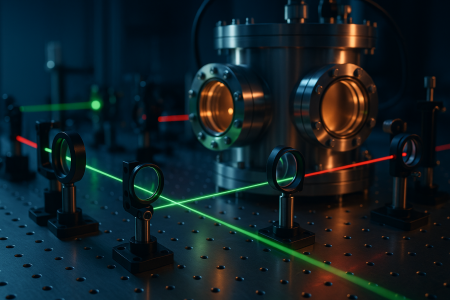
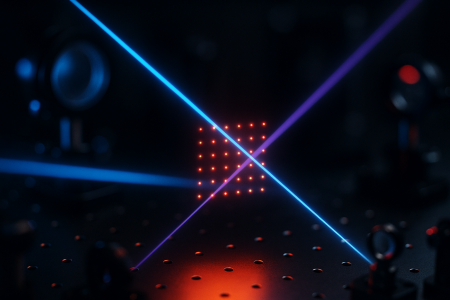
Crosstalk is not unique to superconducting chips. Trapped-ion systems face it too, since a laser aimed at one ion can scatter onto its neighbors, and the shared motion of the ion chain can spread disturbances. Neutral-atom machines contend with spillover from the tightly focused laser beams that address individual atoms. Different platforms, same underlying tension: the qubits have to be near enough to interact, which means they are near enough to interfere.
Crosstalk rarely makes headlines the way qubit counts do. It has no dramatic milestone number attached. But every roadmap that promises millions of qubits is quietly betting that this unglamorous interference problem can be held in check as the neighborhood gets denser and louder.