
Ask an engineer which part of a quantum computer keeps them up at night, and the answer is rarely the qubits themselves. It is the operation that connects two of them. The two-qubit gate, the move that entangles one qubit with another, is the single hardest thing to do well in quantum computing, and its quality sets a hard ceiling on everything a machine can accomplish.
Why one qubit is the easy part
Flipping or rotating a single qubit is a comparatively clean job. In a superconducting processor you send a precisely shaped microwave pulse. In a trapped-ion machine you hit an atom with a tuned laser. These single-qubit operations now routinely reach fidelities above 99.9 percent across several hardware platforms, meaning fewer than one error per thousand operations. That number sounds excellent, and for isolated rotations it is.
The trouble is that a single qubit, no matter how perfectly controlled, cannot do anything a classical computer cannot. The power of quantum computing comes entirely from entanglement, the strange correlation that lets qubits share information in ways classical bits cannot. To create entanglement you need a gate that acts on two qubits at once, conditioning the behavior of one on the state of the other. And that is where the physics gets ugly.
The coupling problem
To entangle two qubits you have to let them interact, which means deliberately opening a channel between systems you have otherwise spent enormous effort isolating from the world. The same coupling that performs the gate also exposes the qubits to crosstalk, leakage into unwanted energy states, and stray interactions with neighbors that should be sitting quietly. Turning the interaction on cleanly and then turning it fully off is a delicate balancing act.
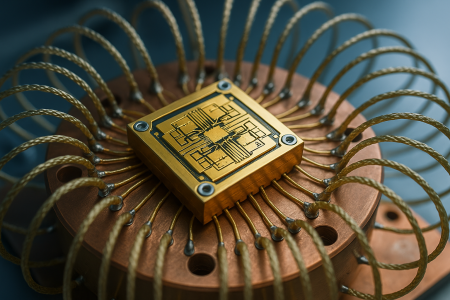
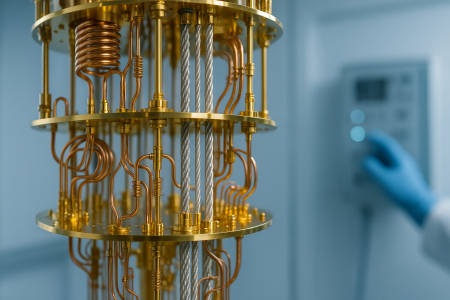
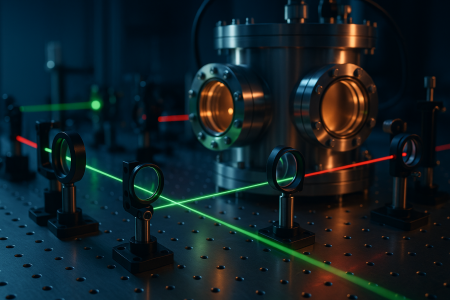
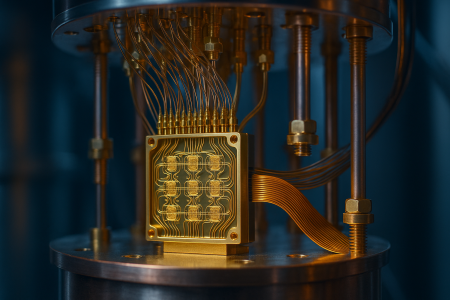
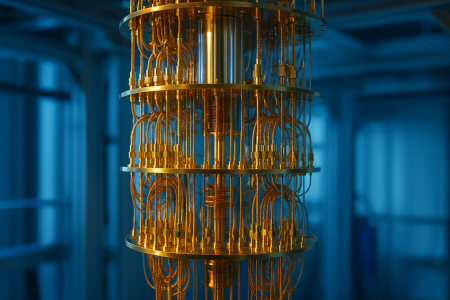
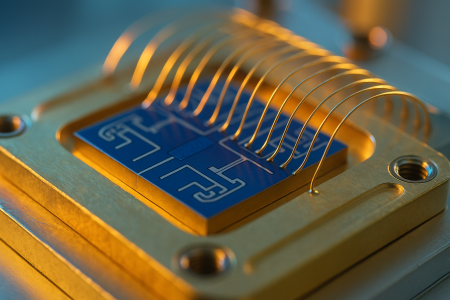
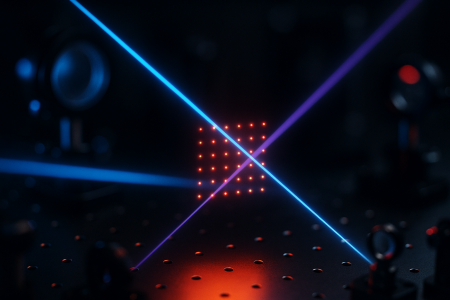
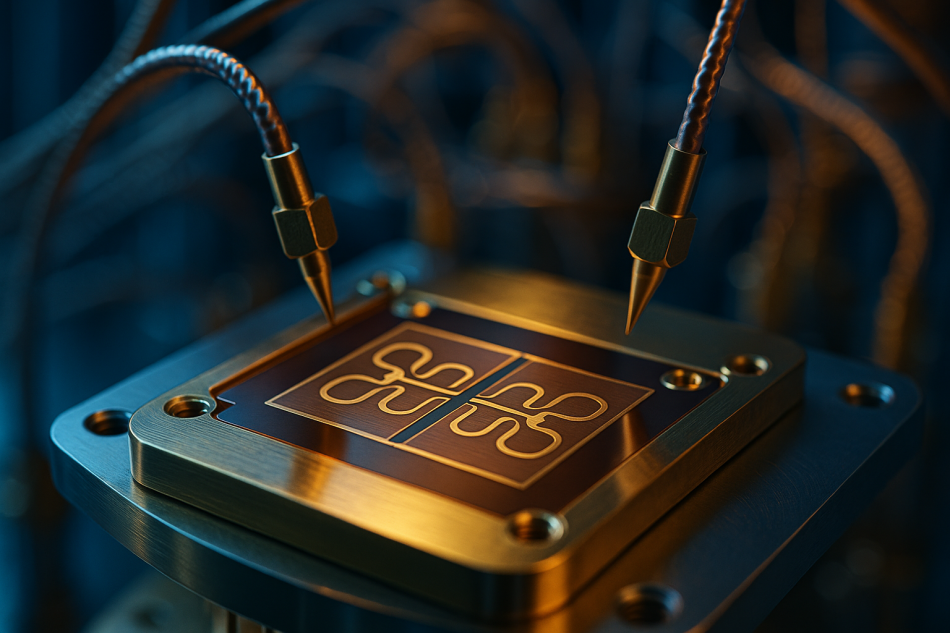
Different hardware takes different routes. Superconducting machines use schemes with names like cross-resonance and tunable couplers, where a separate circuit element brokers the interaction and can be dialed down between operations. Trapped ions entangle through their shared motion, nudging atoms with lasers so their collective vibration carries quantum information from one to another. Neutral-atom systems briefly excite atoms into bloated Rydberg states whose long-range forces let nearby atoms feel each other. Each approach has its own dominant error source, but all of them share the same hierarchy: the two-qubit gate is several times noisier than the single-qubit gate.
Why a few tenths of a percent matter so much
The gap between 99.9 percent and 99.5 percent fidelity sounds trivial. In a deep circuit it is anything but. Errors compound multiplicatively. A useful algorithm may chain together thousands or millions of two-qubit gates, and if each one has even a small chance of failing, the probability that the whole computation survives intact collapses quickly. This is precisely why raw qubit counts can mislead. A machine with a thousand qubits and mediocre entangling gates may run shorter, less useful circuits than a machine with a hundred excellent ones.
It also explains the obsession with two-qubit fidelity on company roadmaps. Trapped-ion builders have demonstrated entangling gates above 99.9 percent in the lab, which is part of why their machines tend to score well on circuit-depth benchmarks despite modest qubit numbers. Superconducting teams have pushed steadily toward the same threshold while scaling chips much larger. The competition is not really about who has more qubits. It is about who can entangle them reliably.
The bridge to error correction
This matters most for the long game. Quantum error correction, the technique meant to turn many flawed physical qubits into a few reliable logical ones, only works if the underlying gates are good enough to clear a threshold. Below that threshold, adding error correction makes things worse, because each corrective operation introduces more errors than it fixes. Crossing it depends overwhelmingly on the quality of two-qubit gates, since they dominate the error budget of any correction cycle.
So when a research group announces a record entangling-gate fidelity, it is not a footnote. It is a step toward the moment when error correction starts paying for itself. The headline-grabbing milestones, the million-qubit ambitions, the chemistry and optimization use cases people are waiting for, all rest on this one stubborn operation getting a little bit better. The hardest move in quantum computing is also the one that decides whether the rest of it works.