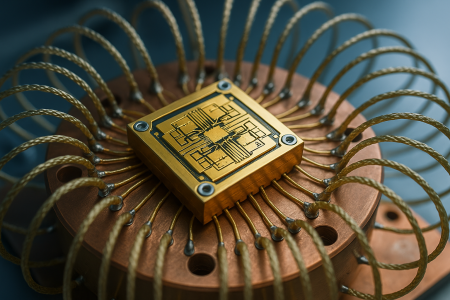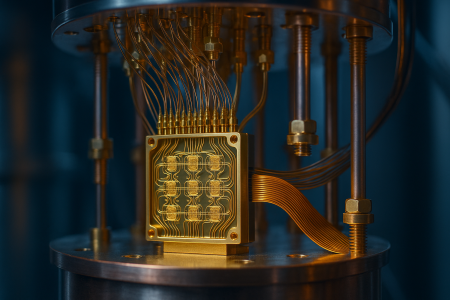

For years the headline number in quantum computing was the qubit count. A chip with 50 qubits sounded more impressive than one with 20, and press releases leaned hard on the figure. That framing is fading. The companies and labs furthest along now talk less about how many physical qubits they have packed onto a chip and more about a harder, more meaningful target: the logical qubit.
The reason is simple. Today's qubits are unreliable. A superconducting qubit might hold its state for a few hundred microseconds before noise corrupts it. Every gate operation introduces a small error, and those errors pile up fast. Run a calculation long enough and the answer dissolves into random noise. Without a fix, quantum computers stay stuck as interesting laboratory curiosities rather than tools that solve problems classical machines cannot.
What a logical qubit actually is
The fix is quantum error correction. Instead of trusting a single fragile qubit to carry information, you spread that information across many physical qubits and use clever measurements to detect and correct errors without destroying the quantum state. The protected unit that emerges from this redundancy is the logical qubit.
The catch is the overhead. Depending on the error-correction scheme and the quality of the underlying hardware, a single logical qubit might require dozens, hundreds, or even a thousand physical qubits. That is why a 1,000-qubit chip does not mean 1,000 useful qubits. It might mean a handful of logical ones, or in many current cases, zero, because the physical error rates are still too high to come out ahead.
The threshold that changes everything
Error correction only helps once hardware crosses a quality bar known as the threshold. Below it, adding more physical qubits to a logical qubit makes things worse, because each extra qubit introduces more errors than the correction can remove. Above it, the opposite happens: more qubits mean a more reliable logical qubit. Getting under that threshold has been one of the defining engineering struggles of the past decade.
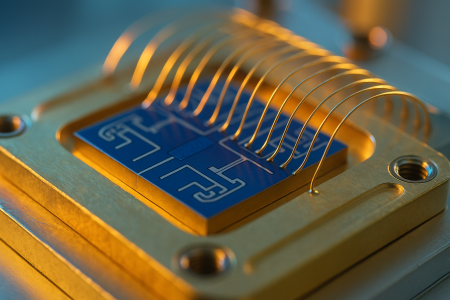
Google's quantum team demonstrated a milestone version of this with its surface-code experiments, showing that a larger grid of physical qubits could produce a logical qubit with a lower error rate than a smaller grid. That sounds modest, but it is the experimental proof that the scaling actually works in the right direction. The surface code, a layout where qubits sit on a checkerboard and neighbors constantly check each other, has become the workhorse approach for superconducting machines.
Trapped-ion companies are pursuing the same goal with different hardware. Quantinuum has run error-correction demonstrations on its trapped-ion systems, exploiting the fact that ions can be shuttled around and connected to almost any other ion, which makes certain codes far more efficient. IBM, meanwhile, has bet on a family of codes called quantum low-density parity-check, or qLDPC, codes, arguing they can cut the physical-qubit overhead dramatically compared with the surface code. The company has folded that bet into its public roadmap toward a fault-tolerant machine later this decade.
Different paths, same destination
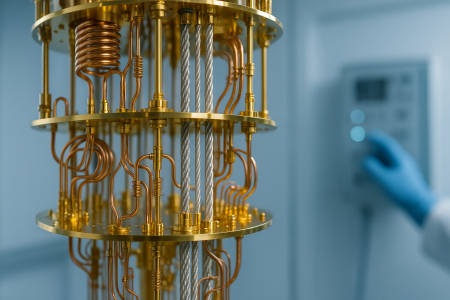
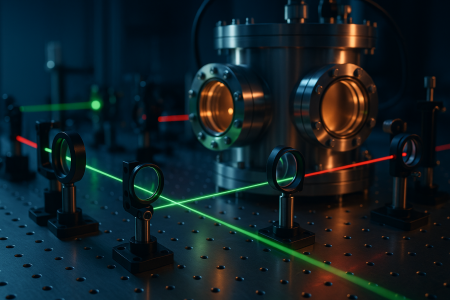
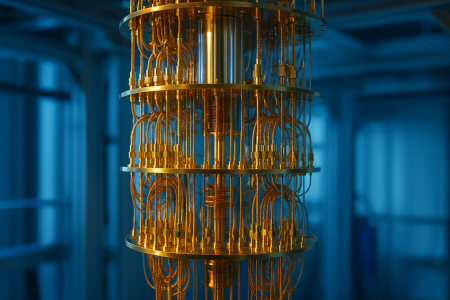
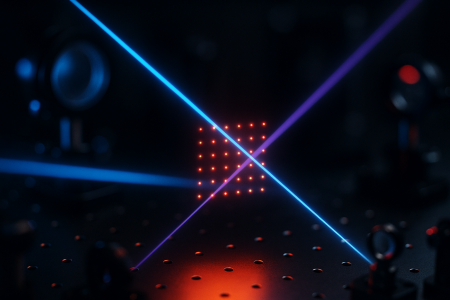
The competition is really a contest of architectures. Superconducting chips are fast but need extreme refrigeration and have limited connectivity. Trapped ions are slower but boast long coherence times and flexible connections. Photonic approaches, championed by companies like PsiQuantum, aim to build error correction directly into a manufacturing process borrowed from the semiconductor industry. Neutral-atom systems offer yet another route, with reconfigurable arrays that can rearrange qubits mid-computation.
None of these has declared victory. Each makes a tradeoff between qubit quality, speed, connectivity, and manufacturability, and error correction interacts with all four. A platform with sluggish gates might still win if its qubits are clean enough to need fewer of them per logical unit.
Why it matters for real applications
The applications people care about, simulating molecules for new materials and drugs, optimizing complex systems, breaking certain hard math problems, all demand deep circuits that run far longer than today's noisy qubits can survive. They need logical qubits with error rates many orders of magnitude better than physical ones. That is the bridge error correction is meant to build.
So when you read about a new chip, the number to watch is shifting. Physical qubit counts still matter as raw material, but the real progress markers are logical error rates, the number of stable logical qubits a machine can sustain, and how cheaply each one can be built. The first system to run a useful algorithm on genuinely reliable logical qubits will mark the moment quantum computing stops being a promise and starts being a tool.