
Before a quantum computer can do anything clever, it has to do something boring: put every qubit into a known starting state. Almost always that state is zero. If you cannot guarantee that your qubits begin the way you think they do, the rest of the computation is built on sand. The answers you read out at the end will be contaminated by whatever garbage the qubits happened to be carrying when the program began.
This is not a footnote. It is one of the five basic requirements David DiVincenzo laid out for any working quantum computer, sitting right alongside long coherence and reliable gates. He called it the ability to initialize the register to a simple fiducial state. In practice it means one thing: reliable, repeatable reset.
Why reset is harder than it sounds
The naive way to reset a qubit is to just wait. Left alone, a qubit in its excited state will eventually relax back down to its ground state, dumping its energy into the surrounding environment. This is passive reset, and for years it was the default. The problem is time. Waiting for natural relaxation means waiting several times the qubit's T1 lifetime to be confident it has actually settled. For a modern superconducting qubit with a lifetime approaching a millisecond, that is an eternity.
And here is the cruel irony of quantum engineering. Everyone is racing to make qubits live longer, because longer coherence means more operations before errors creep in. But a longer-lived qubit is also a qubit that takes longer to relax on its own. The better your qubit gets at holding its state, the worse passive reset becomes. You cannot have it both ways.
Making reset active
The answer is to stop waiting and start forcing the issue. Active reset measures the qubit, and if it comes back excited, applies a pulse to flip it back to ground. If it is already in the ground state, do nothing. This turns a slow physical relaxation into a fast, deterministic operation gated by a measurement, and it depends heavily on the same mid-circuit readout machinery that powers dynamic circuits.
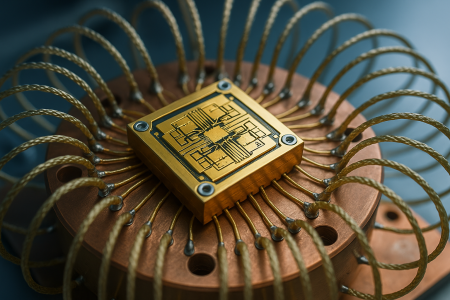
Superconducting platforms have another trick. Instead of waiting for a qubit to leak its energy into the void, engineers give it a fast, controlled drain. By coupling the qubit to a lossy readout resonator and driving the system at the right frequency, they can shuttle the excitation out of the qubit and into the resonator, where it dissipates almost immediately. Schemes with names like the double-drive reset of population effectively open a valve, empty the qubit, and close it again in a fraction of a microsecond.
Different hardware, different headaches
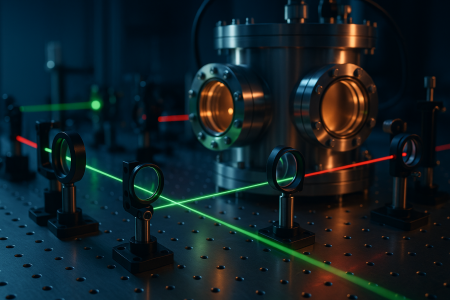
Trapped-ion machines approach initialization with lasers. A technique called optical pumping shines light tuned so that an ion can absorb it from every state except the target one. The ion keeps scattering photons and hopping around until it lands in the state that the light cannot touch, and there it stays. The result is one of the cleanest initializations in the business, routinely better than 99.9 percent, though it takes microseconds rather than nanoseconds.
Neutral-atom arrays face a related challenge, and then a bigger one: they have to load atoms into their traps in the first place, and loading is probabilistic. Roughly half the trap sites come up empty on any given attempt, so these machines image the array, see which sites are filled, and rearrange atoms with movable tweezers to build the pattern they actually want before the computation starts. Reset here is as much about logistics as physics.
Why it matters for the numbers
Reset quality feeds directly into error budgets. A residual excited-state population of even one percent acts like a fresh error injected at the start of every run, and since quantum programs are executed thousands of times to build up statistics, that error shows up in every single shot. Slow reset hurts in a different way. If clearing the register takes longer than running the circuit, the machine spends most of its day resetting rather than computing, and throughput collapses.
None of this makes headlines the way a new qubit count does. But every logical qubit, every error-correction cycle, every benchmark run rests on the assumption that the machine can return to a clean, known state fast and reliably. The reset button is invisible when it works. It is catastrophic when it does not.