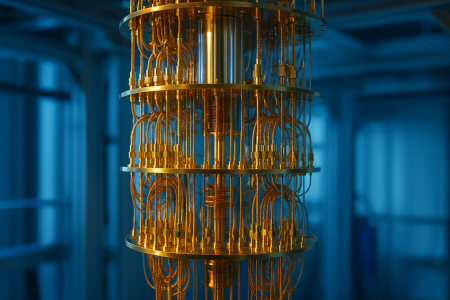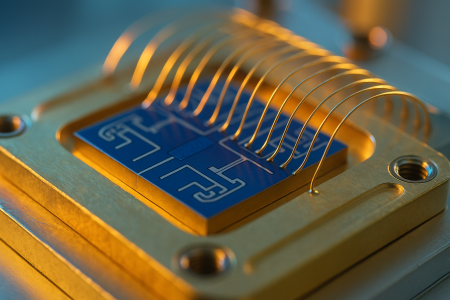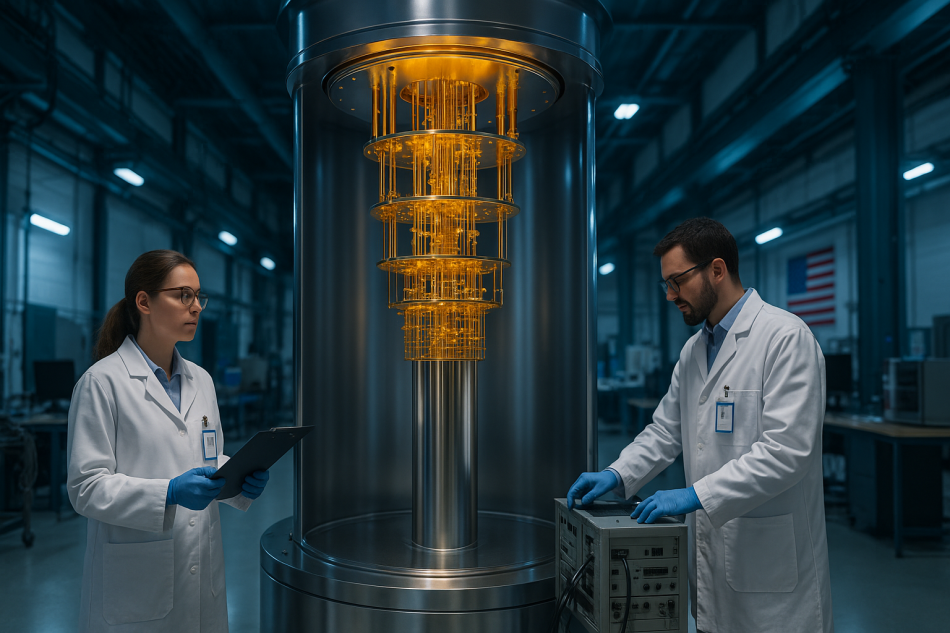
For years, the easiest way to touch a quantum computer was to open a laptop and log into someone else's. IBM, Google, and a handful of startups put their machines behind cloud portals, and researchers anywhere could queue up a job. Convenient, cheap, and completely dependent on a company in another country deciding to keep the lights on. That dependence is exactly what a growing number of governments have decided they cannot live with.
Why a nation wants its own hardware
A quantum computer is not yet a strategic weapon, but policymakers treat it like a strategic technology. The reasoning runs along familiar lines. If quantum machines eventually crack hard problems in chemistry, materials, and optimization, a country that has to borrow computing time is a country that has surrendered a lever of its own future. There is also the matter of who sees the workloads. A pharmaceutical simulation or a defense logistics problem is not something every government is comfortable shipping to a foreign data center, even an encrypted one.
Then there is the industrial argument. Building and maintaining a quantum computer means cultivating cryogenics engineers, control-electronics specialists, error-correction theorists, and fabrication know-how. Buy a machine and host it at home, and you seed an ecosystem of technicians and suppliers that a cloud subscription never would.
The American approach: labs as anchor tenants
The United States codified its ambitions in the National Quantum Initiative, which funneled money into research centers anchored at the Department of Energy's national laboratories. Oak Ridge, Argonne, Brookhaven, and Lawrence Berkeley became hubs where academics and companies could get access to hardware and expertise. Sandia runs QSCOUT, a trapped-ion testbed built specifically so outside researchers can poke at the machine's inner workings rather than treat it as a sealed appliance. The model is less about owning one flagship computer than about making the national labs the gravitational center of the field.
Europe buys, builds, and hosts
The European Union launched its Quantum Flagship as a decade-long, billion-euro program, and individual member states have moved aggressively on hardware. Germany's Jülich Supercomputing Centre has become a showcase, integrating quantum systems alongside its classical supercomputers so that a quantum processor can act as an accelerator for a larger workflow. Machines from European vendors and international suppliers sit on the same campus, a deliberate hedge against betting on a single technology. The pattern repeats across the continent: procure real hardware, place it inside a public research institution, and open the doors to domestic industry.
Asia and the Pacific make their bets
Japan pursued a two-track strategy. RIKEN, working with Fujitsu and other partners, brought a homegrown superconducting machine online, while an IBM system was installed on Japanese soil to give researchers immediate access. China has pushed hard on its own designs, with the photonic Jiuzhang experiments and the superconducting Zuchongzhi processors serving as demonstrations of self-sufficiency. India stood up a National Quantum Mission with substantial multi-year funding aimed at building domestic machines and talent. Australia made one of the boldest moves of all, committing a large public investment to help PsiQuantum build a utility-scale photonic computer in Brisbane, wagering that hosting a frontier machine is worth the risk.
The catch nobody advertises
Owning a quantum computer is not like owning a supercomputer. The machines are temperamental, need constant recalibration, and can be obsolete within a few years as qubit counts and fidelities climb. A government that buys a 100-qubit system today may find it outclassed before the warranty expires. That is why many national programs frame their purchases as testbeds and training grounds rather than production tools. The point is to learn how to run the thing, integrate it with existing infrastructure, and build the workforce, not to compute anything indispensable this year.
There is also a quieter tension. Most of the hardware, even when it sits on national soil, still comes from a small number of vendors. Sovereignty over the building is not the same as sovereignty over the supply chain of dilution refrigerators, specialized amplifiers, and fabrication lines. Several countries have noticed, and their next round of funding increasingly targets the components and the fabs, not just the finished machines.
The sovereign quantum computer, then, is partly a real asset and partly a statement of intent. It says a country plans to be a participant rather than a customer when the technology matures. Whether that bet pays off depends on something no procurement budget can guarantee: that the machines eventually become useful enough to be worth owning.