transmon

The Tantalum Turn: The Metal That Stretched a Qubit's Life
 Rafayel
A superconducting qubit is a tiny electrical circuit that behaves like an artificial atom. Cool it to a fraction of a degree above absolute zero and i...
The Leakage Ladder: When a Qubit Climbs Out of Its Lane
A qubit is a promise of simplicity. Two states, zero and one, and nothing in between to worry about. That promise is what makes the whole edifice of q...
The Josephson Junction: The Flimsy Sandwich Behind Every Superconducting Qubit
Strip away the golden chandelier of a dilution fridge, the forest of coaxial cables, and the control electronics humming in the next room, and a super...

The Fluxonium: The Heavy Qubit Betting on Deeper Protection
The transmon runs most of the superconducting quantum computers you can rent in the cloud today. It is simple, reliable, and well understood. But it h...

The Frequency Collision: When Two Qubits Want the Same Note
Picture a choir where every singer is assigned a fixed note at birth and can never change it. As long as the voices stay spread across the scale, harm...
The Unimon: Finland's Qubit That Rethinks the Transmon
Most superconducting quantum computers run on a qubit called the transmon, a design so dominant that it powers nearly every machine IBM, Google, and R...
The Zuchongzhi Run: China's Superconducting Bid for Quantum Advantage
When people talk about the race to a useful quantum computer, the conversation usually orbits a handful of American and European names. But one of the...
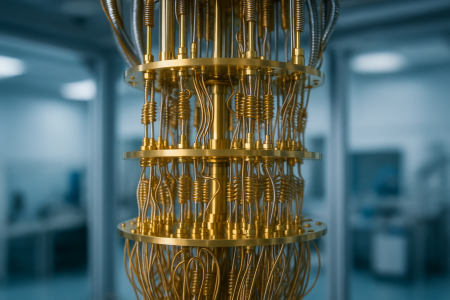
The Dilution Fridge: The Golden Chandelier That Chills Qubits Near Absolute Zero
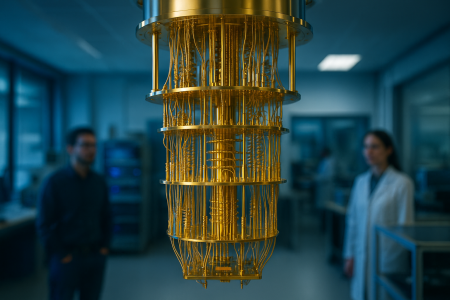
Look at almost any photo of a superconducting quantum computer and you will not see the chip. What you see is the fridge: a gleaming brass-and-gold st...
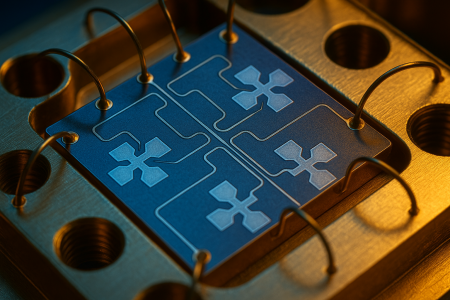
The Transmon: The Charge-Shy Qubit That Runs the Cloud
If you log into a quantum computer today through IBM's cloud, Google's lab, or a Rigetti processor, odds are you are talking to a transmon. It is the...
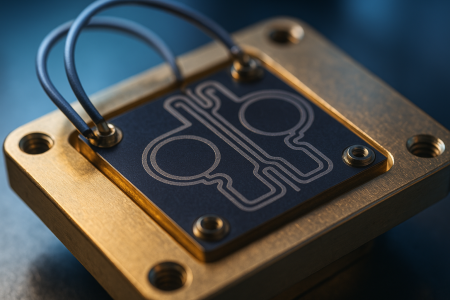
The Purcell Filter: Reading a Qubit Without Letting It Leak Away
Every superconducting quantum processor faces the same awkward bargain. You cannot compute with a qubit you cannot measure, so you wire each qubit to...
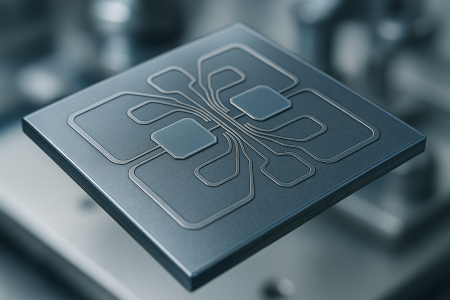
The Tantalum Turn: The Metal That Doubled a Qubit's Memory
For most of the last two decades, superconducting qubits were built from a short list of metals: aluminum for the delicate Josephson junction, and nio...
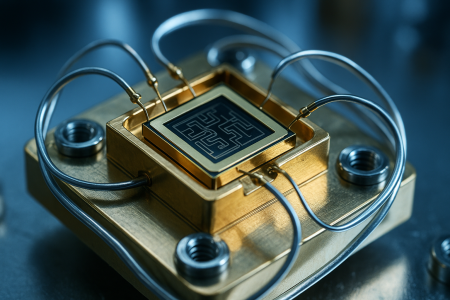
The Leakage Ladder: When a Qubit Climbs Out of Its Two States
A qubit is a fiction the hardware agrees to maintain. Physicists talk about two states, a crisp 0 and 1, but almost every real qubit is carved out of...
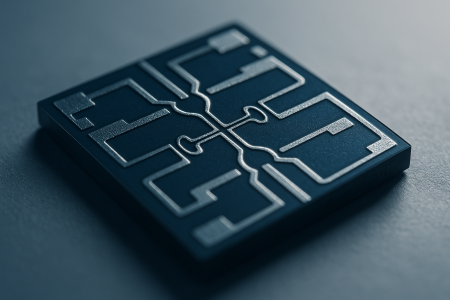
The Josephson Junction: The Weak Link at the Heart of a Qubit
Strip a superconducting quantum computer down to its most essential part and you arrive at something almost comically small: a gap in a wire. Two piec...
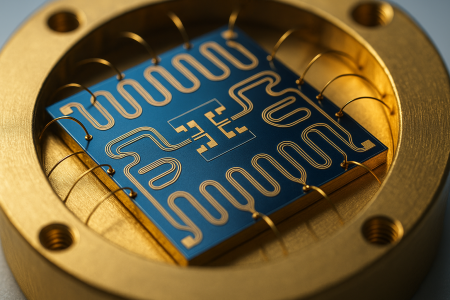
The Frequency Collision: When Two Qubits Land Too Close
Build a superconducting quantum processor out of fixed-frequency transmons and you inherit a problem that has nothing to do with quantum mechanics and...
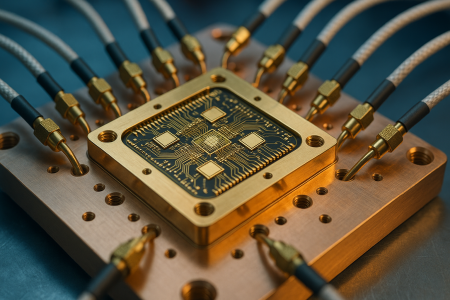
The Cross-Resonance Gate: Entangling Qubits Without Turning a Dial
Every quantum computer needs a way to make two qubits talk to each other. Without a reliable two-qubit gate, you can flip individual qubits all day an...
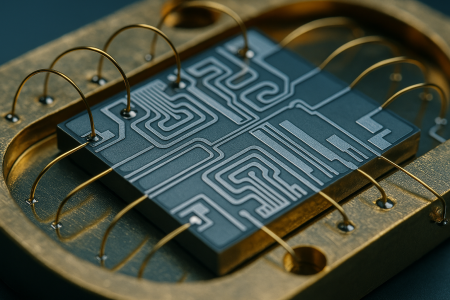
The Purcell Filter: The Guard That Lets a Qubit Be Read Without Being Killed
Every superconducting qubit faces the same awkward trade-off. To find out what state it is in, you have to connect it to the outside world through a r...
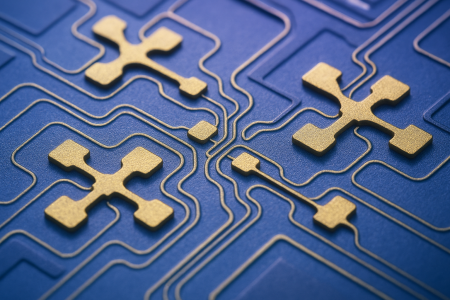
The Tunable Coupler: The Switch That Turns Qubit Chatter On and Off
Two qubits sitting side by side on a superconducting chip have a problem: they can hear each other whether you want them to or not. Physics does not c...
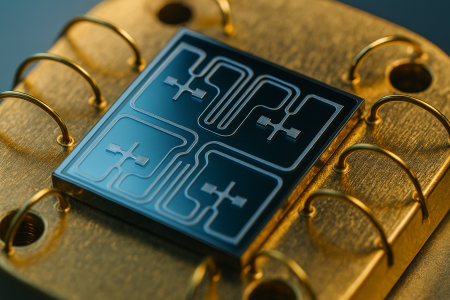
The Josephson Junction: The Tiny Gap That Makes a Superconducting Qubit Possible
Peer inside a superconducting quantum processor from IBM, Google, or Rigetti and you will find, at the core of every qubit, a device so small you woul...
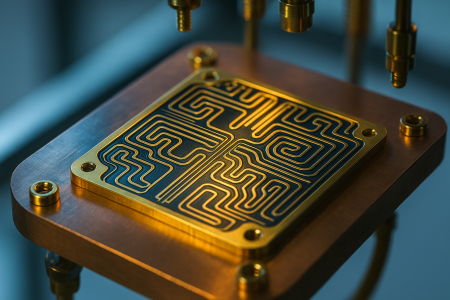
The Leakage Problem: When a Qubit Escapes Its Two States
Every explanation of a qubit starts the same way: it lives in two states, call them 0 and 1, and it can be any blend of the two. That picture is a con...
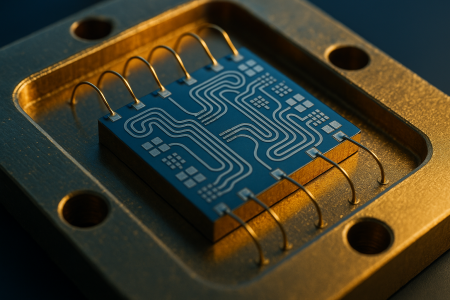
The Fluxonium: The Superconducting Qubit Betting Against the Transmon
If you open up almost any superconducting quantum computer built in the last decade, from IBM's processors to Google's, you will find the same basic i...

The Tantalum Turn: How Swapping Metals Bought Qubits More Time
For most of the last decade, the superconducting qubit was a story about aluminum and niobium. Those were the metals that companies like IBM, Google,...