quantum hardware
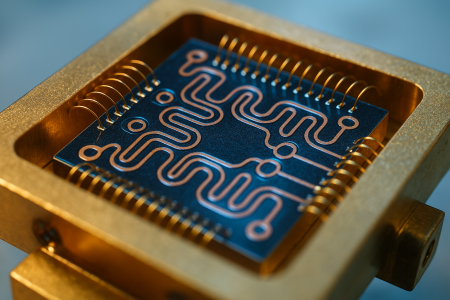
The Tunable Coupler: The Switch That Turns Entanglement On and Off
 Rafayel
Put two superconducting qubits close enough to talk and you have the beginning of a quantum processor. The trouble is that they never stop talking. A...
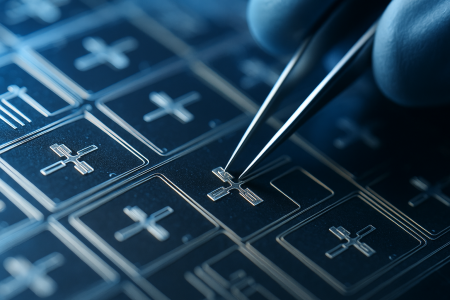
The Josephson Junction: The Flimsy Sandwich Behind Every Superconducting Qubit
Strip away the golden chandelier of a dilution fridge, the forest of coaxial cables, and the control electronics humming in the next room, and a super...
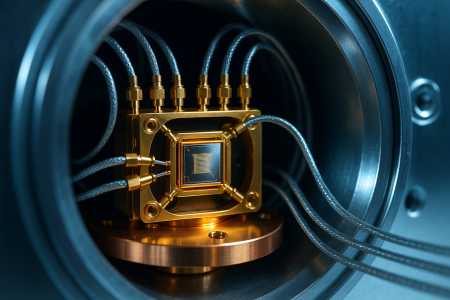
The Reset Button: How a Qubit Gets Wiped Clean Between Runs
Every quantum program begins with a demand that sounds trivial and turns out to be surprisingly hard: start from zero. Not an approximate zero, not a...

The Fluxonium: The Heavy Qubit Betting on Deeper Protection
The transmon runs most of the superconducting quantum computers you can rent in the cloud today. It is simple, reliable, and well understood. But it h...
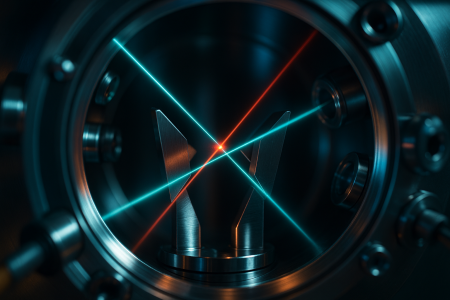
The Barium Switch: Why IonQ Traded One Ion for a Brighter One
Every trapped-ion quantum computer begins with a choice that most users never see: which atom to use. The qubit is a single charged ion held in place...
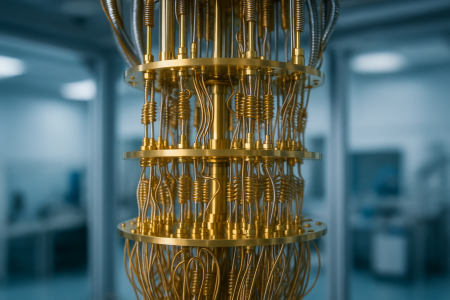
The Dilution Fridge: The Golden Chandelier That Chills Qubits Near Absolute Zero
Look at almost any photo of a superconducting quantum computer and you will not see the chip. What you see is the fridge: a gleaming brass-and-gold st...
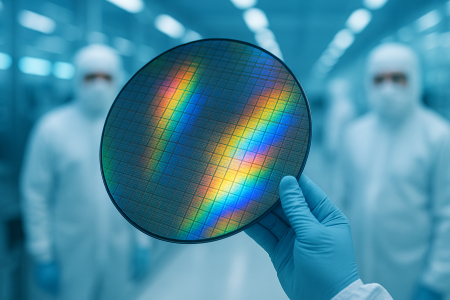
The Silicon Spin Qubit: Intel's Wager on the Transistor's Cousin
Walk through the physics of most quantum computers and you meet exotic hardware: superconducting loops chilled to a whisper above absolute zero, or si...
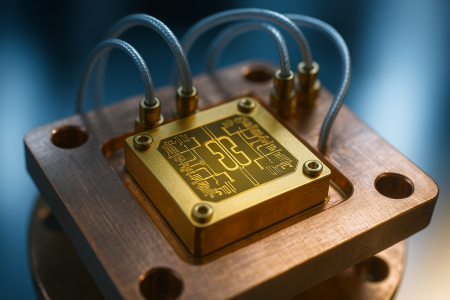
The Cat Qubit: Alice & Bob's Bet on Killing Bit-Flips
Every qubit suffers two basic ways of going wrong. It can flip its value, swapping a 0 for a 1, the way a classical bit does when a cosmic ray or a st...
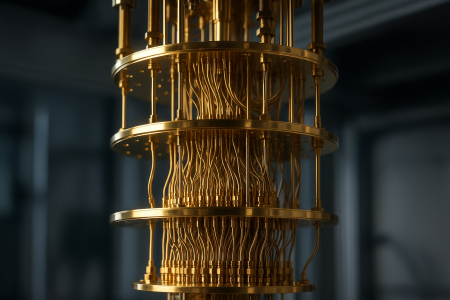
The Wiring Wall: Why Every New Qubit Needs Its Own Cable
Look at a photograph of a superconducting quantum computer and your eye goes to the golden chandelier, tier after tier of plates and coiled cables des...

The Optical Tweezer: How a Laser Grabs One Atom to Make a Qubit
Most descriptions of a neutral-atom quantum computer start with the qubits themselves, single rubidium or cesium atoms floating in a vacuum. But befor...
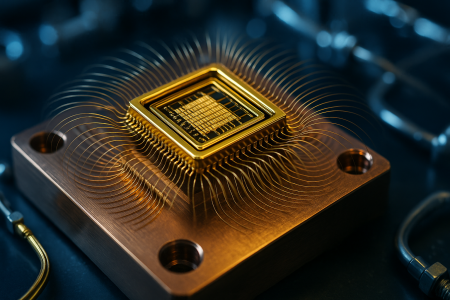
The Quantum Volume Test: The Square That Sizes Up a Whole Machine
Ask how big a quantum computer is and most people reach for a single figure: the number of qubits. It is the easiest thing to advertise and one of the...
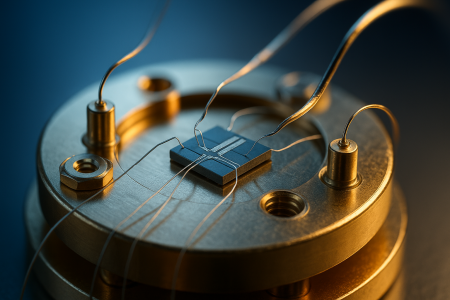
The Braided Qubit: Microsoft's Long Bet on Topological Matter
Most quantum computers fight noise with brute force. You take a fragile physical qubit, surround it with dozens or hundreds of helpers, and run a cons...
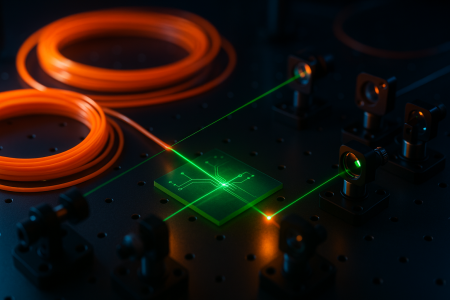
The Squeezed-Light Gambit: Xanadu's Bet on Photons You Can Network
Walk into most quantum labs and you find the same centerpiece: a gold chandelier hanging inside a fridge colder than deep space, guarding a chip of su...
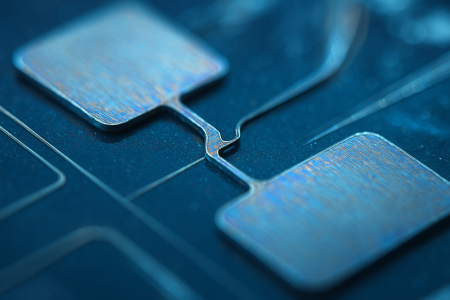
The Two-Level System: The Tiny Flaw That Steals a Qubit's Life
A superconducting qubit is, at heart, a beautifully engineered circuit. But it lives on a chip made of imperfect materials, and those imperfections fi...
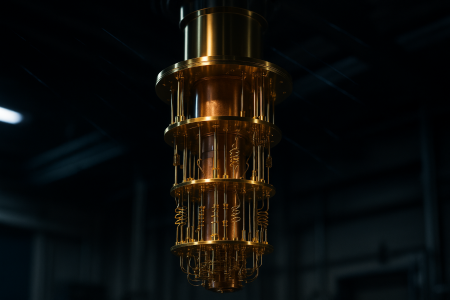
The Cosmic Ray Strike: When One Particle Blanks a Whole Quantum Chip
Quantum error correction rests on a quiet assumption: that mistakes happen one qubit at a time, more or less at random, in scattered spots a code can...
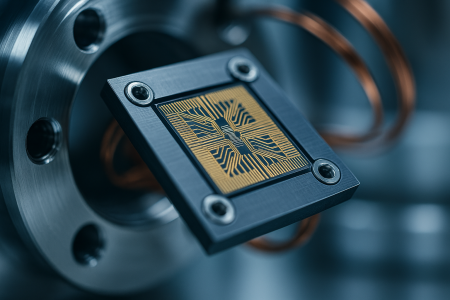
The Etched Trap: Oxford Ionics' Bet on Ions Above a Chip
Most trapped-ion quantum computers look like optics labs that got out of hand. Beams from a dozen lasers thread through mirrors and lenses, each one t...
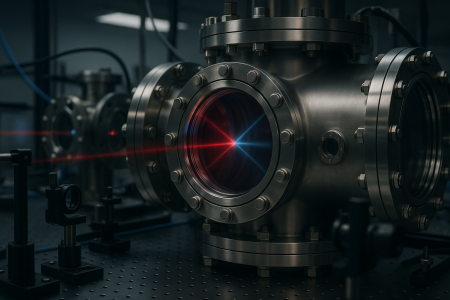
The Thousand-Atom Machine: Atom Computing's Wager on Sheer Scale
In the arms race to build a useful quantum computer, most companies talk about quality first: cleaner gates, longer coherence, fewer errors. Atom Comp...

The Rydberg Blockade: Why Two Atoms Refuse to Light Up Together
In a neutral-atom quantum computer, the qubits are single atoms, held in place by tightly focused laser beams and floating in near-perfect vacuum. To...
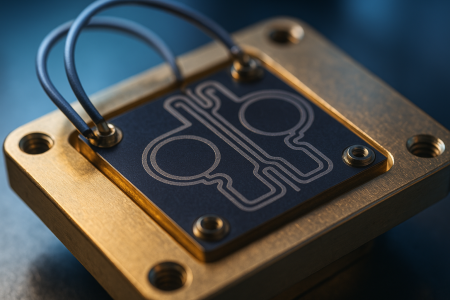
The Purcell Filter: Reading a Qubit Without Letting It Leak Away
Every superconducting quantum processor faces the same awkward bargain. You cannot compute with a qubit you cannot measure, so you wire each qubit to...
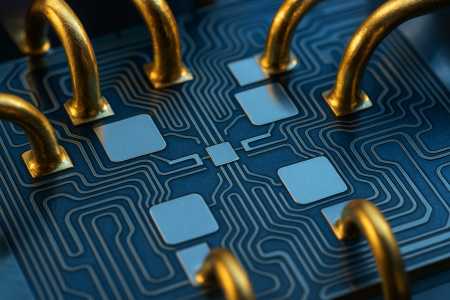
The Tunable Coupler: The Dial That Switches Qubit Chatter On and Off
Two superconducting qubits sitting next to each other on a chip have a problem: they never stop talking. Because they share electromagnetic fields, th...
The Mid-Circuit Peek: Reading a Qubit While the Program Runs
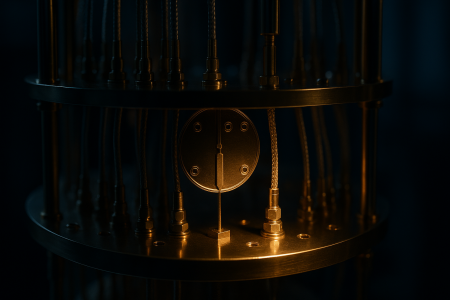
For years the rule of a quantum program was simple: load the qubits, run the gates, then measure everything at the finish. Measurement was the wall yo...