quantum hardware
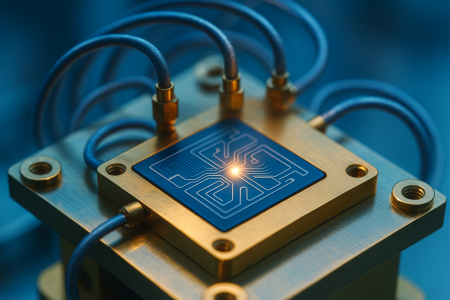
Dynamical Decoupling: The Pulse Trick That Keeps a Waiting Qubit Alive
 Rafayel
Picture a quantum circuit as a factory floor where some machines are hammering away and others are standing idle, waiting for a part to arrive. In a c...
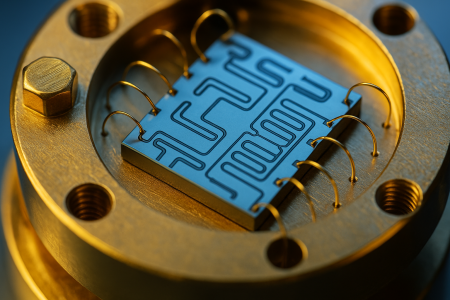
The Purcell Filter: Guarding a Qubit From Its Own Antenna
Every superconducting qubit faces a quiet contradiction. To learn what state it is in, engineers couple it to a small microwave resonator and bounce a...
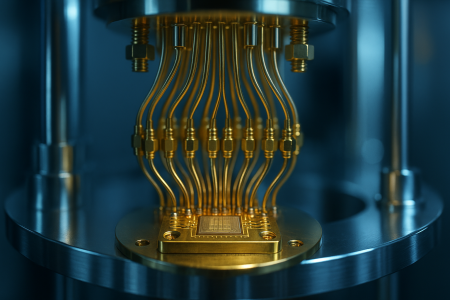
The Reset Button: How a Quantum Computer Clears a Qubit
Before a quantum computer can do anything clever, it has to do something boring: put every qubit into a known starting state. Almost always that state...
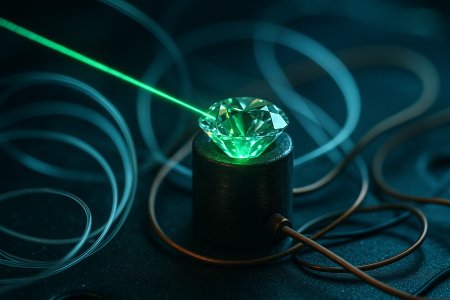
The Diamond Qubit: Quantum Computing Without the Deep Freeze
Nearly every quantum computer you read about shares one demanding requirement: brutal cold. Superconducting chips need dilution refrigerators that hov...
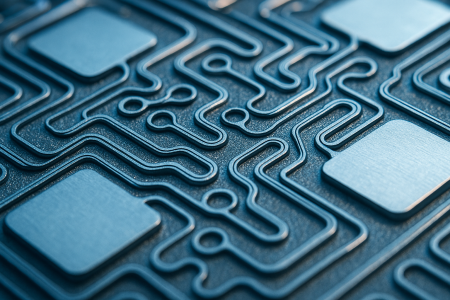
The Tunable Coupler: The On-Off Switch Between Two Qubits
Two qubits that need to talk to each other face an awkward problem: the wiring that lets them interact never really switches off. In a superconducting...
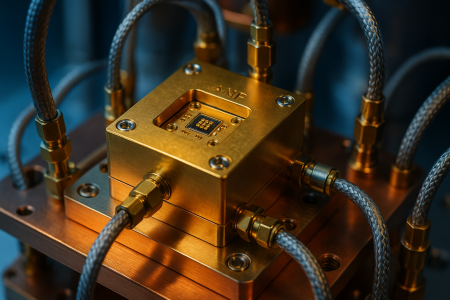
The Quiet Amplifier: How a Qubit's Whisper Survives the Trip Out
When a superconducting quantum computer measures a qubit, it does not read a bright, obvious signal. It reads a faint microwave tone reflected off a t...
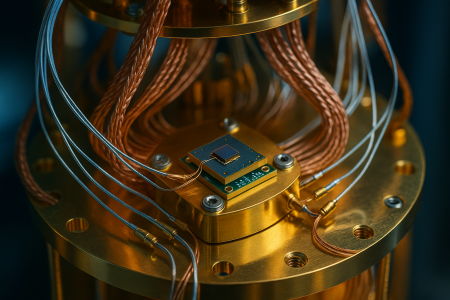
The Cold Controller: Moving Qubit Electronics Into the Fridge
Every superconducting qubit needs a babysitter. Somewhere outside the refrigerator sits a rack of signal generators, digital-to-analog converters, and...
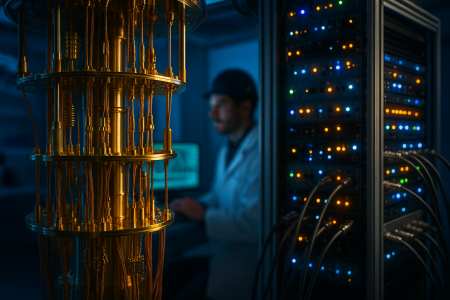
Dynamic Circuits: When a Quantum Computer Reads a Qubit Mid-Job
The textbook version of quantum computing goes like this: you prepare a batch of qubits, run a sequence of gates, and then measure everything at the e...
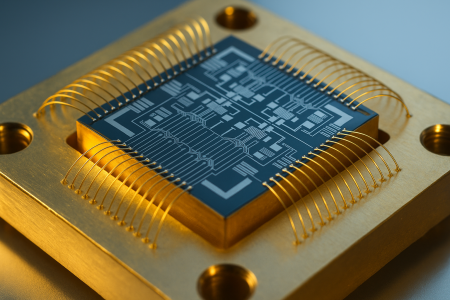
The Crosstalk Curse: When Poking One Qubit Rattles Its Neighbors
A quantum processor is a crowded neighborhood. To perform useful computation, qubits need to sit close enough to interact, exchanging the entanglement...
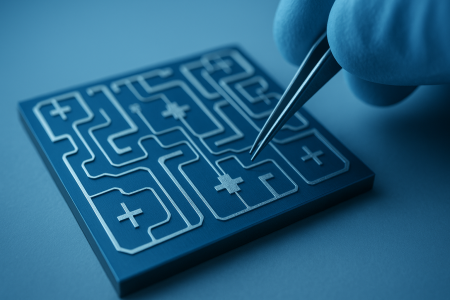
The Josephson Junction: The Tiny Switch at the Heart of the Qubit
Strip away the gold-plated wiring, the refrigerators the size of a phone booth, and the racks of control electronics, and most of today's quantum comp...
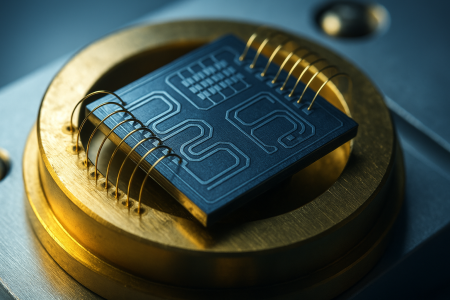
The Fluxonium Challenger: The Superconducting Qubit Gunning for the Transmon
Nearly every superconducting quantum computer you have heard of runs on the same basic building block: the transmon. IBM, Google, and Rigetti all stac...
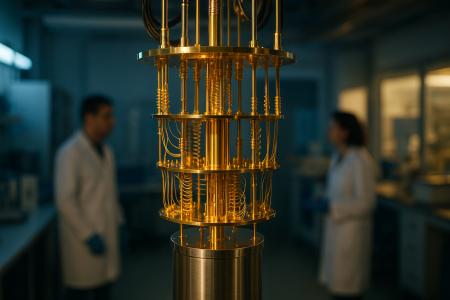
The Helium-3 Squeeze: The Rare Isotope Quantum Computers Can't Run Without
Ask a quantum hardware engineer what keeps them up at night and you might expect an answer about coherence times or gate fidelity. Sometimes the hones...
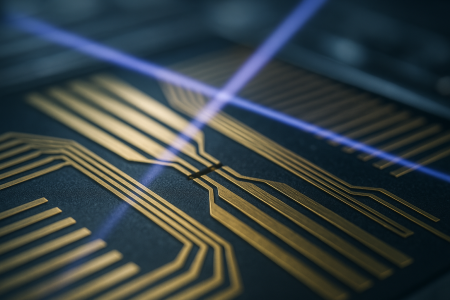
The Ion Shuttle: How Quantum Computers Move Atoms to Compute
Most pictures of a quantum computer show qubits fixed in place, wired up like transistors on a circuit board. Trapped-ion machines built on a design c...

The Erasure Trick: Making Qubit Errors Announce Themselves
Every quantum computer fights the same enemy: errors. Qubits drift, decay, and flip in ways that corrupt a calculation long before it finishes. The us...
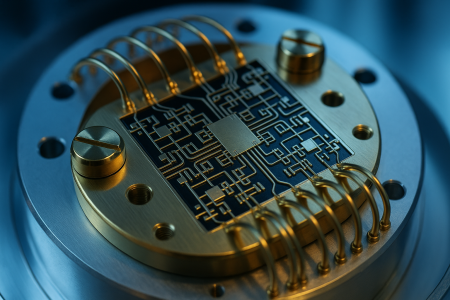
The Overhead Diet: New Error-Correcting Codes That Shrink Quantum Machines
Every serious plan to build a useful quantum computer runs into the same wall: error correction is expensive. Qubits are fragile, they drift and flip...
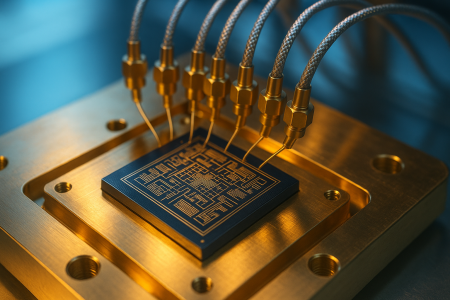
The Clock Speed Divide: Why Some Qubits Run a Thousand Times Faster
Ask two engineers to name the most important number in a quantum computer and you will get two answers. One will say coherence time, the other fidelit...
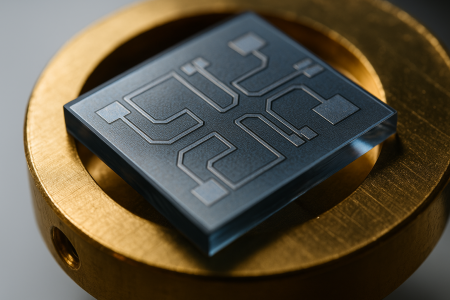
The Tantalum Surprise: How a Material Swap Stretched Qubit Lifetimes
For years the standard recipe for a superconducting qubit looked settled. You patterned thin films of aluminum and niobium on a silicon or sapphire ch...
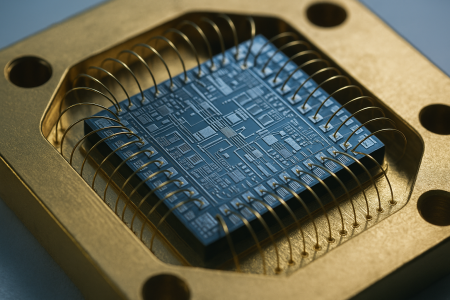
The Yield Problem: Why Two Identical Qubits Don't Exist
Walk through any pitch about quantum computing and you will hear about qubit counts climbing into the hundreds and thousands. What you rarely hear is...
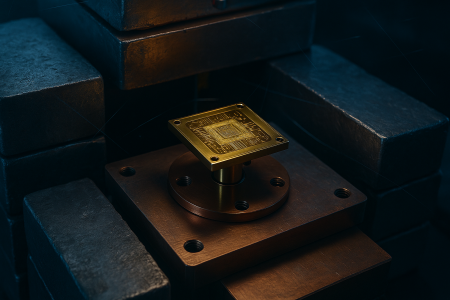
The Cosmic Ray Problem: How Stray Particles Wreck Quantum Chips
Most descriptions of why quantum computers are fragile focus on heat, electrical noise, and the jitter of the qubits themselves. But there is a strang...
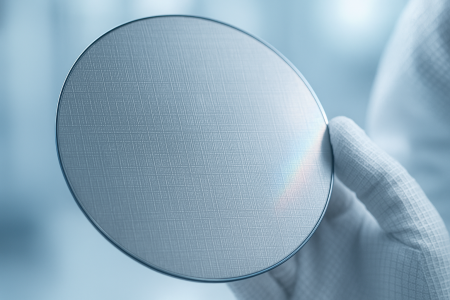
The Silicon Spin Bet: Building Qubits on a Chip Fab Line
Walk into most quantum computing labs and the hardware barely resembles a computer chip. Trapped-ion machines use vacuum chambers and lasers. Supercon...
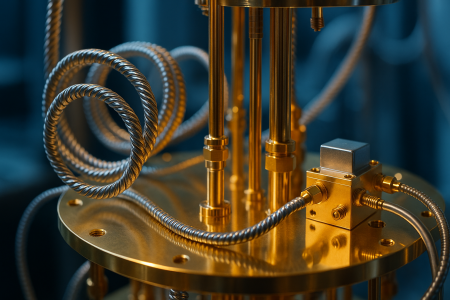
The Readout Problem: How a Quantum Computer Actually Reads a Qubit
Most of the attention in quantum computing goes to the front of the calculation: how you make a qubit, how long it stays coherent, how cleanly you can...