quantum hardware

The Two-Level System: The Tiny Flaws That Drain a Qubit's Life
 Rafayel
Ask an engineer why a superconducting qubit forgets its state so quickly, and sooner or later the conversation turns to something they can neither see...
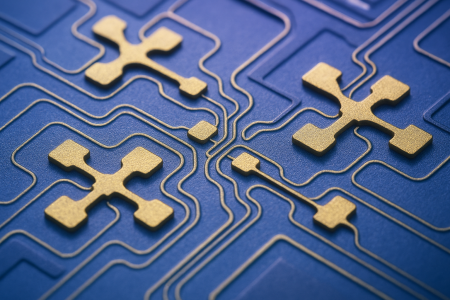
The Tunable Coupler: The Switch That Turns Qubit Chatter On and Off
Two qubits sitting side by side on a superconducting chip have a problem: they can hear each other whether you want them to or not. Physics does not c...
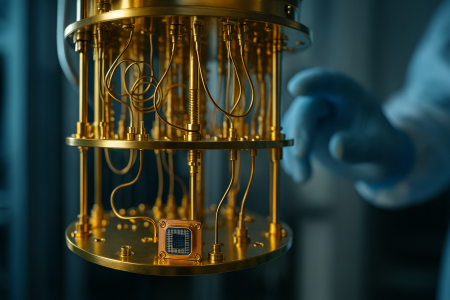
The Cold Controller: Moving Qubit Electronics Inside the Fridge
A superconducting quantum computer looks, from the outside, like a chandelier of gold-plated plates hanging inside a refrigerator the size of a fridge...
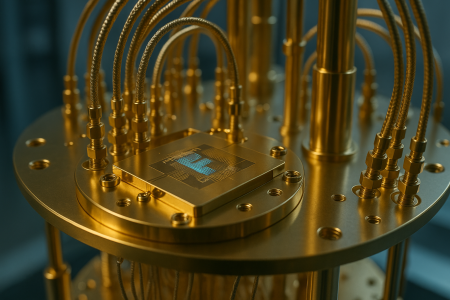
The Mid-Circuit Measurement: Reading a Qubit Without Ending the Job
For most of quantum computing's short history, measurement was a full stop. You loaded your circuit, let the qubits evolve, and only at the very end d...
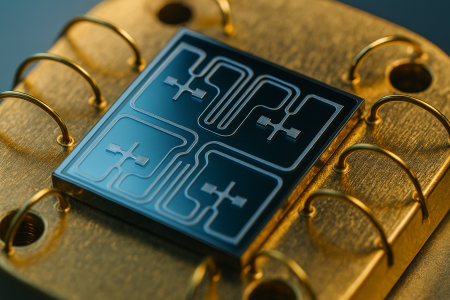
The Josephson Junction: The Tiny Gap That Makes a Superconducting Qubit Possible
Peer inside a superconducting quantum processor from IBM, Google, or Rigetti and you will find, at the core of every qubit, a device so small you woul...
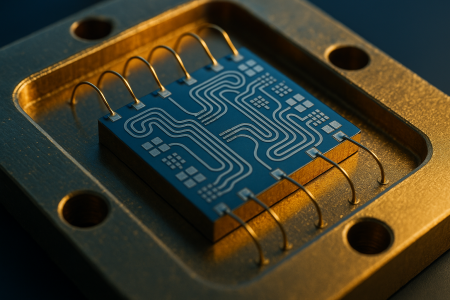
The Fluxonium: The Superconducting Qubit Betting Against the Transmon
If you open up almost any superconducting quantum computer built in the last decade, from IBM's processors to Google's, you will find the same basic i...

The Ion Shuttle: How Trapped-Ion Computers Move Their Qubits Around
Most quantum processors are stuck with the layout they were built with. A superconducting chip has its qubits soldered into fixed positions, and if tw...
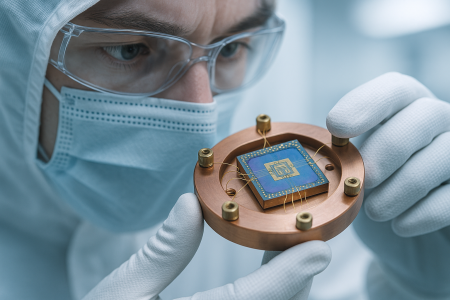
The Cosmic Ray Problem: When Space Radiation Wipes a Quantum Chip
Most of the errors that plague a superconducting quantum computer are local and boring in a useful way. One qubit drifts, a control pulse is a hair to...
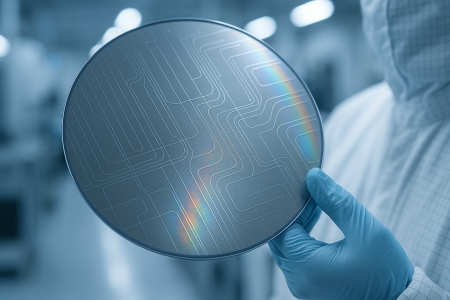
The Foundry Play: PsiQuantum's Bet on Printing Qubits Like Chips
Almost every quantum computing company shares a habit: they release a machine, add a few more qubits, release another, and invite customers to experim...

The Yield Problem: Why No Two Qubits Come Out Identical
Walk into a chip fab and you expect uniformity. Modern semiconductor plants print billions of transistors that behave the same across a wafer and acro...
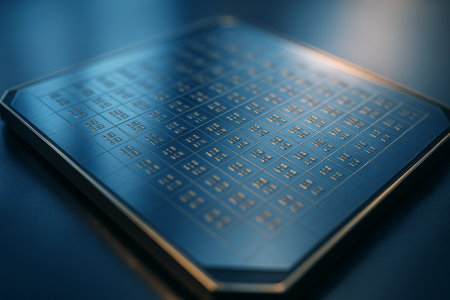
The Surface Code: Quantum Computing's Favorite Safety Net
Ask engineers at IBM, Google, or a dozen startups how they plan to build a quantum computer that actually finishes a useful calculation, and you will...

The Quantum Dot: Betting a Qubit Can Ride the Chip Industry
Most of the qubits that make headlines are exotic. Superconducting loops need dilution refrigerators, trapped ions float in ultra-high vacuum, neutral...

The Tweezer Array: How Lasers Assemble a Grid of Atom Qubits
Most quantum computers arrive with their qubits already built in. A superconducting chip is fabricated in a cleanroom, its qubits etched and deposited...

The Honeywell Spinout: How Quantinuum Bet on Trapped Ions
Most people don't associate thermostats and jet engine controls with quantum computing. Yet one of the most quietly influential quantum hardware maker...

The Dilution Refrigerator: Chilling Qubits a Hair Above Absolute Zero
Look at a photo of a superconducting quantum computer and the thing that catches your eye is rarely the chip. It is the chandelier: a tiered tower of...

The Two Clocks: T1, T2, and How Long a Qubit Remembers
Ask a quantum engineer how good their qubit is and they will almost always answer with two numbers. The first is called T1. The second is called T2. T...
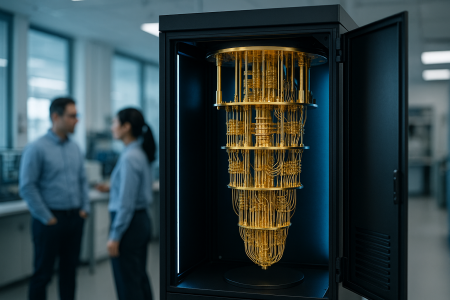
The Annealer's Wager: D-Wave's Bet on a Different Quantum Machine
Most of the quantum computing conversation revolves around gate-based machines: chips that run sequences of logical operations, the quantum cousins of...
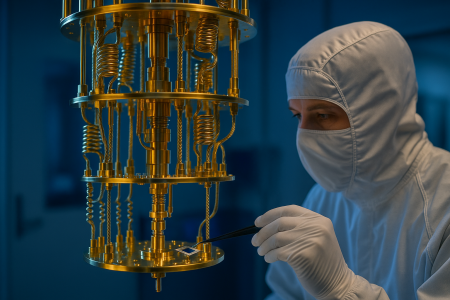
The Topological Bet: Microsoft's Long Shot at a Sturdier Qubit
Nearly every quantum computer in operation today shares a frustrating trait: the information in its qubits is fragile. A stray vibration, a wandering...

The Analog Route: Quantum Simulators That Skip the Logic Gates
Ask most people to picture a quantum computer and they imagine a circuit: qubits marching through a choreographed sequence of logic gates, one operati...
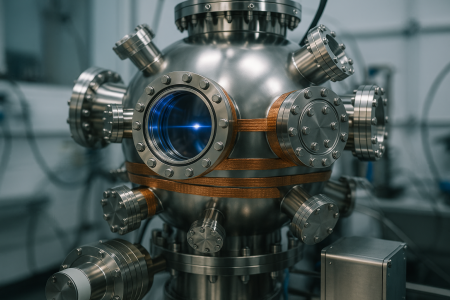
The Vacuum Trap: Why Atom and Ion Quantum Computers Chase Emptier-Than-Space Chambers
Every quantum computer needs to keep the outside world away from its qubits. Superconducting chips do it with cold, sealing themselves inside a diluti...
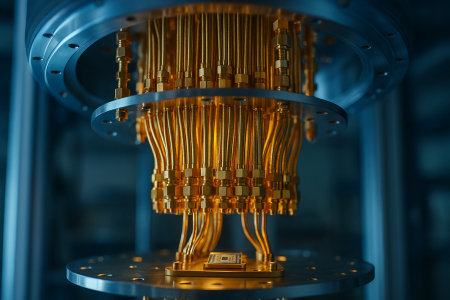
The Wiring Wall: Why a Million Qubits Can't Each Have Their Own Cable
Open the door of a dilution refrigerator and you see the part nobody puts on the brochure: a dense forest of coaxial cables snaking down through gold-...