quantum hardware
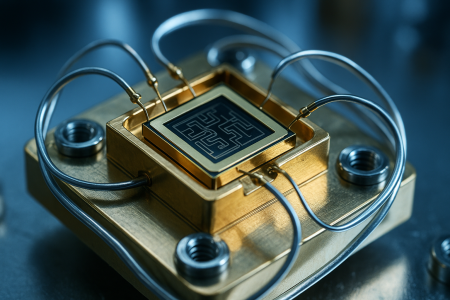
The Leakage Ladder: When a Qubit Climbs Out of Its Two States
 Rafayel
A qubit is a fiction the hardware agrees to maintain. Physicists talk about two states, a crisp 0 and 1, but almost every real qubit is carved out of...
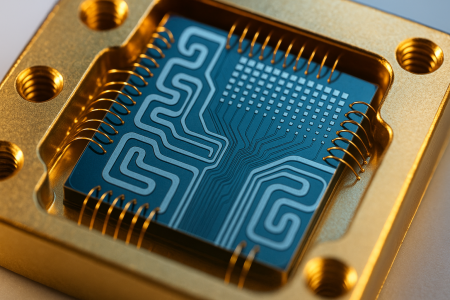
The Fluxonium Qubit: The Slower Cousin That Refuses to Forget
Walk into almost any lab building a superconducting quantum computer and you will find the same workhorse qubit: the transmon. It is the design behind...
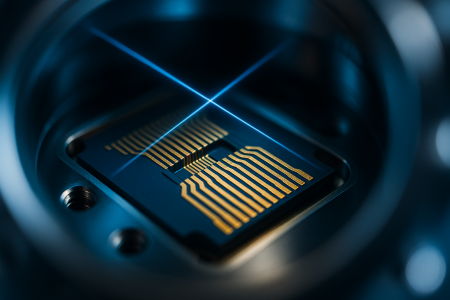
The Ion Highway: How Quantinuum Shuttles Qubits Across a Chip
In most quantum computers, the qubits sit still. Superconducting circuits are etched into a chip and stay put; entangling two of them means routing si...
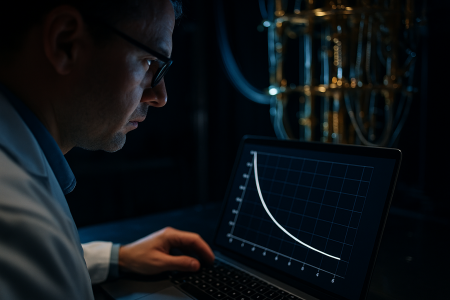
The Randomized Benchmark: How a Quantum Computer Grades a Single Gate
Ask a quantum engineer how good their machine is and you will get a lot of numbers. Qubit counts, coherence times, connectivity maps. But the number t...

The Barium Bet: Why Ion-Trap Machines Are Switching Atoms
Every trapped-ion quantum computer starts with a choice most people never see: which atom to trap. The qubit is not built, it is borrowed from nature,...
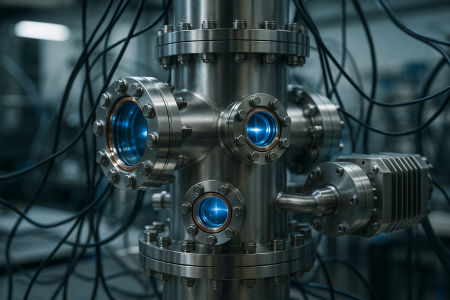
The Vacuum Chamber: Why Atom Qubits Need Space Emptier Than Orbit
Ask most people what a quantum computer looks like and they picture a golden chandelier hanging inside a refrigerator. That image belongs to the super...
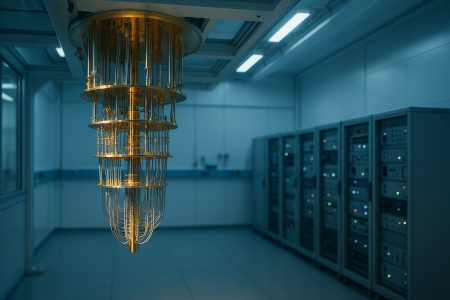
The Watt Gap: Why a Quantum Computer Sips Power a Supercomputer Guzzles
Walk into a room housing a superconducting quantum computer and your first assumption is probably wrong. The gleaming gold chandelier hanging inside t...
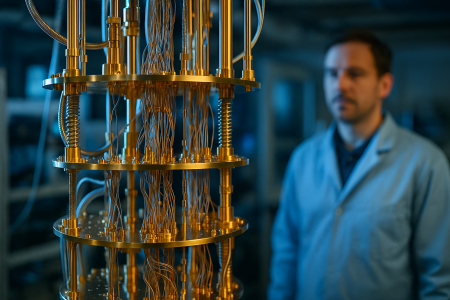
The Helium-3 Squeeze: The Rare Isotope Every Quantum Fridge Needs
Ask what limits the growth of a superconducting quantum computer and you will hear about qubit counts, error rates, and wiring. Further down the list,...
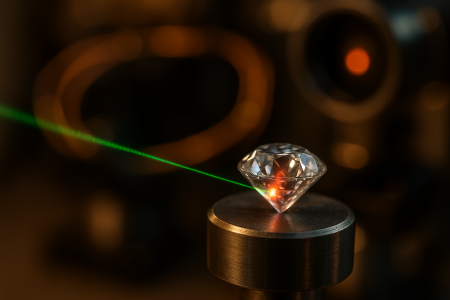
The Diamond Defect: The Qubit That Might Compute Without a Fridge
Most quantum computers demand a machine the size of a small car to survive: a dilution refrigerator that chills superconducting chips to a hair above...
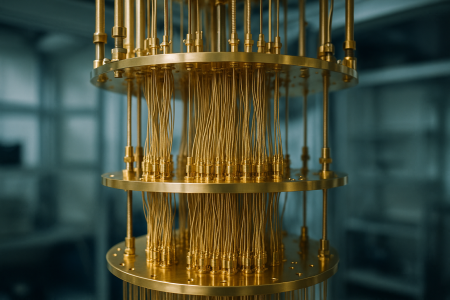
The Wiring Wall: Why a Quantum Fridge Runs Out of Cables Before Qubits
Look inside the photographs quantum computing companies love to publish and you will see a gleaming golden chandelier hanging in a laboratory. It look...
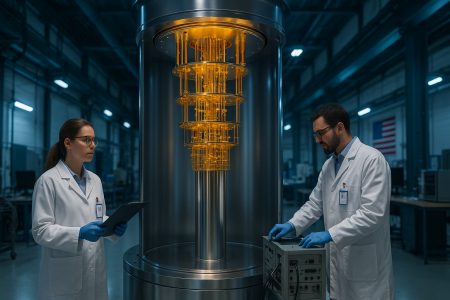
The Sovereign Machine: Why Countries Race to Own a Quantum Computer
For years, the easiest way to touch a quantum computer was to open a laptop and log into someone else's. IBM, Google, and a handful of startups put th...
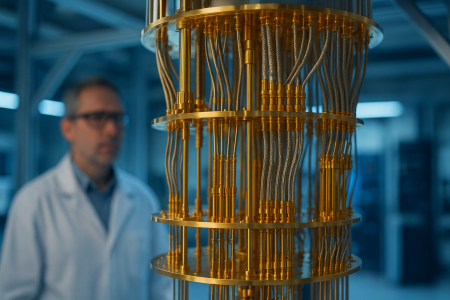
The Millikelvin Machine: The Fridge That Keeps Qubits Cold Enough to Compute
Look at almost any photo of a superconducting quantum computer and you are not really looking at the computer. The chip itself is a fingernail-sized s...
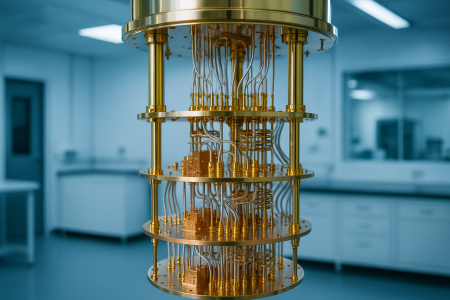
The Annealer's Wager: D-Wave's Bet That You Don't Need Gates
Ask most people to picture a quantum computer and they imagine gates: crisp logical operations flipping and entangling qubits one step at a time, like...
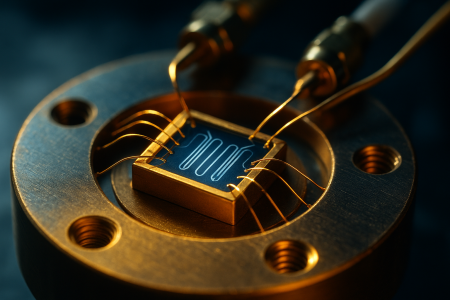
The Topological Gambit: Microsoft's Long Bet on the Braided Qubit
Most quantum computers fight noise from the outside in. Engineers wrap a fragile qubit in shielding, chill it near absolute zero, run constant error c...

The Atom-Array Upstarts: How QuEra and Pasqal Bet on Neutral Atoms
Ask most people to picture a quantum computer and they imagine a gold chandelier hanging inside a refrigerator, or a chip cooled to a whisker above ab...
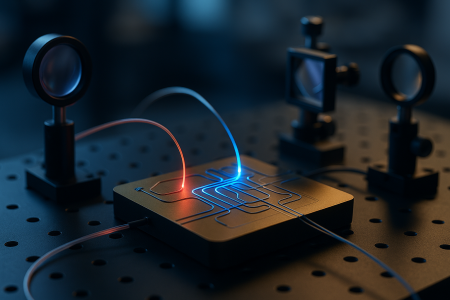
The Room-Temperature Wager: Xanadu's Bet on Photonic Qubits
Walk into most quantum computing labs and you will find a chandelier of copper and gold plating hanging inside a refrigerator colder than deep space....
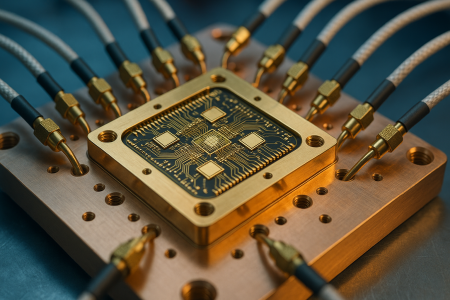
The Cross-Resonance Gate: Entangling Qubits Without Turning a Dial
Every quantum computer needs a way to make two qubits talk to each other. Without a reliable two-qubit gate, you can flip individual qubits all day an...
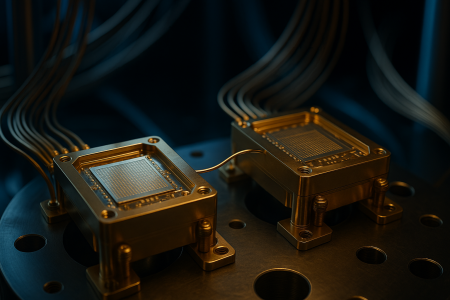
The Quantum Interconnect: Wiring Separate Chips Into One Computer
There is a ceiling on how big a single quantum chip can get. Fabrication yield drops as the wafer grows, wiring gets impossibly crowded, and a chip th...
The DiVincenzo Checklist: Five Boxes Every Qubit Must Tick
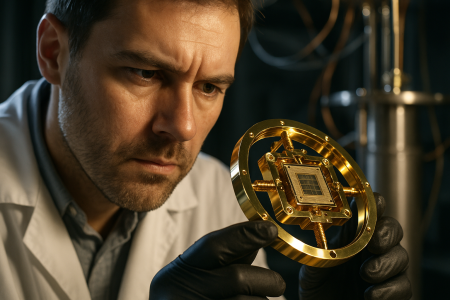
In 2000, the physicist David DiVincenzo wrote down a short list of requirements that any physical system must meet to work as a quantum computer. It w...
The Purcell Filter: The Guard That Lets a Qubit Be Read Without Being Killed
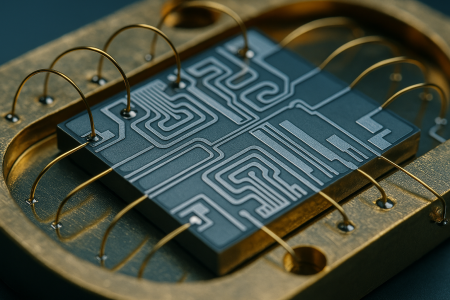
Every superconducting qubit faces the same awkward trade-off. To find out what state it is in, you have to connect it to the outside world through a r...
The Flip-Chip Stack: How Superconducting Qubits Went 3D
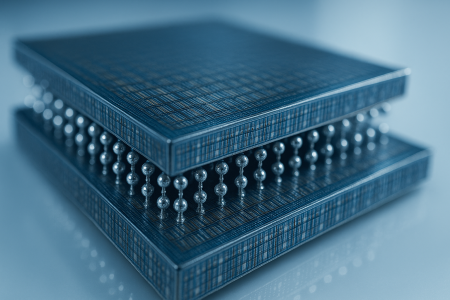
For years, a superconducting quantum chip looked like a single tile of silicon or sapphire with everything printed on one face. The qubits, the resona...